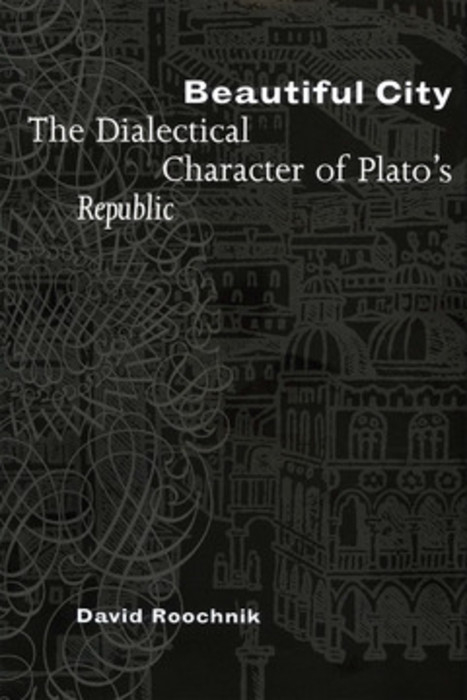
Beautiful City (eBook)
176 Seiten
Cornell University Press (Verlag)
9781501718748 (ISBN)
To the vast literature on Plato's Republic comes a new interpretation. In Beautiful City, David Roochnik argues convincingly that Plato's masterpiece is misunderstood by modern readers. The work must, he explains, be read dialectically, its parts understood as forming a unified whole. Approached in this way, the text no longer appears to defend an authoritarian and monolithic political system, but rather supplies a qualified defense of democracy and the values of diversity.
Writing in clear and straightforward prose, Roochnik demonstrates how Plato's treatment of the city and the soul evolves throughout the dialogue and can be appreciated only by considering the Republic in its entirety. He shows that the views expressed in the early parts of the text do not represent Plato's final judgment on these subjects but are in fact dialectical 'moments' intended to be both partial and provisional. Books 5-7 of the Republic are, he maintains, meant to revise and improve upon books 2-4. Similarly, he sees the usually neglected books 8-10 as advancing beyond the thoughts presented in the previous books. Paying particular attention to these later books, Roochnik details, for instance, how the stories of the 'mistaken' regimes, which are often seen as unimportant, are actually crucial in Plato's account of the soul.
Beautiful City is certain to be controversial, as the author's insights and opinions will engage and challenge philosophers, classicists, and political theorists.
RoochnikDavid:
David Roochnik is Associate Professor of Philosophy at Boston University. He is the author of The Tragedy of Reason: Towards a Platonic Conception of Logos and Of Art and Wisdom: Plato's Understanding of Techne.
In this slim but elegantly written volume, Roochnik (philosophy, Boston Univ.) treats Plato's 'Republic' as a dialogue, which is to say that he is attentive to the fact that 'The Republic' develops and builds as a conversation might, with progressive revisions, qualifications, and attention to the method of the dialectic itself.... Roochnik's approach is persuasive and highly recommended to scholars of the classical world. Summing Up: Highly recommended.-Choice Beautiful City is certain to be controversial, as the author's insights and opinions will engage and challenge philosophers, classicists, and political theorists. To the vast literature on Plato's Republic comes a new interpretation. In Beautiful City, David Roochnik argues convincingly that Plato's masterpiece is misunderstood by modern readers. The work must, he explains, be read dialectically, its parts understood as forming a unified whole. Approached in this way, the text no longer appears to defend an authoritarian and monolithic political system, but rather supplies a qualified defense of democracy and the values of diversity. Writing in clear and straightforward prose, Roochnik demonstrates how Plato's treatment of the city and the soul evolves throughout the dialogue and can be appreciated only by considering the Republic in its entirety. He shows that the views expressed in the early parts of the text do not represent Plato's final judgment on these subjects but are in fact dialectical moments intended to be both partial and provisional. Books 5-7 of the Republic are, he maintains, meant to revise and improve upon books 2-4. Similarly, he sees the usually neglected books 8-10 as advancing beyond the thoughts presented in the previous books. Paying particular attention to these later books, Roochnik details, for instance, how the stories of the mistaken regimes, which are often seen as unimportant, are actually crucial in Plato's account of the soul.
| Erscheint lt. Verlag | 18.10.2018 |
|---|---|
| Sprache | englisch |
| Themenwelt | Geisteswissenschaften ► Philosophie ► Allgemeines / Lexika |
| Geisteswissenschaften ► Philosophie ► Philosophie Altertum / Antike | |
| Geisteswissenschaften ► Sprach- / Literaturwissenschaft ► Anglistik / Amerikanistik | |
| Geisteswissenschaften ► Sprach- / Literaturwissenschaft ► Literaturwissenschaft | |
| ISBN-13 | 9781501718748 / 9781501718748 |
| Informationen gemäß Produktsicherheitsverordnung (GPSR) | |
| Haben Sie eine Frage zum Produkt? |
 PDF (Adobe DRM)
Kopierschutz: Adobe-DRM
Adobe-DRM ist ein Kopierschutz, der das eBook vor Mißbrauch schützen soll. Dabei wird das eBook bereits beim Download auf Ihre persönliche Adobe-ID autorisiert. Lesen können Sie das eBook dann nur auf den Geräten, welche ebenfalls auf Ihre Adobe-ID registriert sind.
Details zum Adobe-DRM
Dateiformat: PDF (Portable Document Format)
Mit einem festen Seitenlayout eignet sich die PDF besonders für Fachbücher mit Spalten, Tabellen und Abbildungen. Eine PDF kann auf fast allen Geräten angezeigt werden, ist aber für kleine Displays (Smartphone, eReader) nur eingeschränkt geeignet.
Systemvoraussetzungen:
PC/Mac: Mit einem PC oder Mac können Sie dieses eBook lesen. Sie benötigen eine
eReader: Dieses eBook kann mit (fast) allen eBook-Readern gelesen werden. Mit dem amazon-Kindle ist es aber nicht kompatibel.
Smartphone/Tablet: Egal ob Apple oder Android, dieses eBook können Sie lesen. Sie benötigen eine
Geräteliste und zusätzliche Hinweise
Buying eBooks from abroad
For tax law reasons we can sell eBooks just within Germany and Switzerland. Regrettably we cannot fulfill eBook-orders from other countries.
aus dem Bereich