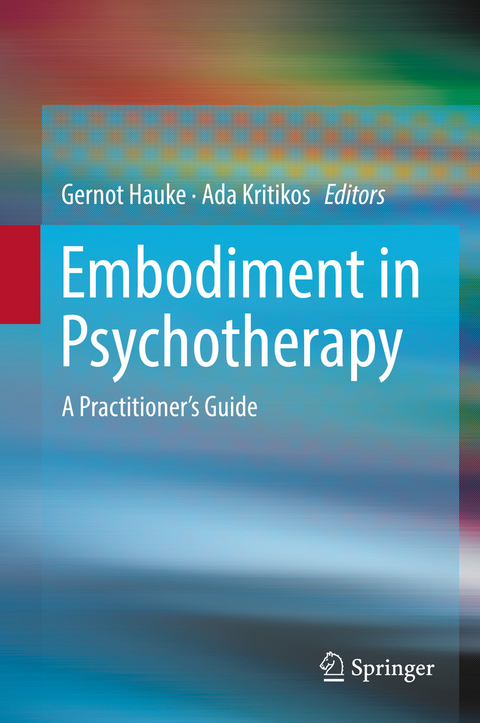
Embodiment in Psychotherapy (eBook)
XVI, 387 Seiten
Springer International Publishing (Verlag)
978-3-319-92889-0 (ISBN)

This groundbreaking clinical guide explores the theory behind embodiment in psychotherapy, the science that underlies its methods, and how this knowledge can offer greater depth to clinical practice. Experts across the cognitive and behavioral sciences analyze the complex roles of the body in helping create the self and convey agency, and the essential cognitive, emotional, and behavioral processes expressed in movement, gestures, and facial expressions. Diverse techniques are shown bridging gaps between emotional and bodily awareness and verbal and nonverbal communication to reinforce self-regulation, navigate social relationships, and support the therapeutic bond. These practical guidelines demonstrate the versatility of embodiment work in use with individuals, couples, and groups in addressing a wide range of emotional, interpersonal, and somatic concerns.
Among the topics covered:
· Embodiment as an organizing principle.
· Generating body focus: the gate to embodied work and emotional awareness.· Embodiment of social interaction: our place in the world around us.
· Resource activation: bringing values into the flesh.
· Therapeutic alliance: grounding interaction in space.
· The power of embodying values in work place teams.
Expanding on while strengthening traditional theory and methods, Embodiment in Psychotherapy brings new directions in healing to researchers, clinicians, and psychotherapists of all schools in psychiatry, counseling, coaching, and social work, as well as psychology students, trainers, managers, and supervisors.
Dr. Gernot Hauke, Diploma in Chemistry and Psychology. He got his Ph. D. in Psychology from the Technical University of Munich. He owns certifications as Psychological Psychotherapist, as Clinical Trainer and Supervisor in CBT and as a Business Coach.He is the author of several books and scientific papers. His primary interest focuses on the neurobiology of embodiment, direct induction of emotions in therapeutic processes and application of fundamental embodiment processes in psychotherapy.
Associate Professor Ada Kritikos has a PhD in Psychology (University of Melbourne) and has trained and practised as a Clinical Neuropsychologist. She has held a teaching and research tenured position at The University of QueenslandSchoold of Psychology since 2010. She has authored many research papers, on action observation, body representation, self-other spatial positioning differences and embodiment.
Dr. Gernot Hauke, Diploma in Chemistry and Psychology. He got his Ph. D. in Psychology from the Technical University of Munich. He owns certifications as Psychological Psychotherapist, as Clinical Trainer and Supervisor in CBT and as a Business Coach.He is the author of several books and scientific papers. His primary interest focuses on the neurobiology of embodiment, direct induction of emotions in therapeutic processes and application of fundamental embodiment processes in psychotherapy. Associate Professor Ada Kritikos has a PhD in Psychology (University of Melbourne) and has trained and practised as a Clinical Neuropsychologist. She has held a teaching and research tenured position at The University of QueenslandSchoold of Psychology since 2010. She has authored many research papers, on action observation, body representation, self-other spatial positioning differences and embodiment.
Building a body of evidence: from sensation to emotion and psychotherapy.- Part I Basics for clinical applications of embodiment.- Interoception – definitions, dimensions, neural.- Embodiment as an organising principle.- Embodiment of emotional regulation.- Embodiment of social interaction: our place in the world around us.- The Thoughtful Self .- The Extended Self – “I am a part of all that I have met”.- Dual Process Theory: Embodiment, Impulse and Reflective determinants of behaviour.- Embodiment Research.- Part II Elementary Embodiment Techniques for the practice.- Generating Body focus: The gate to embodied work and emotional awareness.- Getting the Embodied Emotional Survival Strategy.- Mapping the Embodied Emotional Mind: the Emotional Field.- Resource activation: bringing values into the flesh.- Emotional mastery and life strategy: Moving to solutions.- Therapeutic alliance: grounding interaction in space.- Part III Elementary Embodiment techniques applied to a single therapy setting.- Psychotherapy.- Coaching.- Part IV Further on up the road: Embodiment techniques applied to more complex systems.- Distressed couples: Improving mutual empathy and emotional regulation using embodied empathy mechanisms.- Embodiment in group therapy: From IQ to WeQ - together we are stronger!.- The power of embodying values in work place teams.
| Erscheint lt. Verlag | 8.12.2018 |
|---|---|
| Zusatzinfo | XVI, 387 p. 62 illus. |
| Verlagsort | Cham |
| Sprache | englisch |
| Themenwelt | Geisteswissenschaften |
| Medizin / Pharmazie ► Medizinische Fachgebiete ► Psychiatrie / Psychotherapie | |
| Schlagworte | embodied cognition • embodied cognitive behavioral therapy • embodied empathy • Emotion Regulation • Family Therapy • mind body connections • Psychological interventions • psychotherapy • somatic information |
| ISBN-10 | 3-319-92889-9 / 3319928899 |
| ISBN-13 | 978-3-319-92889-0 / 9783319928890 |
| Informationen gemäß Produktsicherheitsverordnung (GPSR) | |
| Haben Sie eine Frage zum Produkt? |
 PDF (Wasserzeichen)
DRM: Digitales Wasserzeichen
Dieses eBook enthält ein digitales Wasserzeichen und ist damit für Sie personalisiert. Bei einer missbräuchlichen Weitergabe des eBooks an Dritte ist eine Rückverfolgung an die Quelle möglich.
Dateiformat: PDF (Portable Document Format)
Mit einem festen Seitenlayout eignet sich die PDF besonders für Fachbücher mit Spalten, Tabellen und Abbildungen. Eine PDF kann auf fast allen Geräten angezeigt werden, ist aber für kleine Displays (Smartphone, eReader) nur eingeschränkt geeignet.
Systemvoraussetzungen:
PC/Mac: Mit einem PC oder Mac können Sie dieses eBook lesen. Sie benötigen dafür einen PDF-Viewer - z.B. den Adobe Reader oder Adobe Digital Editions.
eReader: Dieses eBook kann mit (fast) allen eBook-Readern gelesen werden. Mit dem amazon-Kindle ist es aber nicht kompatibel.
Smartphone/Tablet: Egal ob Apple oder Android, dieses eBook können Sie lesen. Sie benötigen dafür einen PDF-Viewer - z.B. die kostenlose Adobe Digital Editions-App.
Buying eBooks from abroad
For tax law reasons we can sell eBooks just within Germany and Switzerland. Regrettably we cannot fulfill eBook-orders from other countries.
aus dem Bereich