Evang (eBook)
137 Seiten
Publishdrive (Verlag)
9780000124401 (ISBN)
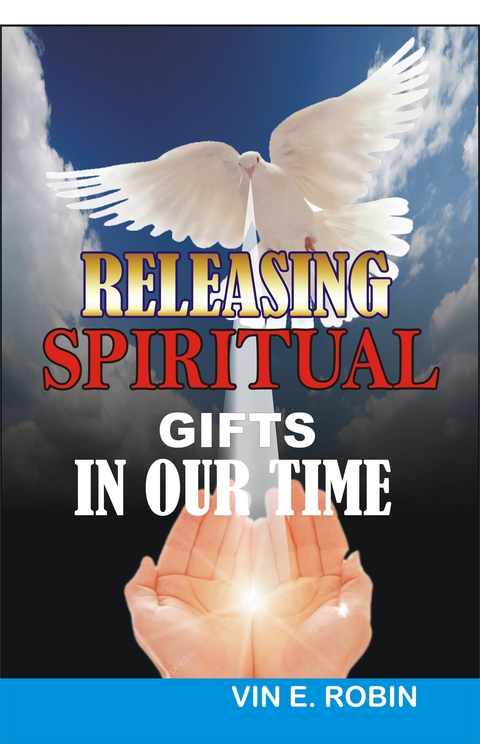
God has given us all that we will ever need in our existence here on earth. With the Holy Spirit, we have and will always enjoy an unlimited access to everything in creation. This book is loaded with the complete expositions on the Person of the Holy Spirit, His many Gifts, their operations, and management. This book is a must-have to anyone who desires to do great exploits in our world and enjoy true peace and joy in plenitude.
CHAPTER TWO
WHEN THE HOLY SPIRIT COMES
WHO IS THE HOLY SPIRIT?
In the teaching of Roman Catholic Church (CCC 264) "The Holy Spirit proceeds from the Father as the first principle and, by the eternal gift of this to the Son, from the communion of both the Father and the Son" (St. Augustine, De Trin. 15, 26, 47: PL 42, 1095). According to Gelasius of Cyzicus, The Holy Spirit is of the same Godhead and essence as the Father and the Son, and is ever inseparable from the Father and the Son, as the Son is from the Father and the Father from the Son (History of the Council of Nicea A.D. 476). Epiphanius holds that The Holy Spirit is neither begotten nor created but of the same substance with the Father and the Son Panarion 74 (A.D. 377).
According to the Athanasian Creed (A.D. 400), The Holy Spirit is from the Father and the Son, not made nor created, nor begotten, but proceeding. Augustine, On the Trinity, XV:17,27 (A.D. 408) notes that the Holy Spirit, according to the Holy Scriptures, is neither of the Father alone, nor of the Son alone, but of both. He further paints a more precise picture when he says; wherefore let him who can understand the generation of the Son from the Father without time, also understand the procession of the Holy Spirit from both without time. More so, understand, that as the Father has in Himself that the Holy Spirit should proceed from Him, so has He given to the Son that. The same Spirit should proceed from Him, and be both apart from time: and that the Holy Spirit is so said to proceed from the Father. This should be understood that His proceeding also from the Son is a property derived by the Son from the Father. For if the Son has of the Father whatever He has, then certainly He has of the Father, that the Holy Spirit also proceeds not just from the Father alone. More so, the Spirit of both is not begotten of both but proceeds from both (A.D. 408).
Cyril of Alexandria (A.D. 430) says that the Holy Spirit is called the Spirit of Truth, and Christ is the Truth, and he is poured forth from him [the Son] just as he is also from God the Father.” (Epistle 17). And the Council of Toledo II (A.D. 447) asserts that the Spirit is also the Paraclete, who is himself neither the Father and the Son, but proceeding from the Father and the Son. Therefore the Father is unbegotten, the Son is begotten, the Paraclete is not begotten, but proceeding from the Father and the Son.”
The Holy Spirit is the 3rd person of the Blessed Trinity, and the one most active in the world today. The Bible says that the Holy Spirit hovered over the face of the waters at the creation of the world (Genesis 1:2), he led Jesus into the desert (Matthew 4:1), comes to us at Confirmation (Acts 8:18), and intercedes for us in sighs that we cannot understand (Romans8:26).
SYMBOLS OF THE HOLY SPIRIT
The Scriptures uses the symbols as presented in the Catechism of the Catholic Church, to refer to the Holy Spirit; water, anointing, fire, cloud and light, the seal, the hand, the finger, the dove.
Water
The water made mention of, symbolizes the action of the Holy Spirit's in Baptism after the invocation of the Holy Spirit, the water becomes a powerful sacramental sign of new birth in Christ. In the same way, the gestation of our first birth took place in water, so too, the water of Baptism directs us to the Holy Spirit that births us into the divine life is given to us in the Holy Spirit.
As "by one Spirit we were all baptized," so we are also "made to drink of one Spirit." Thus the Spirit is also personally the living water welling up from Christ crucified as its source and welling up in us to eternal life.
Anointing
The symbolism of anointing with oil also signifies the Holy Spirit, to the point of becoming a synonym for the Holy Spirit. In Christian initiation, anointing is the sacramental sign of Confirmation, called "chrismation" in the Churches of the East. Its full force can be grasped only concerning the primary anointing accomplished by the Holy Spirit, that of Jesus. Christ (in Hebrew "messiah") means the one "anointed" by God's Spirit.
There were several anointed ones of the Lord in the Old Covenant, pre-eminently King David. But Jesus is God's Anointed in a unique way: the Holy Spirit entirely anointed the humanity the Son assumed. The Holy Spirit established him as "Christ."
The Virgin Mary conceived Christ by the Holy Spirit who, through the angel, proclaimed him the Christ at his birth, and prompted Simeon to come to the temple to see the Christ of the Lord. The Spirit-filled Christ and the power of the Spirit went out from him in his acts of healing and of saving. Finally, it was the Spirit who raised Jesus from the dead.
Now, fully established as "Christ" in his humanity victorious over death, Jesus pours out the Holy Spirit abundantly until "the saints" constitute - in their union with the humanity of the Son of God - that perfect man "to the measure of the stature of the fullness of Christ": "the whole Christ," in St. Augustine's expression.
Fire
While water signifies birth and the fruitfulness of life given in the Holy Spirit, fire symbolizes the transforming energy of the Holy Spirit's actions. The prayer of the prophet Elijah, who "arose like fire" and whose "word burned like a torch," brought down fire from heaven on the sacrifice on Mount Carmel. This event was a "figure" of the fire of the Holy Spirit, who transforms what he touches.
John the Baptist, who goes "before [the Lord] in the spirit and power of Elijah," proclaims Christ as the one who "will baptize you with the Holy Spirit and with fire." Jesus will say of the Spirit: "I came to cast fire upon the earth; and would that it was already burning!" The Roman Catholic Church holds that the symbolism of fire has been retained as one of the most expressive images of the Holy Spirit's actions. In the Acts of the Apostles, the Holy Spirit rests on the disciples on the morning of Pentecost and fills them with himself in the form of tongues "as of fire, Cloud and light” These two images occur together in the manifestations of the Holy Spirit.
In the theophanies (manifestations of God) of the Old Testament, the cloud, now obscure, now luminous, reveals the living and saving God, while veiling the transcendence of his glory - with Moses on Mount Sinai, at the tent of meeting, and during the wandering in the desert, and with Solomon at the dedication of the Temple. In the Holy Spirit, Christ fulfills these figures. The Spirit comes upon the Virgin Mary and "overshadows" her so that she might conceive and give birth to Jesus.
On the mountain of Transfiguration, the Spirit in the "cloud came and overshadowed" Jesus, Peter, James, and John saw Moses and Elijah and "a voice came out of the cloud, saying; 'This is my Son, my Chosen; listen to him!" Finally, the cloud took Jesus out of the sight of the disciples on the day of his ascension and will reveal him as Son of man in glory on the day of his final coming.
The seal
This symbol is close to that of anointing. "The Father has set his seal" on Christ and also seals us in him. Because this seal indicates the indelible effect of the anointing with the Holy Spirit in the sacraments of Baptism, Confirmation, and Holy Orders, the image of the seal (sphragis) has been used in some theological traditions to express the indelible "character" imprinted by these three unrepeatable sacraments.
The hand
Jesus heals the sick and blesses little children by laying hands on them. In his name, the apostles will do the same. Even more pointedly, it is by the Apostles' imposition of hands that the Holy Spirit is given. The Letter to the Hebrews lists the imposition of hands among the "fundamental elements" of its teaching. The Church has kept this sign of the all-powerful outpouring of the Holy Spirit in its sacramental epiclesis.
The finger
It is by the finger of God that Jesus cast out demons." If God's law was written on tablets of stone "by the finger of God," then the "letter from Christ" entrusted to the care of the apostles, is written, "with the Spirit of the living God, not on tablets of stone, but on tablets of human hearts." The hymn Veni Creator Spiritus invokes the Holy Spirit as the "finger of the Father's right hand."
The Dove
At the end of the flood, whose symbolism refers to Baptism, a dove released by Noah returns with a fresh olive-tree branch in its beak as a sign that the earth was again habitable. When Christ comes up from the water of his baptism, the Holy Spirit, in the form of a dove, comes down upon him and remains with him. The Spirit comes down and remains in the purified hearts of the baptized. In certain churches, the Eucharist is reserved in a metal receptacle in the form of a dove (columbarium) suspended above the altar. Christian iconography traditionally uses a dove to suggest the Spirit (CCC 694-701).
We must note that the Holy Spirit is not any of the above-listed symbols but the symbols only show an attribute or manifestation of the Holy Spirit.
THE GODHEAD DEMYSTIFIED
God is love: Father, Son, and Holy Spirit. God freely wills to communicate the glory of his blessed life. Such is the "plan of his loving kindness," conceived by the Father before the foundation of the world, in his beloved Son: "He destined us in love to be his sons" and "to be conformed to the image of his Son," through "the spirit of sonship. This plan is a "grace which was given to us in Christ Jesus before the ages began," stemming” immediately from Trinitarian love. It unfolds in the work of creation, the whole history of salvation after the fall, and the missions of the Son and the Spirit, which are continued in the...
| Erscheint lt. Verlag | 17.10.2018 |
|---|---|
| Sprache | englisch |
| Themenwelt | Geisteswissenschaften ► Religion / Theologie ► Christentum |
| ISBN-13 | 9780000124401 / 9780000124401 |
| Informationen gemäß Produktsicherheitsverordnung (GPSR) | |
| Haben Sie eine Frage zum Produkt? |
 EPUB (Adobe DRM)
Größe: 537 KB
Kopierschutz: Adobe-DRM
Adobe-DRM ist ein Kopierschutz, der das eBook vor Mißbrauch schützen soll. Dabei wird das eBook bereits beim Download auf Ihre persönliche Adobe-ID autorisiert. Lesen können Sie das eBook dann nur auf den Geräten, welche ebenfalls auf Ihre Adobe-ID registriert sind.
Details zum Adobe-DRM
Dateiformat: EPUB (Electronic Publication)
EPUB ist ein offener Standard für eBooks und eignet sich besonders zur Darstellung von Belletristik und Sachbüchern. Der Fließtext wird dynamisch an die Display- und Schriftgröße angepasst. Auch für mobile Lesegeräte ist EPUB daher gut geeignet.
Systemvoraussetzungen:
PC/Mac: Mit einem PC oder Mac können Sie dieses eBook lesen. Sie benötigen eine
eReader: Dieses eBook kann mit (fast) allen eBook-Readern gelesen werden. Mit dem amazon-Kindle ist es aber nicht kompatibel.
Smartphone/Tablet: Egal ob Apple oder Android, dieses eBook können Sie lesen. Sie benötigen eine
Geräteliste und zusätzliche Hinweise
Buying eBooks from abroad
For tax law reasons we can sell eBooks just within Germany and Switzerland. Regrettably we cannot fulfill eBook-orders from other countries.
aus dem Bereich