


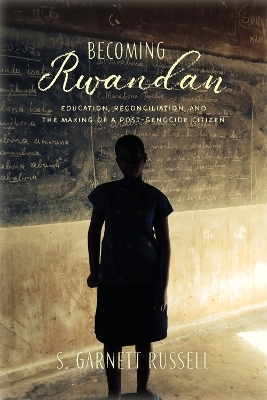
Becoming Rwandan
Education, Reconciliation, and the Making of a Post-Genocide Citizen
Seiten
2019
Rutgers University Press (Verlag)
978-1-9788-0287-2 (ISBN)
Rutgers University Press (Verlag)
978-1-9788-0287-2 (ISBN)
In the aftermath of the genocide, the Rwandan government has used the education system as a way to sustain peace and shape a new generation of Rwandans. This book argues that although the government utilizes global discourses in national policy documents, the way in which teachers and students engage with these global models distorts its intention.
In the aftermath of the genocide, the Rwandan government has attempted to use the education system in order to sustain peace and shape a new generation of Rwandans. Their hope is to create a generation focused on a unified and patriotic future rather than the ethnically divisive past. Yet, the government's efforts to manipulate global models around citizenship, human rights, and reconciliation to serve its national goals have had mixed results, with new tensions emerging across social groups. Becoming Rwandan argues that although the Rwandan government utilizes global discourses in national policy documents, the way in which teachers and students engage with these global models distorts the intention of the government, resulting in unintended consequences and undermining a sustainable peace.
In the aftermath of the genocide, the Rwandan government has attempted to use the education system in order to sustain peace and shape a new generation of Rwandans. Their hope is to create a generation focused on a unified and patriotic future rather than the ethnically divisive past. Yet, the government's efforts to manipulate global models around citizenship, human rights, and reconciliation to serve its national goals have had mixed results, with new tensions emerging across social groups. Becoming Rwandan argues that although the Rwandan government utilizes global discourses in national policy documents, the way in which teachers and students engage with these global models distorts the intention of the government, resulting in unintended consequences and undermining a sustainable peace.
S. GARNETT RUSSELL is an assistant professor of international and comparative education and the director of the George Clement Bond Center for African Education at Teachers College, Columbia University in New York.
Contents
List of Abbreviations
1 Introduction
2 The Role of Education in Transitional Justice, Peacebuilding, and Reconciliation
3 Constructing Citizenship and a Post-Genocide Identity
4 Using and Abusing Human Rights Norms
5 Addressing the Genocide and Promoting Reconciliation
6 The Potential and Limitations of Education for Peacebuilding
Appendix 1: Research Methods and Data Analysis
Appendix 2: National Policy Documents, Curricula, and Textbooks
Acknowledgments
Notes
References
Index
| Erscheinungsdatum | 01.08.2019 |
|---|---|
| Zusatzinfo | 23 b-w images |
| Verlagsort | New Brunswick NJ |
| Sprache | englisch |
| Maße | 140 x 216 mm |
| Gewicht | 4 g |
| Themenwelt | Geisteswissenschaften ► Geschichte |
| Sozialwissenschaften ► Pädagogik | |
| Sozialwissenschaften ► Politik / Verwaltung ► Europäische / Internationale Politik | |
| Sozialwissenschaften ► Soziologie | |
| ISBN-10 | 1-9788-0287-0 / 1978802870 |
| ISBN-13 | 978-1-9788-0287-2 / 9781978802872 |
| Zustand | Neuware |
| Informationen gemäß Produktsicherheitsverordnung (GPSR) | |
| Haben Sie eine Frage zum Produkt? |
Mehr entdecken
aus dem Bereich


aus dem Bereich
Amerikas Strategie der Vorherrschaft und der Kampf um Eurasien
Buch | Softcover (2024)
NOMEN Verlag
CHF 27,95
kurze Geschichte einer langen Beziehung
Buch | Hardcover (2025)
Suhrkamp (Verlag)
CHF 36,40
erfolgreiche Interessenvertretung durch Prozesskompetenz im komplexen …
Buch | Hardcover (2023)
Wiley-VCH (Verlag)
CHF 58,75


