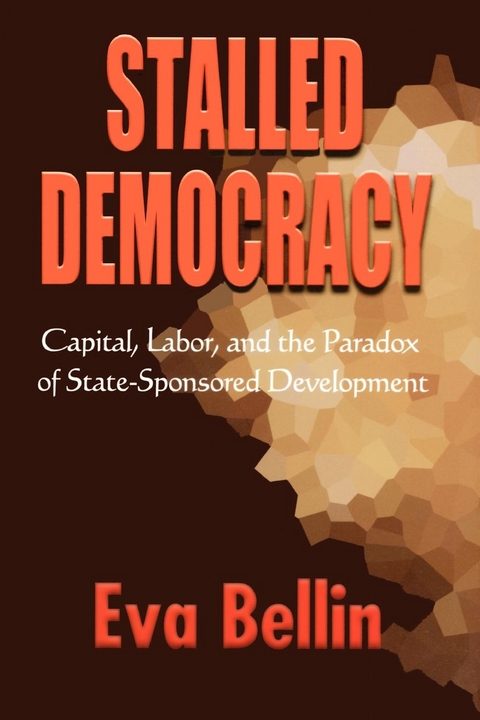
Stalled Democracy (eBook)
256 Seiten
Cornell University Press (Verlag)
978-1-5017-2212-7 (ISBN)
This ambitious book examines the dynamics of democratization in Tunisia and other late-developing countries where the process has stalled.
In this ambitious book Eva Bellin examines the dynamics of democratization in late-developing countries where the process has stalled. Bellin focuses on the pivotal role of social forces and particularly the reluctance of capital and labor to champion democratic transition, contrary to the expectations of political economists versed in earlier transitions. Bellin argues that the special conditions of late development, most notably the political paradoxes created by state sponsorship, fatally limit class commitment to democracy. In many developing countries, she contends, those who are empowered by capitalist industrialization become the allies of authoritarianism rather than the agents of democratic reform.
Bellin generates her propositions from close study of a singular case of stalled democracy: Tunisia. Capital and labor's complicity in authoritarian relapse in that country poses a puzzle. The author's explanation of that case is made more general through comparison with the cases of other countries, including Mexico, Indonesia, South Korea, Turkey, and Egypt. Stalled Democracy also explores the transformative capacity of state-sponsored industrialization. By drawing on a range of real-world examples, Bellin illustrates the ability of developing countries to reconfigure state-society relations, redistribute power more evenly in society, and erode the peremptory power of the authoritarian state, even where democracy is stalled.
In this ambitious book, Eva Bellin examines the dynamics of democratization in late-developing countries where the process has stalled. Bellin focuses on the pivotal role of social forces and particularly the reluctance of capital and labor to champion democratic transition, contrary to the expectations of political economists versed in earlier transitions. Bellin argues that the special conditions of late development, most notably the political paradoxes created by state sponsorship, fatally limit class commitment to democracy. In many developing countries, she contends, those who are empowered by capitalist industrialization become the allies of authoritarianism rather than the agents of democratic reform.Bellin generates her propositions from close study of a singular case of stalled democracy: Tunisia. Capital and labor's complicity in authoritarian relapse in that country poses a puzzle. The author's explanation of that case is made more general through comparison with the cases of other countries, including Mexico, Indonesia, South Korea, Turkey, and Egypt. Stalled Democracy also explores the transformative capacity of state-sponsored industrialization. By drawing on a range of real-world examples, Bellin illustrates the ability of developing countries to reconfigure state-society relations, redistribute power more evenly in society, and erode the peremptory power of the authoritarian state, even where democracy is stalled.
Eva Bellin is Myra and Robert Kraft Professor of Arab Politics in the Department of Politics and the Crown Center for Middle East Studies, Brandeis University.
Introduction1. Genesis of the Private Sector in Tunisia: The Logic of State Sponsorship2. The Developmental Paradox: Capital's Emergent Power and Autonomy3. A Checkered Alliance: State Sponsorship of Labor4. Influence under Constraint: The Trajectory of Labor's Power and Autonomy5. Capital and Labor: Agents of Democratization?6. Stalled Democracy in Comparative PerspectiveAppendix 1: Comparative Wage Rates in Forty-one Countries, 1990Appendix 2: Number of Strikes in Tunisia, 1970–1994Appendix 3: Organizational Structure of the Union Générale de Travailleurs TunisiensAppendix 4: Membership Numbers in the Union Générale de Travailleurs TunisiensNotes
References
Index
| Erscheint lt. Verlag | 5.7.2018 |
|---|---|
| Verlagsort | Ithaca |
| Sprache | englisch |
| Maße | 150 x 150 mm |
| Themenwelt | Sachbuch/Ratgeber ► Beruf / Finanzen / Recht / Wirtschaft ► Wirtschaft |
| Geisteswissenschaften ► Geschichte ► Regional- / Ländergeschichte | |
| Sozialwissenschaften ► Politik / Verwaltung ► Politische Systeme | |
| Sozialwissenschaften ► Politik / Verwaltung ► Politische Theorie | |
| Wirtschaft ► Volkswirtschaftslehre ► Wirtschaftspolitik | |
| Schlagworte | dynamics of democratization, stagnant development, agents of democratic reform, Tunisia, authoritarian relapse, state-society relations, redistribution of power |
| ISBN-10 | 1-5017-2212-3 / 1501722123 |
| ISBN-13 | 978-1-5017-2212-7 / 9781501722127 |
| Informationen gemäß Produktsicherheitsverordnung (GPSR) | |
| Haben Sie eine Frage zum Produkt? |
 PDF (Adobe DRM)
Kopierschutz: Adobe-DRM
Adobe-DRM ist ein Kopierschutz, der das eBook vor Mißbrauch schützen soll. Dabei wird das eBook bereits beim Download auf Ihre persönliche Adobe-ID autorisiert. Lesen können Sie das eBook dann nur auf den Geräten, welche ebenfalls auf Ihre Adobe-ID registriert sind.
Details zum Adobe-DRM
Dateiformat: PDF (Portable Document Format)
Mit einem festen Seitenlayout eignet sich die PDF besonders für Fachbücher mit Spalten, Tabellen und Abbildungen. Eine PDF kann auf fast allen Geräten angezeigt werden, ist aber für kleine Displays (Smartphone, eReader) nur eingeschränkt geeignet.
Systemvoraussetzungen:
PC/Mac: Mit einem PC oder Mac können Sie dieses eBook lesen. Sie benötigen eine
eReader: Dieses eBook kann mit (fast) allen eBook-Readern gelesen werden. Mit dem amazon-Kindle ist es aber nicht kompatibel.
Smartphone/Tablet: Egal ob Apple oder Android, dieses eBook können Sie lesen. Sie benötigen eine
Geräteliste und zusätzliche Hinweise
Buying eBooks from abroad
For tax law reasons we can sell eBooks just within Germany and Switzerland. Regrettably we cannot fulfill eBook-orders from other countries.
aus dem Bereich