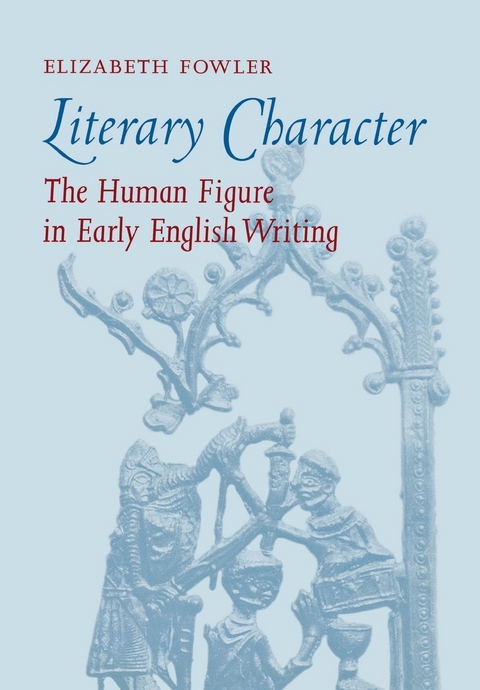
Literary Character (eBook)
280 Seiten
Cornell University Press (Verlag)
978-1-5017-2416-9 (ISBN)
Chaucer introduces the characters of the Knight and the Prioress in the General Prologue to The Canterbury Tales. Beginning with these familiar figures, Elizabeth Fowler develops a new method of analyzing literary character. She argues that words...
Chaucer introduces the characters of the Knight and the Prioress in the General Prologue to The Canterbury Tales. Beginning with these familiar figures, Elizabeth Fowler develops a new method of analyzing literary character. She argues that words generate human figures in our reading minds by reference to paradigmatic cultural models of the person. These models—such as the pilgrim, the conqueror, the maid, the narrator—originate in a variety of cultural spheres. A concept Fowler terms the "social person" is the key to understanding both the literary details of specific characterizations and their indebtedness to history and culture.
Drawing on central texts of medieval and early modern England, Fowler demonstrates that literary characters are created by assembling social persons from throughout culture. Her perspective allows her to offer strikingly original readings of works by Chaucer, Langland, Skelton, and Spenser, and to reformulate and resolve several classic interpretive problems. In so doing, she reframes accepted notions of the process and the consequences of reading.
Developing insights from law, theology, economic thought, and political philosophy, Fowler's book replaces the traditional view of characters as autonomous individuals with an interpretive approach in which each character is seen as a battle of many archetypes. According to Fowler, the social person provides the template that enables authors to portray, and readers to recognize, the highly complex human figures that literature requires.
Chaucer introduces the characters of the Knight and the Prioress in the General Prologue to The Canterbury Tales. Beginning with these familiar figures, Elizabeth Fowler develops a new method of analyzing literary character. She argues that words generate human figures in our reading minds by reference to paradigmatic cultural models of the person. These models—such as the pilgrim, the conqueror, the maid, the narrator—originate in a variety of cultural spheres. A concept Fowler terms the "social person" is the key to understanding both the literary details of specific characterizations and their indebtedness to history and culture.Drawing on central texts of medieval and early modern England, Fowler demonstrates that literary characters are created by assembling social persons from throughout culture. Her perspective allows her to offer strikingly original readings of works by Chaucer, Langland, Skelton, and Spenser, and to reformulate and resolve several classic interpretive problems. In so doing, she reframes accepted notions of the process and the consequences of reading.Developing insights from law, theology, economic thought, and political philosophy, Fowler's book replaces the traditional view of characters as autonomous individuals with an interpretive approach in which each character is seen as a battle of many archetypes. According to Fowler, the social person provides the template that enables authors to portray, and readers to recognize, the highly complex human figures that literature requires.
Elizabeth Fowler is Associate Professor of English at the University of Virginia. She is coeditor of The Project of Prose in Early Modern Europe and the New World, and is a general editor of the forthcoming Works of Edmund Spenser.
| Erscheint lt. Verlag | 5.7.2018 |
|---|---|
| Verlagsort | Ithaca |
| Sprache | englisch |
| Maße | 150 x 150 mm |
| Themenwelt | Literatur ► Essays / Feuilleton |
| Geschichte ► Allgemeine Geschichte ► Mittelalter | |
| Geisteswissenschaften ► Sprach- / Literaturwissenschaft ► Anglistik / Amerikanistik | |
| Geisteswissenschaften ► Sprach- / Literaturwissenschaft ► Literaturwissenschaft | |
| ISBN-10 | 1-5017-2416-9 / 1501724169 |
| ISBN-13 | 978-1-5017-2416-9 / 9781501724169 |
| Informationen gemäß Produktsicherheitsverordnung (GPSR) | |
| Haben Sie eine Frage zum Produkt? |
 PDF (Adobe DRM)
Kopierschutz: Adobe-DRM
Adobe-DRM ist ein Kopierschutz, der das eBook vor Mißbrauch schützen soll. Dabei wird das eBook bereits beim Download auf Ihre persönliche Adobe-ID autorisiert. Lesen können Sie das eBook dann nur auf den Geräten, welche ebenfalls auf Ihre Adobe-ID registriert sind.
Details zum Adobe-DRM
Dateiformat: PDF (Portable Document Format)
Mit einem festen Seitenlayout eignet sich die PDF besonders für Fachbücher mit Spalten, Tabellen und Abbildungen. Eine PDF kann auf fast allen Geräten angezeigt werden, ist aber für kleine Displays (Smartphone, eReader) nur eingeschränkt geeignet.
Systemvoraussetzungen:
PC/Mac: Mit einem PC oder Mac können Sie dieses eBook lesen. Sie benötigen eine
eReader: Dieses eBook kann mit (fast) allen eBook-Readern gelesen werden. Mit dem amazon-Kindle ist es aber nicht kompatibel.
Smartphone/Tablet: Egal ob Apple oder Android, dieses eBook können Sie lesen. Sie benötigen eine
Geräteliste und zusätzliche Hinweise
Buying eBooks from abroad
For tax law reasons we can sell eBooks just within Germany and Switzerland. Regrettably we cannot fulfill eBook-orders from other countries.
aus dem Bereich