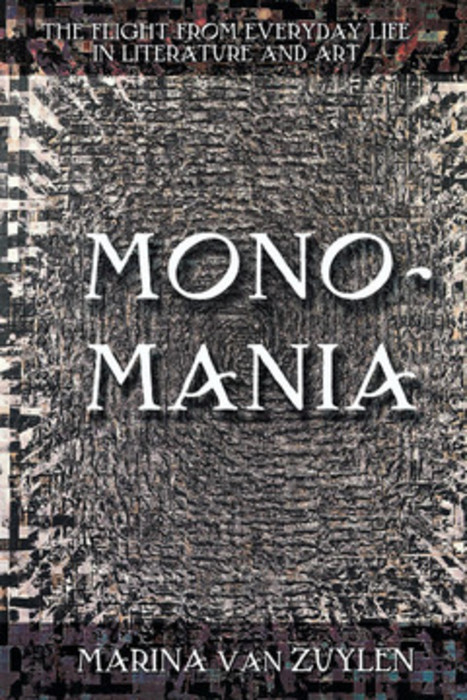
Monomania (eBook)
252 Seiten
Cornell University Press (Verlag)
978-1-5017-1745-1 (ISBN)
"This book is about the obsessive strategies people use to keep the arbitrary out of their lives; it is about the fanaticism and intolerance linked to their ideas of perfection and permanence.... Those readers who have brushed against the dangers...
This book is about the obsessive strategies people use to keep the arbitrary out of their lives; it is about the fanaticism and intolerance linked to their ideas of perfection and permanence.... Those readers who have brushed against the dangers of the idee fixe, who have come close to surrendering to something or someone diabolically seductive or coercive, will recognize in these characters their own encounter with a dangerously systematized world.-From the introduction. Monomania explores the cultural prominence of the idee fixe in Western Europe during the nineteenth and twentieth centuries. Marina van Zuylen revives the term monomania to explore the therapeutic attributes of obsession. She introduces us to artists and collectors, voyeurs and scholars, hypochondriacs and melancholics, whose lives are run by debilitating compulsions that may become powerful weapons against the tyranny of everyday life. In van Zuylen's view, there is a productive tension between disabling fixations and their curative powers; she argues that the idee fixe has acted as a corrective for the multiple disorders of modernity. The authors she studies-Charles Baudelaire, Sophie Calle, Elias Canetti, George Eliot, Gustave Flaubert, and Thomas Mann among them-embody or set in motion different manifestations of this monomaniacal imperative. Their protagonists or alter egos live more intensely, more meaningfully, because of the compulsive pressures they set up for themselves. Monomania shows that transforming life into art, or at least into the artful, drives out the anxiety of the void and puts in its place something so orderly and meaningful that it can take on the aura of a religion.
Marina van Zuylen is Professor of French and Comparative Literature at Bard College. She is the author of Difficulty as an Aesthetic Principle.
| Erscheint lt. Verlag | 31.5.2018 |
|---|---|
| Verlagsort | Ithaca |
| Sprache | englisch |
| Maße | 150 x 150 mm |
| Themenwelt | Literatur ► Essays / Feuilleton |
| Geisteswissenschaften ► Psychologie ► Persönlichkeitsstörungen | |
| Geisteswissenschaften ► Sprach- / Literaturwissenschaft ► Anglistik / Amerikanistik | |
| Geisteswissenschaften ► Sprach- / Literaturwissenschaft ► Literaturgeschichte | |
| Geisteswissenschaften ► Sprach- / Literaturwissenschaft ► Literaturwissenschaft | |
| ISBN-10 | 1-5017-1745-6 / 1501717456 |
| ISBN-13 | 978-1-5017-1745-1 / 9781501717451 |
| Informationen gemäß Produktsicherheitsverordnung (GPSR) | |
| Haben Sie eine Frage zum Produkt? |
 PDF (Adobe DRM)
Kopierschutz: Adobe-DRM
Adobe-DRM ist ein Kopierschutz, der das eBook vor Mißbrauch schützen soll. Dabei wird das eBook bereits beim Download auf Ihre persönliche Adobe-ID autorisiert. Lesen können Sie das eBook dann nur auf den Geräten, welche ebenfalls auf Ihre Adobe-ID registriert sind.
Details zum Adobe-DRM
Dateiformat: PDF (Portable Document Format)
Mit einem festen Seitenlayout eignet sich die PDF besonders für Fachbücher mit Spalten, Tabellen und Abbildungen. Eine PDF kann auf fast allen Geräten angezeigt werden, ist aber für kleine Displays (Smartphone, eReader) nur eingeschränkt geeignet.
Systemvoraussetzungen:
PC/Mac: Mit einem PC oder Mac können Sie dieses eBook lesen. Sie benötigen eine
eReader: Dieses eBook kann mit (fast) allen eBook-Readern gelesen werden. Mit dem amazon-Kindle ist es aber nicht kompatibel.
Smartphone/Tablet: Egal ob Apple oder Android, dieses eBook können Sie lesen. Sie benötigen eine
Geräteliste und zusätzliche Hinweise
Buying eBooks from abroad
For tax law reasons we can sell eBooks just within Germany and Switzerland. Regrettably we cannot fulfill eBook-orders from other countries.
aus dem Bereich