Bridges the gap between the scholarly literature and 'pop-psych' books on EI
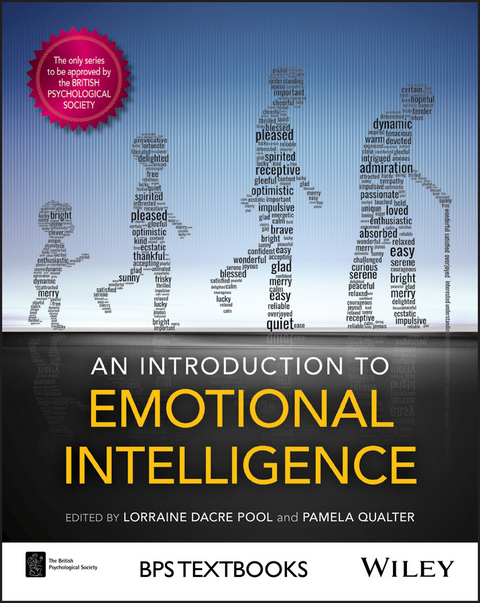
Emotional Intelligence (EI) has become a topic of vast and growing interest worldwide and is concerned with the ways in which we perceive, identify, understand, and manage emotions. It is an aspect of individual difference that can impact a number of important outcomes throughout a person's lifespan. Yet, until now there were no authoritative books that bridge the gap between scholarly articles on the subject, often published in obscure professional journals, and the kind of books found in the 'pop-psych' sections of most large bookstores. This book fills that gap, addressing the key issues from birth through to old age, including the impact of EI on child development, social relationships, the workplace, and health. It is a useful introduction to the academic study of EI, including its history as a concept. Featuring contributions by an international team of EI researchers, this thought provoking and informative book offers students, educators, mental health professionals, and general readers a comprehensive, critical, and accessible introduction to state-of-the-art EI theory and research.
From the historical origins of EI to its contemporary applications across an array of domains, An Introduction to Emotional Intelligence explores what the research evidence tells us about it, why it is important, and how it is measured. Throughout each chapter any potentially tricky words or concepts are highlighted and explained. And, most chapters feature activities to spur further reflection on the subject matter covered as well as ideas on how to apply aspects of EI to various questions or problems arising in the readers' lives.
- Features contributions from expert authors from around the world with experience of researching and teaching EI theory and practice
- Makes EI concepts, foundations, research, and theory accessible to a wider audience of readers than ever before
- Explores EI's roots in psychological thinking dating back to early 20th century and considers the reasons for its widespread popularity in contemporary times
- Reviews the latest research into the constructs of ability EI and trait EI and their validity in relation to health, wellbeing, social relationships, academic, and work performance
An Introduction to Emotional Intelligence is fascinating and informative reading and a source of practical insight for students of psychology, management and leadership, education, social work and healthcare, and those working in education, health settings and in psychological counseling professions.
DR. LORRAINE DACRE POOL is a Chartered Psychologist and Principal Lecturer at the Centre for Excellence in Learning and Teaching, the University of Central Lancashire, Preston, UK. She has a BA in Social Psychology, an MSc in Occupational/Organisational Psychology, and a PhD in Emotional Intelligence and Graduate Employability. PAMELA QUALTER, PhD is Professor of Psychology for Education at Manchester Institute of Education, The University of Manchester, Manchester, UK. She is one of the UK's leading experts in the field of child/adolescent loneliness and is an important researcher of social and emotional skills within education.
List of Contributors vii
List of Figures and Tables xi
Preface: Introduction by the Editors xii
Acknowledgments xvi
Chapter 1 Emotional Intelligence: A Brief Historical Introduction 1
Moshe Zeidner and Gerald Matthews
Chapter 2 Trait and Ability Conceptualizations of Emotional Intelligence 18
Elizabeth J. Austin
Chapter 3 Emotional Self-Efficacy 32
Nicola S. Schutte
Chapter 4 Measuring Emotional Intelligence 44
Luke E. R. Brown, Pamela Qualter, and Carolyn MacCann
Chapter 5 An Overview of Emotional Intelligence in Early Childhood 64
Craig S. Bailey and Susan E. Rivers
Chapter 6 Emotional Intelligence and Emotional Education in the School Years 81
Juan ]Carlos Perez ]Gonzalez and Pamela Qualter
Chapter 7 Emotional Intelligence in Adolescence and Early Adulthood 105
Sarah K. Davis
Chapter 8 Emotional Intelligence in Higher Education 123
Debbie J. Pope and Lorraine Dacre Pool
Chapter 9 Emotional Intelligence and the Workplace 136
Lorraine Dacre Pool
Chapter 10 Emotional Intelligence for Health Care Professions - Professional Compathy 149
Theo Stickley and Dawn Freshwater
Chapter 11 Emotional Intelligence, Stress, and Health: When the Going Gets Tough, the Tough Turn to Emotions 161
Kateryna V. Keefer, Donald H. Saklofske, and James D. A. Parker
Chapter 12 Emotional Intelligence and Ageing 184
Pamela Qualter and Maria Gallagher
References 193
Index 241
List of Contributors
Elizabeth J. Austin is Emerita Professor of Individual Differences and Psychometrics at the University of Edinburgh. Her main research interest is emotional intelligence, especially its “dark side.” Other research interests include personality, coping, and test development. She is currently an associate editor for Personality and Individual Differences and British Journal of Psychology, and has served as a member of the board of directors of the International Society for the Study of Individual Differences (2009‐–2015).
Dr. Craig S. Bailey is an associate research scientist at the Yale Child Study Center and Director of Early Childhood at the Yale Center for Emotional Intelligence. Dr. Bailey and his team facilitate professional development workshops with early childhood educators, develop content for practicing and teaching emotional intelligence, and conduct psychological, educational, and intervention research. Dr. Bailey’s research specializes in children’s social and emotional learning in early childhood classrooms with an emphasis on how teachers support and promote the development of empathy and emotion regulation. With experience as an early childhood educator, Dr. Bailey is passionate about bridging the gap between research and practice.
Luke E. R. Brown is trained as an organizational psychologist, with degrees in psychology from the University of Sydney and the University of New South Wales, Australia. He is interested in the relationship between EI and job performance, including how emotional states and assessment processes might influence this relationship.
Lorraine Dacre Pool is a Chartered Psychologist, Principal Lecturer at the University of Central Lancashire and a Principal Fellow of the Higher Education Academy. She holds a BA in Social Psychology from the University of Sussex, an MSc in Occupational/Organisational Psychology from the University of Manchester and a PhD in Psychology from the University of Central Lancashire. Her work in the field of graduate employability, including the development of the CareerEDGE model, is widely known and she has a particular interest in the role played by Emotional Intelligence. This was the subject of her PhD research, which included the successful design, delivery, and evaluation of a taught module of Emotional Intelligence for students in Higher Education, details of which have been published in the journal Learning and Individual Differences. She delivers workshops on EI for both staff and students and is often invited to speak on the subject at universities throughout the UK.
Dr. Sarah K. Davis is a Senior Lecturer in Applied Psychology at the University of Worcester, UK. Her research focuses on individual differences in development and particularly how emotional intelligence contributes to stressor‐mental health processes.
Dawn Freshwater began her career as a health professional in the UK’s National Health Service in 1980 and became Professor of Mental Health in 2000. She is the former Pro‐Vice Chancellor for Organizational Effectiveness at the University of Leeds and is currently the Vice‐Chancellor at the University of Western Australia. She maintains a strong track record in developing and interrogating methodological approaches that underpin and support research that translates into improved practice in mental health care.
Maria Gallagher interned as a research assistant for Pamela Qualter and worked in geriatric health and social care after graduating with a BSc in Psychology from the University of Central Lancashire in 2015. She assisted Pamela Qualter with her research on adolescent psychology funded by the Economic and Social Research Council (ESRC).
Dr. Kateryna V. Keefer is an Assistant Professor of Psychology at Trent University, Canada. As an emerging scholar, Dr. Keefer has published over 30 journal articles and book chapters and co‐edited the Handbook of Emotional Intelligence in Education. Dr. Keefer’s research focuses on the development, assessment, and applications of socioemotional competencies in the promotion of wellness and resilience across the lifespan. In addition, Dr. Keefer has a strong background in psychological assessment.
Carolyn MacCann is a senior lecturer at the School of Psychology, University of Sydney, Australia. Her research focuses on two main areas: assessment development of emotional intelligence and other noncognitive constructs for selection, training, and diagnostic applications; and examining how emotional intelligence influences the processes underlying emotions and emotion regulation. She has over 60 publications in these areas, and is an associate editor for the European Journal of Psychological Assessment.
Gerald Matthews is a Research Professor at the Institute for Simulation and Training, University of Central Florida. His research focuses on the cognitive science of personality, emotion and human performance. He is the author or co‐editor of 19 books and author or co‐author of over 300 scientific papers and chapters. He is a former President of the International Society for the Study of Individual Differences.
Dr. James D. A. Parker is a Professor of Psychology at Trent University, Canada, and a former Canada Research Chair (Tier II) in Emotion and Health. Dr. Parker has published over 160 journal articles and book chapters on the topics of personality, socioemotional competencies, wellness, and coping. He also co‐developed several widely used measures of these constructs. His most influential books include Disorders of Affect Regulation and the Handbook of Emotional Intelligence.
Dr. Juan‐Carlos Pérez‐González is Associate Professor of Research Methods and Assessment in Education. He researches assessment of emotional intelligence and evaluation of emotional education across the lifespan. He has published over 30 journal articles and taught more than 60 invited lectures, including universities in the USA, United Kingdom, Ecuador and Brazil. He is a fellow of the International Society for the Study of Individual Differences (ISSID) and of the International Society of Research on Emotion (ISRE) and is an Associate Editor of British Journal of Educational Psychology. He works at the Faculty of Education at the National University of Distance Education (UNED) in Madrid, Spain, where he is Founder and Director of EDUEMO Lab (Emotional Education Laboratory).
Dr. Debbie J. Pope is an Associate Lecturer within the School of Psychology, University of Central Lancashire. She works as both an Associate Lecturer and a Disability Needs Assessor for students entering HE. In the past, she has had departmental responsibility for SEN students and the successful transition and retention of students. She currently teaches applied aspects of educational psychology, including the contribution and impact of EI, on both undergraduate and postgraduate courses.
Pamela Qualter is a developmental psychologist researching emotional intelligence in childhood and adolescence. She is also an expert on loneliness across the lifespan. She has published over 50 journal articles and received funding from British funding councils for her work. She is a Professor of Psychology for Education and is an Associate Editor of Personality and Individual Differences, a peer‐reviewed academic journal published by Elsevier and the official journal of the International Society for the Study of Individual Differences. She works at The Manchester Institute of Education at The University of Manchester.
Dr. Susan E. Rivers is Executive Director and Chief Scientist of iThrive, a nonprofit organization committed to empowering teens through great games, where she uses her expertise in emotional intelligence to enhance the social and emotional wellbeing of adolescents by accelerating the development and widespread adoption of interactive, evidence‐based digital products. Prior to joining iThrive, Dr. Rivers served on the research faculty at Yale University for a decade in the Department of Psychology, where she co‐founded the Yale Center for Emotional Intelligence and served as its founding Deputy Director. She devised and co‐developed the RULER framework for teaching emotional intelligence and social and emotional learning, which has reached an estimated 500,000 children in schools across the globe. She also has evaluated the impact of RULER in dozens of schools and published evidence showing its significant positive impacts on students and teachers. Dr. Rivers is a graduate of Skidmore College, earned two master’s degrees and her doctorate in social psychology at Yale University, and was a Visiting Fellow in Human Development at the Department of Human Ecology at Cornell University. She has published and spoken widely on emotional intelligence and social and emotional learning, and the potential for games in promoting positive youth development. Dr. Rivers lives in Newton, MA with her husband and three children, who are avid gamers and burgeoning game developers.
Dr. Donald H. Saklofske is a Professor of Psychology at the University of Western Ontario, Canada. Dr. Saklofske is also a visiting professor at Beijing Normal University, China, an International Research Associate at the University of Florence, Italy, and an adjunct professor at the University of Calgary and University of Saskatchewan, Canada. His research focuses on personality, intelligence, individual differences, and psychological assessment....
| Erscheint lt. Verlag | 18.4.2018 |
|---|---|
| Reihe/Serie | BPS Textbooks in Psychology |
| BPS Textbooks in Psychology | BPS Textbooks in Psychology |
| Sprache | englisch |
| Themenwelt | Geisteswissenschaften ► Psychologie ► Arbeits- und Organisationspsychologie |
| Schlagworte | autism and emotional intelligence • Emotionale Intelligenz • Emotional Intelligence • emotional intelligence and aging • emotional intelligence and health • emotional intelligence and social adjustment • emotional intelligence and socialization • emotional intelligence assessments • emotional intelligence concepts • emotional intelligence examples • Emotional Intelligence explained • emotional intelligence for beginners • emotional intelligence for counseling professionals • emotional intelligence for educators • emotional intelligence for psychotherapists • emotional intelligence for social workers • emotional intelligence guides • emotional intelligence in action • emotional intelligence in children and adolescents • emotional intelligence introduction • emotional intelligence overview • emotional intelligence research • everyday emotional intelligence • frontiers of emotional intelligence • lorraine dacre pool • measuring emotional intelligence • pamela qualter • Personality & Individual Differences • Persönlichkeit • Persönlichkeit u. individuelle Unterschiede • Psychologie • Psychology • what is EI • what is emotional intelligence |
| ISBN-13 | 9781119114420 / 9781119114420 |
| Informationen gemäß Produktsicherheitsverordnung (GPSR) | |
| Haben Sie eine Frage zum Produkt? |
 EPUB (Adobe DRM)
Kopierschutz: Adobe-DRM
Adobe-DRM ist ein Kopierschutz, der das eBook vor Mißbrauch schützen soll. Dabei wird das eBook bereits beim Download auf Ihre persönliche Adobe-ID autorisiert. Lesen können Sie das eBook dann nur auf den Geräten, welche ebenfalls auf Ihre Adobe-ID registriert sind.
Details zum Adobe-DRM
Dateiformat: EPUB (Electronic Publication)
EPUB ist ein offener Standard für eBooks und eignet sich besonders zur Darstellung von Belletristik und Sachbüchern. Der Fließtext wird dynamisch an die Display- und Schriftgröße angepasst. Auch für mobile Lesegeräte ist EPUB daher gut geeignet.
Systemvoraussetzungen:
PC/Mac: Mit einem PC oder Mac können Sie dieses eBook lesen. Sie benötigen eine
eReader: Dieses eBook kann mit (fast) allen eBook-Readern gelesen werden. Mit dem amazon-Kindle ist es aber nicht kompatibel.
Smartphone/Tablet: Egal ob Apple oder Android, dieses eBook können Sie lesen. Sie benötigen eine
Geräteliste und zusätzliche Hinweise
Buying eBooks from abroad
For tax law reasons we can sell eBooks just within Germany and Switzerland. Regrettably we cannot fulfill eBook-orders from other countries.
aus dem Bereich