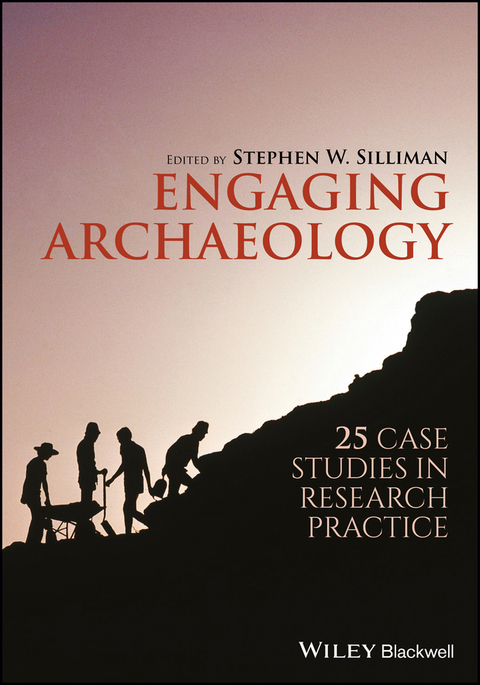
Engaging Archaeology (eBook)
John Wiley & Sons (Verlag)
978-1-119-24052-5 (ISBN)
Bringing together 25 case studies from archaeological projects worldwide, Engaging Archaeology candidly explores personal experiences, successes, challenges, and even frustrations from established and senior archaeologists who share invaluable practical advice for students and early-career professionals engaged in planning and carrying out their own archaeological research.
With engaging chapters, such as 'How Not to Write a PhD Thesis on Neolithic Italy' and 'Accidentally Digging Central America's Earliest Village', readers are transported to the desks, digs, and data-labs of the authors, learning the skills, tricks of the trade, and potential pit-falls of archaeological fieldwork and collections research. Case studies collectively span many regions, time periods, issues, methods, and materials. From the pre-Columbian Andes to Viking Age Iceland, North America to the Middle East, Medieval Ireland to remote north Australia, and Europe to Africa and India, Engaging Archaeology is packed with rich, first-hand source material.
Unique and thoughtful, Stephen W. Silliman's guide is an essential course book for early-stage researchers, advanced undergraduates, and new graduate students, as well as those teaching and mentoring. It will also be insightful and enjoyable reading for veteran archaeologists.
Stephen W. Silliman is Professor - and current Department Chair - in the Department of Anthropology at the University of Massachusetts Boston. He has conducted fieldwork in the Northeastern USA, the American West Coast, Bermuda, and Japan. His research interests focus on Native American history, colonialism and post-colonialism, identity, social and practice theories, collaborative research, and the politics of heritage.
Bringing together 25 case studies from archaeological projects worldwide, Engaging Archaeology candidly explores personal experiences, successes, challenges, and even frustrations from established and senior archaeologists who share invaluable practical advice for students and early-career professionals engaged in planning and carrying out their own archaeological research. With engaging chapters, such as How Not to Write a PhD Thesis on Neolithic Italy and Accidentally Digging Central America's Earliest Village , readers are transported to the desks, digs, and data-labs of the authors, learning the skills, tricks of the trade, and potential pit-falls of archaeological fieldwork and collections research. Case studies collectively span many regions, time periods, issues, methods, and materials. From the pre-Columbian Andes to Viking Age Iceland, North America to the Middle East, Medieval Ireland to remote north Australia, and Europe to Africa and India, Engaging Archaeology is packed with rich, first-hand source material. Unique and thoughtful, Stephen W. Silliman s guide is an essential course book for early-stage researchers, advanced undergraduates, and new graduate students, as well as those teaching and mentoring. It will also be insightful and enjoyable reading for veteran archaeologists.
Stephen W. Silliman is Professor - and current Department Chair - in the Department of Anthropology at the University of Massachusetts Boston. He has conducted fieldwork in the Northeastern USA, the American West Coast, Bermuda, and Japan. His research interests focus on Native American history, colonialism and post-colonialism, identity, social and practice theories, collaborative research, and the politics of heritage.
Title Page 5
Copyright Page 6
Contents 7
List of Figures 11
List of Tables 13
Notes on Contributors 15
Acknowledgments 21
Chapter 1 Engaging Archaeology: An Introduction and a Guide 25
Introduction 25
Archaeological Practice 26
Finding and Filling a Gap 27
A Guide to Engaging Archaeological Research 29
Conclusion 34
References 34
Part I Landscapes, Settlements, and Regions 37
Chapter 2 Climbing Hillforts and Thinking about Warfare in the Pre-Columbian Andes 39
The Hillfort Project: Version One 39
In the Field 41
Theory and Interpretation 42
The Hillfort Project: Version Two 43
Theory and Interpretation: Under the Hood 44
Looking Back 46
Paired Reading 46
References 46
Chapter 3 Losing Control in the American Southwest: Collaborative Archaeology in the Service of Descendant Communities 47
Introduction: The Meeting 47
The Setting: The Valles Caldera/Wavema 49
Finding the Right Data 51
Methods 52
Results 52
Reflections and Lessons Learned 53
Paired Reading 54
References 54
Chapter 4 Getting It Wrong for All the Right Reasons: Developing an Approach to Systematic Settlement Survey for Viking Age Iceland 55
The Idea: The Easy Part 55
The Data: The Hard Part 56
The Grant: The Best One Might Be a Rejected One 58
The Scale: Right Methods, Wrong Organization 59
The Middle Range: Incomplete Data, Incomplete Theory 60
The Conclusion: The Right Way To Be Wrong 61
Paired Reading 62
References 62
Chapter 5 Archaeological Projects in India: Decolonizing Archaeological Research, Assessing Success, and Valuing Failure 65
Retrospective Origins 65
Setting Up the Survey: The Ganeshwar Jodhpura Cultural Complex (GJCC) Survey 66
Decolonizing Archaeological Survey Methods: The GJCC 2003 Survey 67
A Brief Note on the GJCC Survey Results 70
Assessing Success and Valuing Failure 70
Drinking Tea 71
Concluding Thoughts 72
Paired Reading 72
References 73
Chapter 6 Lifeways of the First Australians: Regional Archaeology in the Remote North of Australia 75
Introduction 75
The Project 77
Approach 78
The Excavations 79
Interpreting the Chronological Sequence 79
The Technology 81
Discussion 81
Paired Reading 82
References 82
Chapter 7 The Kuril Biocomplexity Project: Anatomy of an Interdisciplinary Research Program in the North Pacific 85
Introduction 85
Biographical Account 86
Methods 88
Theory 88
Results 89
Reflections 92
Lessons Learned 92
Paired Reading 93
References 93
Chapter 8 Listen for the Echo of Drums Across the Water: Rock Art Sites as Engaged Community Research in Ontario, Canada 95
Prologue 95
The Questions of Rock Art 96
Images and the Experience and Meaning of Place 97
The Social Landscape of a Sacred World 98
Speaking to Strangers 99
Maps and the Meaning of Locative Experience 100
Epilogue 101
Paired Reading 102
References 102
Chapter 9 The Heart of Lightness: Doing Archaeology in the Brazilian Central Amazon 103
Doing Archaeology in the Amazon in the Early 1990s 103
The Central Amazon Project 104
The First Field School Years (1999–2005) 106
The Pipeline Years (2005–2009) 108
Reflections and Lessons Learned 109
Paired Reading 109
References 110
Part II Sites, Households, and Communities 111
Chapter 10 Household Archaeology at the Community Scale?: Refining Research Design in a Complex Polynesian Chiefdom 113
Introduction 113
Project Management for Multi?Year International Collaborative Research 114
Research Questions and Theoretical Framework 114
Linking Arguments: Material Correlates of House Societies 115
Shifting the Research Design and Sampling Protocols 115
Project Results: Successes and a Few Failures 118
Final Commentary 119
Paired Reading 120
References 120
Chapter 11 Research Spaces from Borderland Places – Late Woodland Archaeology in Southern Ontario 123
Introduction 123
Finding a Space for Research 124
Making that Research Space 127
Research Spaces in Borderland Places 130
Paired Reading 131
References 131
Chapter 12 Ethnoarchaeology of Pottery in Tigray, Ethiopia: Engaging with Marginalized People 133
Starting Out: Lessons in Patience 133
The Tigray Pottery Project 134
The Path to the Potters 136
Theory 137
Types of Data 138
Reflections 140
Lessons Learned 140
Paired Reading 141
References 141
Chapter 13 Integrating Paleoethnobotany in Investigations of Spanish: Colonialism in the American Southwest 143
Introduction 143
My Dissertation 144
My Current Research 147
Lessons Learned 149
Paired Reading 150
References 150
Chapter 14 Framing Local History with Global Archaeological Lenses in Osun Grove, Nigeria 151
Short Biographical Account 151
Project Source 152
Theoretical Framework 153
Methods 153
Nature of Data 155
Reflections 156
Lessons Learned 157
Paired Reading 158
References 158
Chapter 15 Rooting in New England: Archaeologies of Colonialism, Community, and Collaboration 159
Trying to Root in New England 159
Project Implementation 161
Making Sense of Things 162
Reflections 164
Lessons Learned 165
Paired Reading 166
References 166
Chapter 16 Accidentally Digging Central America’s Earliest Village 167
Getting to Puerto Escondido: How Research and Researchers Develop 167
The Lower Ulua Valley Project 169
Puerto Escondido: Pursuing the Classic House Compound 170
Unexpected Finds and Modified Research Goals 171
Puerto Escondido: Understanding Everyday Life in a Cosmopolitan Village 172
Reflections and Lessons Learned 173
Paired Reading 174
References 174
Chapter 17 Slouching Towards Theory: Implementing Bioarchaeological Research at Petra, Jordan 175
Short Biographical Account 175
Source of Project 176
Theoretical Framework 177
Methods 179
Nature of Data 180
Reflections 181
Lessons Learned 181
Paired Reading 182
References 182
Chapter 18 In Archaeology, “You Get What You Get,” and Most of the Time What You Get Is Unexpected: Investigating Paleoindians in Western North America 183
Introduction 183
Exploring Bonneville Estates Rockshelter 184
Theoretical Perspective 186
Methods 187
Results 188
Reflections 189
Lessons Learned 190
Paired Reading 190
References 190
Chapter 19 Archaeologies of a Medieval Irish Castle: Thinking about Trim 193
Introduction 193
Asking Questions: Trim Castle as a Research Project 195
Viewing Trim Castle Through Three Lenses: History, Archaeology, Scholarship 196
Question 1: What is the Sequence at Trim Castle? 198
Question 2: How Did Trim Castle “Work”? 199
Final Reflections 200
Paired Reading 200
References 200
Part III Materials, Collections, and Analyses 203
Chapter 20 Dr. Stage-Love, or: How I Learned to Stop Worrying and Love My Dissertation on Race, Pipes, and Classification in the Chesapeake 205
Introduction: The Best Eight Years of Your Life 205
Inspiration 206
Observation 207
Explanation 209
Integration 210
Reflection 211
Paired Reading 212
References 212
Chapter 21 Lessons Learned in Seriating Maya Pottery 213
Introduction 213
Ceramic Seriation: The Basics 214
Ceramic Seriation in the Mopan Valley 217
Conclusions 220
Paired Reading 220
References 221
Chapter 22 The Bones from the Other Tell: Zooarchaeology at Çatalhöyük West 223
Site Background 223
Aims 224
Methods 225
Theoretical Background 225
Getting Involved 226
Settling In 226
Going West 228
Priorities, Priorities 229
Branching Out: Collaborations and Specialist Analyses 229
Regional Meta-Analysis 230
Looking Back 231
Paired Reading 231
References 231
Chapter 23 Disrupting Fixed Narratives: Researching Colonial Dress and Identity in Museum Collections 233
Conducting Research on Seventeenth-Century Stone Molds and How Museums Shape Narratives 233
Some Theory and History Regarding Dress 235
Button Molds in the Museum, Thoughts on Looking and the Disruption of Narratives 237
Lessons Learned and Reflections on Museum Collections 239
Paired Reading 240
References 240
Chapter 24 Reverse Engineering in Prehistory: The Neolithic Bow of La Draga, Spain 243
The Archaeological Site 243
Research Questions 244
The Neolithic Bows from La Draga and the Nature of Archery 245
Replicating Prehistoric Bows 246
Computer Simulation Experiments 247
Lessons Learned 248
Paired Reading 250
References 250
Chapter 25 Learning about Learning in Ice Age France through Stone Tools: An Intersectional Feminist Approach without Gender 251
Biographical Note 251
The Project 252
The Data 254
Reflections and Lessons Learned 256
Paired Reading 257
References 258
Chapter 26 How Not to Write a PhD Thesis: Some Real-Life Lessons from 1990s Michigan and Prehistoric Italy 259
Introduction 259
The Backstory 260
Formulating a Project 260
The Research Design Encounters Reality 262
Habits of Mind and Intellectual Footwork 263
Your Research, Your Self: Intellectual Comfort Zones 265
Conclusions: Surviving a Research Project, and Maybe Even Winding Up on Top 266
Paired Reading 267
References 267
Index 269
EULA 277
"Central to the vibrancy of this collection is voice. The chapters are clearly narratives, not academic tomes." - Canadian Journal of Archaeology/Journal canadien d'archéologie 45:98-100 (2021)
| Erscheint lt. Verlag | 26.1.2018 |
|---|---|
| Sprache | englisch |
| Themenwelt | Geisteswissenschaften ► Archäologie |
| Geschichte ► Allgemeine Geschichte ► Vor- und Frühgeschichte | |
| Schlagworte | Altertum • archaeological accounts • archaeological analysis • archaeological careers • archaeological concepts • Archaeological Method • Archaeological Method and Theory • Archaeological Methods & Theory • archaeological research design • archaeological research strategies • archaeological research techniques • Archaeological Theory • archaeologist experience • archaeology • archaeology field methods • Archaeology Special Topics • Archäologie • life of an archaeologist • Methoden u. Theorie der Archäologie • principles of archaeology archaeologist professional advice • real archaeology • Spezialthemen Archäologie • true archaeology |
| ISBN-10 | 1-119-24052-2 / 1119240522 |
| ISBN-13 | 978-1-119-24052-5 / 9781119240525 |
| Informationen gemäß Produktsicherheitsverordnung (GPSR) | |
| Haben Sie eine Frage zum Produkt? |
 PDF (Adobe DRM)
Kopierschutz: Adobe-DRM
Adobe-DRM ist ein Kopierschutz, der das eBook vor Mißbrauch schützen soll. Dabei wird das eBook bereits beim Download auf Ihre persönliche Adobe-ID autorisiert. Lesen können Sie das eBook dann nur auf den Geräten, welche ebenfalls auf Ihre Adobe-ID registriert sind.
Details zum Adobe-DRM
Dateiformat: PDF (Portable Document Format)
Mit einem festen Seitenlayout eignet sich die PDF besonders für Fachbücher mit Spalten, Tabellen und Abbildungen. Eine PDF kann auf fast allen Geräten angezeigt werden, ist aber für kleine Displays (Smartphone, eReader) nur eingeschränkt geeignet.
Systemvoraussetzungen:
PC/Mac: Mit einem PC oder Mac können Sie dieses eBook lesen. Sie benötigen eine
eReader: Dieses eBook kann mit (fast) allen eBook-Readern gelesen werden. Mit dem amazon-Kindle ist es aber nicht kompatibel.
Smartphone/Tablet: Egal ob Apple oder Android, dieses eBook können Sie lesen. Sie benötigen eine
Geräteliste und zusätzliche Hinweise
Buying eBooks from abroad
For tax law reasons we can sell eBooks just within Germany and Switzerland. Regrettably we cannot fulfill eBook-orders from other countries.
aus dem Bereich