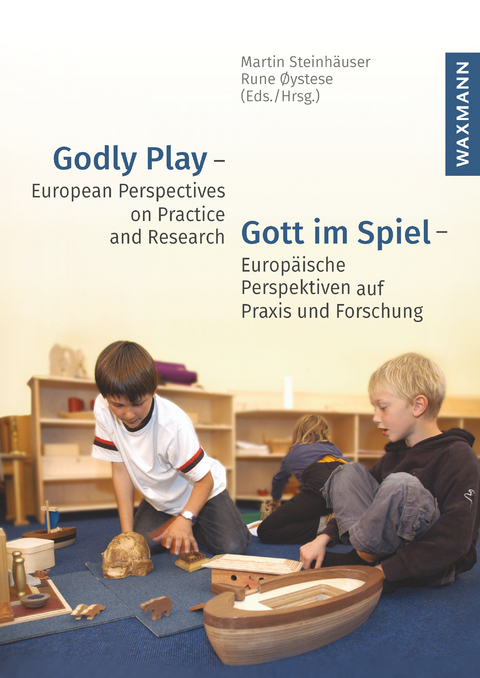
Godly Play - European Perspectives on Practice and Research Gott im Spiel - Europäische Perspektiven auf Praxis und Forschung (eBook)
416 Seiten
Waxmann Verlag GmbH
978-3-8309-8630-0 (ISBN)
Book Cover / Buchtitel 2
Imprint / Impressum 4
Contents/Inhalt 7
Preface 11
Vorwort 12
Introduction 1: Content and Structure of this book (Rune Øystese) 13
1 How this book came about 13
2 Overview of the contents 13
3 How to use this book 17
4 Why this book is bilingual 18
5 About the Modest Aims of this Book 18
Einführung 1: Inhalt und Struktur dieses Buches (Rune Øystese) 20
1 Wie dieses Buch entstand 20
2 Inhaltlicher Überblick 20
3 Zum Gebrauch dieses Buches 25
4 Warum dieses Buch zweisprachig ist 26
5 Die moderaten Intentionen dieses Buches 26
Introduction 2: Research on Godly Play (Martin Steinhäuser) 28
1 Why Research Godly Play? 28
2 Research History and Strategies 32
2.1 Foundational Research by Jerome Berryman 32
2.2 International Research Interests 34
3 Types of Godly Play Research 38
4 Questions and Content 40
Sources/Quellen 42
Appendix 44
Einführung 2: Godly Play und Forschung 46
1 Warum Godly Play beforschen? 47
2 Forschungsgeschichte und Forschungsstrategien 50
2.1 Gründungsforschung und Normative des Erfinders 50
2.2 Internationale Forschungsinteressen 52
3 Richtungen der Beforschung von Godly Play / Gott im Spiel 57
4 Welche Fragen, welche Inhalte? 59
Literatur 62
Part A: Where it all happens – Country Reports 63
The European Growth of Godly Play (Peter Privett) 65
Zusammenfassung 65
1 Beginnings 65
2 Training 67
3 Translation 68
4 Compromise 68
5 Organization and Support 69
6 Challenges 69
References 70
Godly Play in Belarus (Alesya Avsievich and Tanya Manulik) 71
1 General Information 71
2 How Godly Play Came to Belarus 71
3 Godly Play in Belarus today 72
4 Perspectives 73
Godly Play in Belgium (Flanders and Brussels) (Katie Velghe) 74
1 General Information 74
2 How Godly Play Came to Belgium 74
3 Godly Play in Belgium today 74
4 Perspectives 75
Godly Play in the Czech Republic (Petra Bandhauer) 77
1 General Information 77
2 How Godly Play Came to the Czech Republic 77
3 Godly Play in the Czech Republic today 78
4 Perspectives 78
Godly Play in Denmark (Erik Holmgaard) 79
1 General Information 79
2 How Godly Play Came to Denmark 79
3 Godly Play in Denmark today 79
4 Training 79
5 Perspectives 80
Godly Play in Estonia (Eha Kraft, Maria Põldaru, Mari Vahermägi) 81
1 General Information 81
2 How Godly Play Came to Estonia 81
3 Godly Play in Estonia today 82
Godly Play in Finland (Anita Ahtiainen) 83
1 General Information 83
2 How Godly Play Came to Finland 83
3 Godly Play in Finland today 84
4 Outside Finland 85
5 Deep Talk – Spin-off from Godly Play 85
Godly Play in Germany (Martin Steinhäuser) 86
1 General Information 86
2 How Godly Play Came to Germany 86
3 Godly Play in Germany today 87
4 Perspectives 88
Godly Play in Ireland (Kate Cavanagh) 89
1 General Information 89
2 How Godly Play Came to Ireland 89
3 Godly Play in Ireland today 90
4 Perspectives 91
Godly Play in Latvia (Anita Kazaka) 92
1 General Information 92
2 How Godly Play Came to Latvia 92
3 Godly Play in Latvia today 93
4 Perspectives 94
Godly Play in The Netherlands (Christi Loor, Irma Visser) 95
1 General Information 95
2 How Godly Play Came to the Netherlands 95
3 Godly Play in The Netherlands today 96
4 The Future of Godly Play in The Netherlands 97
Godly Play in Norway (Rune Øystese) 98
1 General Information 98
2 How Godly Play Came to Norway 98
3 Organizational Matters 99
4 Challenges 99
5 Perspectives 100
Godly Play in Russia (Asmic Arutyunova, Tuula Valkonen) 101
1 General Information 101
2 How Godly Play Came to Russia 101
3 Godly Play in Russia today 102
4 Perspectives 103
Godly Play in Scotland (Alex Mackenzie) 104
1 General Information 104
2 How Godly Play Came to Scotland 104
3 Godly Play in Scotland today 105
4 Perspectives 105
Godly Play in Spain (David Pritchard) 107
1 General Information 107
2 How Godly Play Came to Spain 107
3 Godly Play España today 108
4 Recent Developments and Perspectives 109
Godly Play in Sweden (Elin Rundh Dapo) 111
1 General Information 111
2 How Godly Play Came to Sweden 111
3 Godly Play in Sweden today 111
4 Perspectives 112
Godly Play in Switzerland (Caroline Baertschi) 113
1 General Information 113
2 Godly Play in Switzerland: A Collection of Stories 114
2.1 French Switzerland: How Godly Play Developed in Geneva 114
2.2 German Switzerland 115
3 Godly Play in Switzerland today: Perspectives 116
Godly Play in the United Kingdom (Peter Privett) 117
1 General Information 117
2 How Godly Play Came to the UK 117
3 Godly Play in the UK today 118
4 Perspectives 119
Where in the World is Godly Play? An Overview of the Global Godly Play Community (Andrew Sheldon) 120
Zusammenfassung 120
1 In the Beginning 120
2 The Second Generation 121
3 To the UK and Europe 122
4 To the Ends of the Earth 122
5 Godly Play and Ecumenism 123
6 The Third Generation 124
7 Where in the World is Godly Play? 124
8 Godly Play: A Global Circle 125
Part B: Foundational Reflections on Theory and Methodology 127
The Integrity of Godly Play as an Object for Research. A Consideration of its Development, Assumptions, and Conceptual Unity (Jerome W. Berryman) 129
Zusammenfassung 129
1 The Opening of the Process: 1960 130
2 Scanning: 1960–1970 130
3 Insight: 1970–1974 131
4 Development: 1974–2017 131
4.1 Implementing Montessori and Cavalletti 131
4.2 William James and the Art of Teaching 133
4.3 Publishing Godly Play Theory 134
4.4 Soft Closure: 2018 135
5 The Scientific Plausibility for Godly Play's Key Assumptions 135
6 What, then, Is the Entity to Be Researched? 137
7 Conclusion 138
References 139
Children's Voice and Theology. Godly Play in a Broader Perspective (Friedrich Schweitzer) 141
Zusammenfassung 141
1 Introduction 141
2 Broadening the Approach: European Perspectives on Godly Play 142
3 Godly Play and Children as Theologians 145
3.1 Theology by Children 145
3.2 Theology with Children 146
3.3 Theology for Children 147
4 Theology of Childhood 148
References 150
„Das war spannend und jetzt fühle ich mich anders.“ Über die gegenseitige Befruchtung von Kindertheologie und Godly Play (´Petra Freudenberger-Lötz) 151
Summary 151
1 Ein Schlüsselerlebnis 151
2 Charakteristika Theologischer Gespräche: ihre Chancen und ihre Grenzen 152
3 Hintergrundwissen: Einbruchstellen des Glaubens 152
3.1 Der Weltbildparadigmenwechsel wird vorgenommen aufgrund des vorherrschenden naturwissenschaftlichen Zugangs zur Welt 153
3.2 Die Religionskritik erwacht aufgrund der Fähigkeit zur Mittelreflexion 153
3.3 Die Theodizeefrage erwacht aufgrund der Erfahrung des Nicht-Eingreifens Gottes 153
4 Godly Play und die Möglichkeit eines neuen Zugangs 154
5 Vergleich der inneren Struktur beider Ansätze 155
5.1 Die Struktur eines Theologischen Gespräches 155
5.2 Die Struktur einer Godly Play Einheit 156
5.3 Sich über die Ergründungsfragen hinaus wagen 158
6 Möglichkeiten der Weiterentwicklung 158
Literatur 160
Kinder als Forschende (Carolin Magdalena Altmann, Johanna Kallies-Bothmann und Marie Sophie Kitzinger) 161
Summary 161
Einleitung 161
1 Zum Forschungsbegriff 161
1.1 Entwicklungspsychologische Einsichten 161
1.2 Konstruktivismus 162
2 Zum Forschungsbegriff aus pädagogischer Sicht 163
2.1 Reformpädagogik/Montessori-Pädagogik 163
2.2 Freinet-Pädagogik 163
2.3 Reggio-Pädagogik 164
2.4 Forschen als menschliche Grundfähigkeit 165
2.5 Beteiligung von Kindern auf der Meta-Ebene 165
2.6 Religionspädagogische Perspektive – Kindertheologie 166
3 Zum Forschungsbegriff aus sozialwissenschaftlich-empirischer Sicht 166
4 Zusammenführung 168
5 Ausblick: Kinder als Forschende in Godly Play 169
Literatur 171
Research on Godly Play. What can be Learned from Montessori Research? (John Chattin-McNichols) 175
Zusammenfassung 175
Introduction 175
1 Research Problems in Montessori 176
2 Categories of Academic Research on Montessori and Analogs for Godly Play 178
3 Teacher or Practitioner Research 179
4 Some Ideas for Qualitative and Quantitative Research on Godly Play 181
4.1 Some Qualitative or Mixed Methods Ideas Include: 181
4.2 Some Quantitative or Mixed Methods Ideas Include: 182
References 183
Die Vorstellung Gottes. Eine phänomenologisch-hermeneutische Studie zum Begriff der Imagination bei Godly Play/Gott im Spiel (Martin Steinhäuser) 184
Summary 184
Einleitung 184
1 Imagination in Aktion – Begriff und Merkmale 185
1.1 Visualität 185
1.2 Innenseite von Erfahrungen 186
1.3 Körperlichkeit 187
1.4 Lösungswege erkunden 188
1.5 Die halbdurchlässige Grenze 189
1.6 Realität kreativ verändern 190
1.7 Die Bedeutung des Anderen 191
2 Imagination in theoretischer Reflexion 192
2.1 Imagination im Konzept von Godly Play 192
2.2 Die Vorstellung Gottes in konzeptioneller Reflexion 193
3 Qualitätsmaßstäbe für die Praxis von Godly Play / Gott im Spiel 197
3.1 Materialien 197
3.2 Sprache 197
3.3 Curriculum 197
3.4 Spiel und kreative Tätigkeit 198
3.5 Stimulierende Haltung 198
Literatur 199
Jesus und die Kinder (Mk 10,13–16parr.) als Begründung des religionspädagogischen Perspektivenwechsels? Eine kritisch-exegetische Studie (Ursula Ulrike Kaiser) 201
Summary 201
1 Hinführung zum Thema 201
2 Die Erzählung von der Kindersegnung und deren interpretative Leerstellen 203
3 Wie ein Kind – Die spezifische Aufnahme von Mk 10,15 in Mt 18,3 206
4 Statusverzicht und die Verheißung des Gottesreiches 207
5 Schluss 209
Literatur 210
Godly Play and the Catechesis of the Good Shepherd. A Theological Comparison (Dominic Black) 211
1 Introduction 211
2 The Development and Dissemination of Godly Play 212
3 Biblical Theology 214
4 A Theocentric Emphasis 216
5 Eschatology 218
6 Conclusions 219
References 219
What Makes Telling Bible Stories Important? (Rune Øystese) 221
Zusammenfassung 221
1 Introduction 221
2 The Alternative to Telling Stories 221
3 Why Tell Stories 222
4 Grand Narratives 224
5 Comparing Narratives 226
5.1 The Secular-Humanist Grand Narrative 226
5.2 The Grand Narrative of Consumerism 227
5.3 The Christian Grand Narrative 227
5.4 The Relationship between the Grand Narratives 228
6 The Ambiguity of a Grand Narrative 228
7 Telling Bible Stories as Part of the Christian Narrative 229
7.1 How do we Tell the Stories as Metaphors, Connecting to Lived Life? 230
7.2 To Promote an Imaginative Process 232
References 232
The Ideal and the Real. Reflections on the Ethics of Communicating the Gospel to Children (Henrik Syse) 234
Zusammenfassung 234
1 Introduction 234
2 Power, Vulnerability, and Authenticity 235
3 Conclusion 237
References 238
Responses to Henrik Syse (Katie Velghe, Christian Kahrs, Juha Luodeslampi) 239
Good Questions – Katie Velghe 239
About Preachers and Presenters – Christian Kahrs 241
Ethical Quality from the Godly Play World – Juha Luodeslampi 244
Respecting Boundaries. Ethical Standards in Theological Research Involving Children (Mirjam Zimmermann) 248
Zusammenfassung 248
1 Introduction: Practical Examples from the Field 248
2 Existing Ethical Guidelines 249
3 Boundaries in Planning Research 252
3.1 Planning the Research Design 252
3.2 Choosing the Methodology: for example, Designing a Questionnaire 254
3.3 Applying for Ethical Clearance 255
4 Boundaries in Collecting Data 256
4.1 Children Are Vulnerable 256
4.2 Children Have Different Competences 257
5 Boundaries in Evaluation: Analysing and Interpreting Data 259
5.1 Reflected Subjectivity 260
5.2 Children as Interpreters 261
6 Boundaries in the Publication of Results 262
6.1 Protecting the Research Participants 262
6.2 Reporting back to Research Respondents 262
7 Conclusions 262
References 263
Participatory Awareness. Researching the Process of Introducing Godly Play in a Church Setting (Martin Steinhäuser) 266
Zusammenfassung 266
1 Before the Research Starts 266
1.1 Leading Hypotheses and Leading Question 266
1.2 Literature Overview of the Leading Hypothesis and Research Question 267
1.3 Interim Result 269
2 Developing and Applying a Design for the Research 269
2.1 Defining a Theoretical and Empirical Frame for the Research 269
2.2 Choosing a Field and Clarifying the Bias 270
2.3 Collecting Data: Using Multiple Methods and Perspectives in a Cumulative Process 272
2.4 Interpreting Data and Aiming at a ‘Grounded Theory’ 274
2.5 Validating the Results 277
3 Summary and Outlook 278
References 279
Part C: Examples of Empirical Research Projects 281
The Desire for God. Irish Children's Voices on Spiritual Education (Cora O'Farrell) 283
Zusammenfassung 283
1 Introduction 283
2 Rationale for the Study 283
3 Context of the Study 284
4 Methodology 285
5 The Research Process and Findings 285
5.1 Phase One of the Research 285
5.2 Phase Two of the Research 286
5.3 Phase Three of the Research 288
6 Conclusion 292
References 292
Experiences of Godly Play in Flanders. Research with Secondary School Adolescents (Annemie Dillen and Jeroen Hendrickx) 293
1 Introduction 293
2 Research Methodology 294
3 Results 295
4 Discussion & Conclusion
References 302
Stalking the Wild Silence. Outline of a Proposed Investigation into Children's Experiences of the Silence Generated by Godly Play (Lisa Debney) 303
Zusammenfassung 303
1 Silence and Godly Play 304
2 So what Elements of Godly Play Invite Silence? 305
3 So what might these Experiences of Silence Offer in the Context of Primary School Education? 306
4 Research Design: Or how to Stalk a Wild Silence 307
References 310
Building the Circle on the Same Eye Level. Inclusive Playfulness in Godly Play (Wolfhard Schweiker and Elke Theurer-Vogt) 311
Zusammenfassung 311
1 Question and Current State of Discussion 311
2 Explorative Study 312
3 Description and Analysis 314
3.1 Building the Circle 314
3.2 Storytelling andWondering 315
3.3 Response Time 316
3.4 The Feast 317
4 Results and Outlook 319
4.1 Nadine and Luis 319
4.2 The Inclusive Group in Large and the Need for Negotiation 319
4.3 Specially Gifted 320
4.4 Necessary Adaptations 320
5 Summary and Outlook 320
References 321
The Parable of the Sower. An Adaptation of the Godly Play Approach on a Psychiatric Unit of a Major Children's Hospital (Ryan Campbell and Cheryl V. Minor) 322
Zusammenfassung 322
1 Introduction 322
2 Theoretical Framework – Why Godly Play? 322
3 How is this Approach Adapted for its Use on the Psychiatric Unit? 323
3.1 Method of Data Collection 324
3.2 The Parable of the Sower: The Story of One Session 324
4 Analysis 326
5 Summary 327
References 328
Leave the Bow Untied. Exploring the Role of Godly Play in Facilitating Spirituality in Adults (Elizabeth Turner) 329
1 Introduction 329
2 Background 329
2.1 Sophisticate Theology 330
2.2 Sacred Space 330
2.3 Layers of Meaning 330
2.4 Sacred Language: Joy 330
3 Methodology 331
4 Results 332
5 Conclusion 332
6 Further Reflection 333
References 333
An Enquiry into the Curatorial of the Eucharist with Children. Children Helping to Make the Worship Happen (Trudie Morris) 335
Zusammenfassung 335
1 Backgrounds and Contexts 335
2 Concepts 335
2.1 Children and Co-curation 335
2.2 The Eucharist and Co-curation 336
3 Research Design and Fieldwork 337
3.1 Method 337
3.2 PAR and Godly Play 338
3.3 Ethical Considerations 339
3.4 Recruitment 339
3.5 Data Collection Methods and Analysis 339
4 Key Findings 340
4.1 Factual Findings 340
4.2 Interpretive and Conceptual Findings 340
5 Conclusion 341
References 341
Part D: Stories from diverse Godly Play Practices 343
The Spiritual Care of Older People in Care Settings. Experiences and Reflections on the Use of Godly Play (Kathryn Lord) 345
Zusammenfassung 345
A Scene to Begin with 345
1 Overarching Question 346
2 Method Structure and Theory 346
2.1 Mutual Blessings 346
2.2 Method: Reflective Debrief 347
2.3 Theory: The Benefits of Godly Play 347
3 Five Questions for Reflective Practice 349
3.1 How can Godly Play be a Ministry of Presence to Older People? 349
3.2 How does Godly Play offer spiritual accompaniment? 349
3.3 How is Godly Play Adapted for the Needs of Older People? 350
3.4 How is Godly Play Adapted to the Environment of a Care Setting? 353
3.5 How can Godly Play Help Change the Culture in Care Settings? 353
4 Perspectives 354
References 354
Upstairs at Holy Trinity. The Story so far (Jeanny Wang) 355
1 How Godly Play Came to Holy Trinity School 355
2 The Context of Godly Play at Holy Trinity School 355
3 Examples of what has Happened in our Godly Play Room 355
3.1 The Children are Able to Bring Deep Personal Needs 356
3.2 The Children Connect theirWondering with Everyday Life 356
3.3 The Children Make Deep Theological Connections 356
3.4 The Children, including Vulnerable Children, are Calm 357
3.5 The Godly Play Room is a Safe Place for Children 357
4 And into the Future 357
Making Godly Play Accessible for a Child with High Functioning Autism, Sensory Processing Disorder, and Severe Anxiety Disorder (Nicola Best in collaboration with Andrea Harrison) 359
1 Oliver 359
2 Coming the First Time 359
3 Preparing for the Next Sessions 359
4 The Second Visit – and onwards 360
Godly Play to Go. A Case Study Using a Portable Godly Play Classroom in a 20 kg Suitcase (Bridget Steenkamp, Angela Symington and Laura Guida) 362
1 Introduction 362
2 Making and Trialling Suitable Materials 362
3 Case Studies 363
3.1 Case Study One 363
3.2 Case Study Two 363
4 Reflections 364
4.1 Benefits 364
4.2 Limitations 365
4.3 Planning Future Child Lead Research 365
5 Conclusion 365
References 366
Rune Øystese: The Best Godly Play Experiences 367
Zusammenfassung 367
1 Introduction 367
2 Method and Bias 368
3 The Storytellers 369
4 The Stories 370
4.1 The Stories about the Best Experiences 371
4.2 The Most Important Experiences 377
5 The Stories that could be Done Without 380
References 380
Part E: Perspectives 381
Godly Play Research in the Future. Challenges and Perspectives (Rune Øystese and Martin Steinhäuser) 383
1 Contributions from Riga and Topics for Further Research 383
1.1 General Questions 383
1.2 Questions of Methodology 384
1.3 Questions of Practice 384
2 The Methodological Outlook 385
2.1 Action Research by Reflective Practitioners (by Martin Steinhäuser) 386
2.2 Case Studies (by Rune Øystese) 389
References 393
Perspektiven der Gott im Spiel-Forschung. Möglichkeiten und Herausforderungen (Rune Øystese und Martin Steinhäuser) 395
1 Erträge aus Riga und weitere Forschungsdesiderate 395
1.1 Grundsatzfragen 396
1.2 Methodische und methodologische Fragen 396
1.3 Fragen der Praxis 397
2 Methodologische Ausblicke 397
2.1 „Action Research“ by „Reflective Practitioners“ / Aktionsforschung durch Gott im Spiel-Erzählerinnen und -Erzähler (von Martin Steinhäuser) 398
2.2 Fallstudien (von Rune Øystese) 401
Literatur 407
List of Contributors 408
| Erscheint lt. Verlag | 1.1.2018 |
|---|---|
| Sprache | deutsch |
| Themenwelt | Geisteswissenschaften |
| ISBN-10 | 3-8309-8630-0 / 3830986300 |
| ISBN-13 | 978-3-8309-8630-0 / 9783830986300 |
| Informationen gemäß Produktsicherheitsverordnung (GPSR) | |
| Haben Sie eine Frage zum Produkt? |
 PDF (Ohne DRM)
Größe: 4,7 MB
Digital Rights Management: ohne DRM
Dieses eBook enthält kein DRM oder Kopierschutz. Eine Weitergabe an Dritte ist jedoch rechtlich nicht zulässig, weil Sie beim Kauf nur die Rechte an der persönlichen Nutzung erwerben.
Dateiformat: PDF (Portable Document Format)
Mit einem festen Seitenlayout eignet sich die PDF besonders für Fachbücher mit Spalten, Tabellen und Abbildungen. Eine PDF kann auf fast allen Geräten angezeigt werden, ist aber für kleine Displays (Smartphone, eReader) nur eingeschränkt geeignet.
Systemvoraussetzungen:
PC/Mac: Mit einem PC oder Mac können Sie dieses eBook lesen. Sie benötigen dafür einen PDF-Viewer - z.B. den Adobe Reader oder Adobe Digital Editions.
eReader: Dieses eBook kann mit (fast) allen eBook-Readern gelesen werden. Mit dem amazon-Kindle ist es aber nicht kompatibel.
Smartphone/Tablet: Egal ob Apple oder Android, dieses eBook können Sie lesen. Sie benötigen dafür einen PDF-Viewer - z.B. die kostenlose Adobe Digital Editions-App.
Buying eBooks from abroad
For tax law reasons we can sell eBooks just within Germany and Switzerland. Regrettably we cannot fulfill eBook-orders from other countries.
aus dem Bereich