


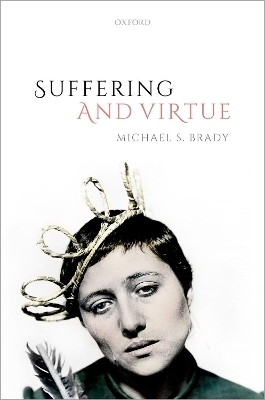
Suffering and Virtue
Seiten
2018
Oxford University Press (Verlag)
978-0-19-881280-7 (ISBN)
Oxford University Press (Verlag)
978-0-19-881280-7 (ISBN)
Why do we suffer? On one reading, this is a question about the causes of physical and emotional suffering. On another, it is a question about whether suffering has a point or purpose or value. Michael Brady's ground-breaking book argues that suffering is vital for the development of virtue, and hence for us to live happy or flourishing lives.
Suffering, in one form or another, is present in all of our lives. But why do we suffer? On one reading, this is a question about the causes of physical and emotional suffering. On another, it is a question about whether suffering has a point or purpose or value. In this ground-breaking book, Michael Brady argues that suffering is vital for the development of virtue, and hence for us to live happy or flourishing lives. After presenting a distinctive account of suffering and a novel interpretation of its core element - unpleasantness - Brady focuses on three claims that are central to his picture. The first is that forms of suffering, like pain and remorse, can themselves constitute virtuous responses. The second is that suffering is essential for four important classes of virtue: virtues of strength, such as fortitude and courage; virtues of vulnerability, such as adaptability and humility; moral virtues, such as compassion; and the practical and epistemic excellences that make up wisdom. His third and final claim is that suffering is vital for the social virtues of justice, love, and trust, and hence for the flourishing of social groups.
Suffering, in one form or another, is present in all of our lives. But why do we suffer? On one reading, this is a question about the causes of physical and emotional suffering. On another, it is a question about whether suffering has a point or purpose or value. In this ground-breaking book, Michael Brady argues that suffering is vital for the development of virtue, and hence for us to live happy or flourishing lives. After presenting a distinctive account of suffering and a novel interpretation of its core element - unpleasantness - Brady focuses on three claims that are central to his picture. The first is that forms of suffering, like pain and remorse, can themselves constitute virtuous responses. The second is that suffering is essential for four important classes of virtue: virtues of strength, such as fortitude and courage; virtues of vulnerability, such as adaptability and humility; moral virtues, such as compassion; and the practical and epistemic excellences that make up wisdom. His third and final claim is that suffering is vital for the social virtues of justice, love, and trust, and hence for the flourishing of social groups.
Michael Brady is Professor of Philosophy at the University of Glasgow, having previously taught at the University of Stirling. His research centres on the philosophy of emotion, and its links with moral philosophy and epistemology. He was Director of the British Philosophical Association, having previously served as Secretary of the Scots Philosophical Association, and he is Philosopher in Residence with Quarantine, the Manchester-based theatre and performance company.
Introduction
1: What Suffering Is
2: The Nature of Unpleasantness
3: Suffering as a Virtuous Motive
4: Suffering and Virtues of Strength and Vulnerability
5: Suffering, Morality, and Wisdom
6: Suffering, Communication, and Social Virtue
| Erscheinungsdatum | 01.08.2018 |
|---|---|
| Verlagsort | Oxford |
| Sprache | englisch |
| Maße | 163 x 241 mm |
| Gewicht | 450 g |
| Themenwelt | Geisteswissenschaften ► Philosophie ► Ethik |
| ISBN-10 | 0-19-881280-9 / 0198812809 |
| ISBN-13 | 978-0-19-881280-7 / 9780198812807 |
| Zustand | Neuware |
| Informationen gemäß Produktsicherheitsverordnung (GPSR) | |
| Haben Sie eine Frage zum Produkt? |
Mehr entdecken
aus dem Bereich



aus dem Bereich
Buch | Hardcover (2025)
Suhrkamp (Verlag)
CHF 32,15


