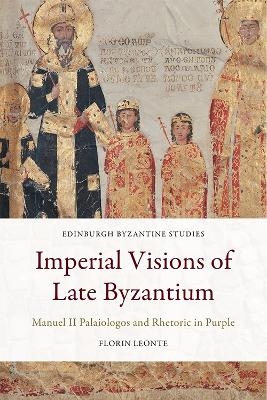
Imperial Visions of Late Byzantium
Edinburgh University Press (Verlag)
978-1-4744-4104-9 (ISBN)
Examines the changes in the Byzantine imperial idea by the end of the fourteenth century with a particular focus on the instrumentalization of the intellectual dimension of the imperial ruleIntegrates late Byzantine imperial visions into the bigger picture of Byzantine imperial ideology Provides a fresh understanding of key pieces of Byzantine public rhetoric and introduces analytical concepts from rhetorical, literary, and discursive theoriesOffers translations of key passages from late Byzantine rhetoric
Manuel II Palaiologos was not only a Byzantine emperor but also a remarkably prolific rhetorician and theologian. His oeuvre included letters, treatises, dialogues, short poems and orations.
Florin Leonte deals with several of his texts shaped by a didactic intention to educate the emperor’s son and successor, John VIII Palaiologos. He argues that the emperor constructed a rhetorical persona which he used in an attempt to compete with other contemporary power-brokers. While Manuel Palaiologos adhered to many rhetorical conventions of his day, he also reasserted the civic role of rhetoric.
With a special focus on the first two decades of Manuel II Palaiologos’ rule, 1391–1417, Leonte offers a new understanding of the imperial ethos in Byzantium by combining rhetorical analysis with investigation of social and political phenomena.
Florin Leonte is Assistant Professor at the Department of Classics, University of Olomouc, Czech Republic. He received his PhD in Byzantine Studies from the Central European University, Budapest. After graduating, he held a number of postdoctoral positions including a two-year lectureship at Harvard University, Department of the Classics, a fellowship at Villa I Tatti, The Research Center for Renaissance Studies in Florence, and a fellowship from the International Society for the History of Rhetoric.
AcknowledgmentsAbbreviationsIntroduction
Part I: Dissent and Consent1. Voices of Dissent: Preaching and Negotiating AuthorityOrganization of the ecclesiastics' groupMajor political and social themes in the ecclesiastics’ writings
2. Voices of Consent: Imperial Rhetoricians, Theatra, and PatronageTheatra and imperial involvementProfile and organization of the rhetoriciansConnections among the members of the literary courtThe rhetorical landscape in the late Palaiologan periodMain themes in the rhetoricians’ writings
Part II: Other Voices, Other Approaches: Manuel II’s Political WritingsIntroduction3. The deliberative voice: The Dialogue with the Empress Mother on MarriageContents and structureGenreConstructing dialogic authority
4. The Didactic Voice: the Foundations of Imperial ConductContext of productionContents and structureGenreAuthorial voice
5. The didactic voice: The Orations (Seven ethical-political orations)IntroductionThe dramatic settingThe contents of the OrationsMajor themes in the OrationsThe contents and form of the orationsBetween teaching and preaching: constructing the genre of the OrationsAuthorial voice: teaching the son and admonishing the emperor
6. The narrative voice: The Funeral Oration on Brother Theodore, Despot of MoreaContexts of productionThe rhetorical template and the compositional structure of the Funeral orationThe narrator and the narrativeAuthorial voice
7. Towards a Renewed Vision of Imperial AuthoritySociety and social "classes"Enemies and alliesMarkers of Byzantine IdentityRenewal of imperial ideology in Manuel's textsManuel II’s Imperial vision and Style of government
AppendicesBibiliographyIndex
| Erscheinungsdatum | 16.08.2020 |
|---|---|
| Reihe/Serie | Edinburgh Byzantine Studies |
| Verlagsort | Edinburgh |
| Sprache | englisch |
| Maße | 156 x 234 mm |
| Themenwelt | Geschichte ► Allgemeine Geschichte ► Vor- und Frühgeschichte |
| Geschichte ► Allgemeine Geschichte ► Altertum / Antike | |
| Geschichte ► Allgemeine Geschichte ► Mittelalter | |
| Geisteswissenschaften ► Geschichte ► Regional- / Ländergeschichte | |
| Geschichte ► Teilgebiete der Geschichte ► Kulturgeschichte | |
| ISBN-10 | 1-4744-4104-1 / 1474441041 |
| ISBN-13 | 978-1-4744-4104-9 / 9781474441049 |
| Zustand | Neuware |
| Informationen gemäß Produktsicherheitsverordnung (GPSR) | |
| Haben Sie eine Frage zum Produkt? |
aus dem Bereich