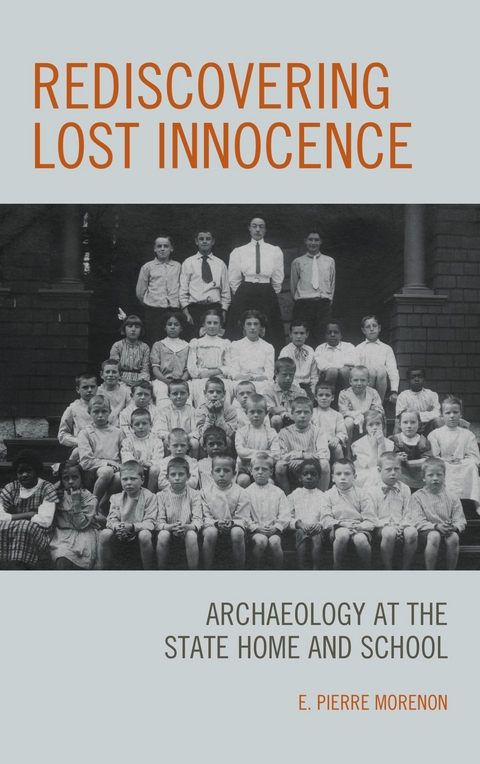
Rediscovering Lost Innocence (eBook)
328 Seiten
Rowman & Littlefield Publishers (Verlag)
978-0-7591-1097-7 (ISBN)
In the first half of the nineteenth-century, responsibility for child care primarily rested within families. Needy children were often cared for by community-sponsored efforts that varied widely in quality, as well as by benevolent organizations dedicated to children's welfare. The late 1800s was marked by major social service infrastructure construction and development. During this period, guided by progressive concerns about the role of the state in responding to societal changes resulting from urbanization and industrialization, Rhode Island took on a more active statewide role in public education, sewers, parks, prisons, and child welfare systems. New ideas about civil rights extended to race, to women, to labor, and to children. Old institutions, such as town almshouses and poor farms, were replaced by state institutions, such as the State Home, which opened in 1885. One might expect to find a huge record for custodial children well imbedded in regional literatures or social science and history texts, yet this is not the case. The State Home Project began in 2001 with no evocative life histories, and no local or regional childhood narratives about the former residents of the State Home upon which to build. It remains an important place because thousands of children and citizens lived portions of their lives there. Documenting children's educational, social and health experiences are not inconsequential. To be sure, varied narratives about custodial children developed as we dug into the soils, read unexamined case histories, and talked with former residents. Archaeology offers the possibility of recovering lost and missing details, and, in collaboration with other disciplines, creates a rich narrative of a place. These experiences were significant in our past; they are important to us in the present and to future generations. They demonstrate our common history.
E. Pierre Morenon professor of anthropology at Rhode Island College, former director of the public archaeology program. He serves as a commissioner on the Rhode Island Historical Preservation and Heritage Commission
1: Forgotten Childhoods 2: Children Lost and Found 3: Child Narratives in Unexamined Records 4: Recording Archaeological Details and Creating New Child Narratives 5: Collaborating 6: Do Archaeologists Overlook Children? 7: Dependent Children in Context 8: Neglected Children as Civic Responsibility 9: From Victorian Landscapes to a Child’s Treatment Center 10: Unearthing Cultural Details 11: Play and Community Relations12: Bureaucracies, Power, and Punishment 13: Why Don’t I Know This? Appendix A: State Home and School Project Timeline (2001–2010) Appendix B: Rhode Island State Home and School/O’Rourke Children’s Center: Oral History ProjectAppendix C: POST-2002 ARCHAEOLOGICAL FIELD PROTOCOL
| Zusatzinfo | 101 Illustrations including: - 2 Black & White Illustrations; - 38 Halftones, Black & White including Black & White Photographs; - 16 Maps; - 35 Tables; - 10 Graphs. |
|---|---|
| Sprache | englisch |
| Themenwelt | Geisteswissenschaften ► Archäologie |
| Geschichte ► Allgemeine Geschichte ► Vor- und Frühgeschichte | |
| Sozialwissenschaften ► Ethnologie | |
| Sozialwissenschaften ► Pädagogik | |
| Sozialwissenschaften ► Soziologie | |
| Schlagworte | American Culture • Anthropology • Applied anthropology • Applied Archaeology • archaeology • Field Archaeology • North American Archaeology • Public History |
| ISBN-10 | 0-7591-1097-2 / 0759110972 |
| ISBN-13 | 978-0-7591-1097-7 / 9780759110977 |
| Informationen gemäß Produktsicherheitsverordnung (GPSR) | |
| Haben Sie eine Frage zum Produkt? |
 EPUB (Adobe DRM)
Kopierschutz: Adobe-DRM
Adobe-DRM ist ein Kopierschutz, der das eBook vor Mißbrauch schützen soll. Dabei wird das eBook bereits beim Download auf Ihre persönliche Adobe-ID autorisiert. Lesen können Sie das eBook dann nur auf den Geräten, welche ebenfalls auf Ihre Adobe-ID registriert sind.
Details zum Adobe-DRM
Dateiformat: EPUB (Electronic Publication)
EPUB ist ein offener Standard für eBooks und eignet sich besonders zur Darstellung von Belletristik und Sachbüchern. Der Fließtext wird dynamisch an die Display- und Schriftgröße angepasst. Auch für mobile Lesegeräte ist EPUB daher gut geeignet.
Systemvoraussetzungen:
PC/Mac: Mit einem PC oder Mac können Sie dieses eBook lesen. Sie benötigen eine
eReader: Dieses eBook kann mit (fast) allen eBook-Readern gelesen werden. Mit dem amazon-Kindle ist es aber nicht kompatibel.
Smartphone/Tablet: Egal ob Apple oder Android, dieses eBook können Sie lesen. Sie benötigen eine
Geräteliste und zusätzliche Hinweise
Buying eBooks from abroad
For tax law reasons we can sell eBooks just within Germany and Switzerland. Regrettably we cannot fulfill eBook-orders from other countries.
aus dem Bereich