


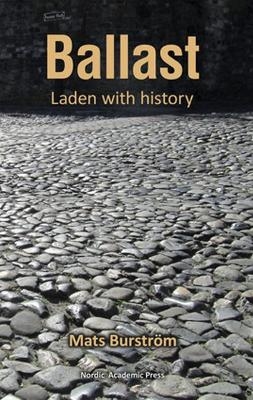
Ballast
Laden with History
Seiten
2017
Nordic Academic Press (Verlag)
978-91-88661-22-7 (ISBN)
Nordic Academic Press (Verlag)
978-91-88661-22-7 (ISBN)
- Titel nicht im Sortiment
- Artikel merken
For centuries ships were ballasted with sand, gravel, stone, or rubble to give them stability, and when they no longer needed the extra weight, it was dumped. In Ballast the archaeologist Mats Burström charts how ship ballast helped to shape the world we live in.
For centuries ships were ballasted with sand, gravel, stone, or rubble to give them stability, and when they no longer needed the extra weight, it was dumped. The result was that huge quantities of ballast were shipped to new places and new continents. In Ballast the archaeologist Mats Burström charts how ship ballast helped to shape the world we live in. Ballast was often reused, sometimes in surprising ways. With the ballast went animal and plant life of all sorts, inadvertently spread to places where they are now so well established that they are thought of as native species. And it was not unknown for ancient artefacts to be found in the ballast too, turning up in the most unexpected places. This is the first comprehensive account of ship ballast, so long overlooked, and now finally recognized for its diverse and exciting history.
For centuries ships were ballasted with sand, gravel, stone, or rubble to give them stability, and when they no longer needed the extra weight, it was dumped. The result was that huge quantities of ballast were shipped to new places and new continents. In Ballast the archaeologist Mats Burström charts how ship ballast helped to shape the world we live in. Ballast was often reused, sometimes in surprising ways. With the ballast went animal and plant life of all sorts, inadvertently spread to places where they are now so well established that they are thought of as native species. And it was not unknown for ancient artefacts to be found in the ballast too, turning up in the most unexpected places. This is the first comprehensive account of ship ballast, so long overlooked, and now finally recognized for its diverse and exciting history.
Mats Burström is professor of Archaeology at Stockholm University, Sweden. He has been instrumental in establishing the archaeological study of the twentieth century as a field of research. His studies within this field include a Nazi propaganda site in Germany, Soviet nuclear missile sites in Cuba, and personal belongings hidden in the ground in Estonia during the Second World War. His academic work is characterized by general references to art and literature.
| Erscheinungsdatum | 31.03.2018 |
|---|---|
| Zusatzinfo | 4 colour |
| Verlagsort | Lund |
| Sprache | englisch |
| Maße | 229 x 152 mm |
| Themenwelt | Geisteswissenschaften ► Archäologie |
| Geisteswissenschaften ► Geschichte ► Hilfswissenschaften | |
| Geisteswissenschaften ► Geschichte ► Teilgebiete der Geschichte | |
| ISBN-10 | 91-88661-22-9 / 9188661229 |
| ISBN-13 | 978-91-88661-22-7 / 9789188661227 |
| Zustand | Neuware |
| Informationen gemäß Produktsicherheitsverordnung (GPSR) | |
| Haben Sie eine Frage zum Produkt? |
Mehr entdecken
aus dem Bereich

aus dem Bereich
die Geburt der Grafiksammlung des Kunstmuseums Stuttgart im …
Buch | Hardcover (2024)
VDG Weimar - Verlag und Datenbank für Geisteswissenschaften
CHF 36,90
kulturelles Erbe und Identität in historischen und jüdischen Museen …
Buch | Hardcover (2025)
De Gruyter Oldenbourg (Verlag)
CHF 41,90
kartografische Wissenskulturen um 1448
Buch | Hardcover (2024)
De Gruyter (Verlag)
CHF 139,90


