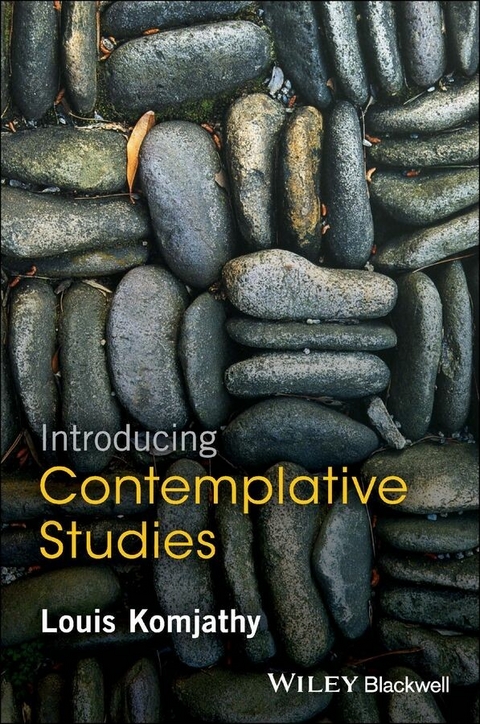
The first book-length introduction to an exciting new interdisciplinary field-written by an internationally recognized leader of the Contemplative Studies movement
This is the first book-length introduction to a growing and influential interdisciplinary field focused on contemplative practice, contemplative experience, and contemplative pedagogy. Written by an internationally recognized leader in the area, Introducing Contemplative Studies seeks to provide readers with a deep and practical understanding of the nature and purpose of the field while encouraging them to find a place of their own in an increasingly widespread movement.
At once comprehensive overview, critical reflection, and visionary proposal, the book explores the central approaches and issues in Contemplative Studies, tackles questions and problems that sometimes go unaddressed, and identifies promising new developments. The author also discusses contemplative pedagogy, an experiential approach to teaching and learning informed by and expressed as contemplative practice.
This is a major introduction to a fast emerging interdisciplinary field that will be invaluable to those interested in the area.
- The only comprehensive introduction to the emerging, interdisciplinary field of Contemplative Studies
- Written by a distinguished leader in the Contemplative Studies movement who is founding Co-Chair of the Contemplative Studies Group of the American Academy of Religion
- Informed by ten years of research and practice, the book explores the field's varied approaches and expressions
- Offers critical reviews of trends which will create discussions both within and outside the Contemplative Studies
- Liberally illustrated with both images and charts
Introducing Contemplative Studies is a must-read for advanced undergraduates, graduate students, teachers and scholars in Contemplative Studies, as well as anyone who is curious about contemplative practice, meditation, contemplative experience, contemplative pedagogy, contemplative science, and, of course, the exciting field of Contemplative Studies generally.
Louis Komjathy is Associate Professor of Theology and Religious Studies at the University of San Diego. He is also founding Co-chair of the Contemplative Studies Group of the American Academy of Religion. He has published widely on contemplative practice both in Daoist contexts and from a comparative perspective, including the recent Contemplative Literature: A Comparative Sourcebook on Meditation and Contemplative Prayer and Taming the Wild Horse: An Annotated Translation and Study of the Daoist Horse Taming Pictures.
The first book-length introduction to an exciting new interdisciplinary field written by an internationally recognized leader of the Contemplative Studies movement This is the first book-length introduction to a growing and influential interdisciplinary field focused on contemplative practice, contemplative experience, and contemplative pedagogy. Written by an internationally recognized leader in the area, Introducing Contemplative Studies seeks to provide readers with a deep and practical understanding of the nature and purpose of the field while encouraging them to find a place of their own in an increasingly widespread movement. At once comprehensive overview, critical reflection, and visionary proposal, the book explores the central approaches and issues in Contemplative Studies, tackles questions and problems that sometimes go unaddressed, and identifies promising new developments. The author also discusses contemplative pedagogy, an experiential approach to teaching and learning informed by and expressed as contemplative practice. This is a major introduction to a fast emerging interdisciplinary field that will be invaluable to those interested in the area. The only comprehensive introduction to the emerging, interdisciplinary field of Contemplative Studies Written by a distinguished leader in the Contemplative Studies movement who is founding Co-Chair of the Contemplative Studies Group of the American Academy of Religion Informed by ten years of research and practice, the book explores the field s varied approaches and expressions Offers critical reviews of trends which will create discussions both within and outside the Contemplative Studies Liberally illustrated with both images and charts Introducing Contemplative Studies is a must-read for advanced undergraduates, graduate students, teachers and scholars in Contemplative Studies, as well as anyone who is curious about contemplative practice, meditation, contemplative experience, contemplative pedagogy, contemplative science, and, of course, the exciting field of Contemplative Studies generally.
Louis Komjathy is Associate Professor of Theology and Religious Studies at the University of San Diego. He is also founding Co-chair of the Contemplative Studies Group of the American Academy of Religion. He has published widely on contemplative practice both in Daoist contexts and from a comparative perspective, including the recent Contemplative Literature: A Comparative Sourcebook on Meditation and Contemplative Prayer and Taming the Wild Horse: An Annotated Translation and Study of the Daoist Horse Taming Pictures.
Preface ix
Acknowledgments xi
List of Figures and Tables xv
Abbreviations xvii
Introduction 1
1 Contemplative Studies 13
2 Contemplative Practice 5 1
3 Contemplative Experience 87
4 Contemplative Traditions 123
5 Contemplative Pedagogy 159
6 Interpretive Approaches 201
7 Current Trends 237
8 Future Prospects 275
Glossary 311
Bibliography 321
Index 355
Introduction
Here is the first book‐length introduction to Contemplative Studies (CS; COST), which is an emerging interdisciplinary field dedicated to research and education on contemplative practice and contemplative experience, including the possible relevance and application to a wide variety of undertakings. Contemplative practice, especially meditation, in a modern context has become embraced by people of every possible persuasion and social location. There are now contemplatives and contemplative communities that are both rooted in and independent of more encompassing religious traditions. Contemplative Studies aims to study and understand these and related phenomena. Contemplative research is now being conducted from various disciplinary perspectives, and contemplative pedagogy is being used throughout every level of the American educational system and beyond.
Given the recent pedigree of Contemplative Studies, which formally emerged in the early 2000s and only became fully established in the last five years or so, this book may be seen as a strange and complex undertaking. It attempts to describe a field that, in a certain sense, only exists in a nascent form and approximate expressions. So, it could be argued that I am creating a field, rather than describing one. While I do not believe this, it is a legitimate concern, and perhaps a viable criticism.
My decision to write the present book involved a great amount of reflection, not to mention wide‐ranging research, and it was not undertaken lightly. My intention is rooted in both a strong conviction in the importance of the field, including its transformative potential in various areas of inquiry, and an aspiration to move the field forward. It might be seen as a contemplative exercise in itself, both in terms of its expression and its engagement. It offers opportunities for reflection and challenges for clarification, and perhaps even inspiration for participation and adaptation. My own process of writing resulted in some serious reservations and identification of areas requiring revision.
Initially, I had imagined a book that might be comparable to Francis X. Clooney’s Comparative Theology (2010a), also published by Wiley‐Blackwell as an introduction to the associated field. However, these areas of inquiry are radically different, including in terms of origins, development, interests, and expressions. Clooney had, moreover, been a founding figure and primary exponent of the field for almost 20 years when he wrote that book. He had even witnessed the emergence of the “next generation” of comparative theologians, some of whom were trained by Clooney himself. In the present case, representatives of Contemplative Studies are still establishing the parameters of the field, discussing definitional issues, developing critical lexicons, exploring interpretive approaches, and working to create viable models and programs. Generally speaking, we have yet to see more critical engagements and “meta” reflections, ones attentive to various unquestioned assumptions, ingrained opinions, and unrecognized biases. Thus, the present book is at once comprehensive overview, critical reflection, and visionary proposal, with the latter dimension being particularly problematic. In a field that is only emerging, and still requiring reflective revision, how can one offer a “new vision”? One answer is that involvement with the field and thinking through its current expressions and underdeveloped possibilities opens up new vistas, if only vaguely perceived at the present moment. Nonetheless, other CS representatives probably would have written different accounts, and this presentation may be unrecognizable to some. In fact, I am aware that parts of my account will no doubt be disturbing, and may disturb the apparent “stability” of the field. While it contains critical reflections, it is primarily intended to establish a more viable and convincing, more sophisticated and integrated field. This is one in which the foundations are solid and may endure.
The book is informed by my involvement as a participating member in the field for about eight years. During this time, I helped to establish the Contemplative Studies Group of the American Academy of Religion (2010), of which I am the founding co‐chair. I have also been working to create an interdisciplinary program and center of Contemplative Studies. This work has involved a variety of on‐campus public lectures on contemplative education, collaborative relationships with colleagues, as well as participation in the Contemplative Pedagogy Professional Learning Community (PLC) at the University of San Diego. It has also raised questions about Contemplative Studies undertaken at a religiously affiliated (“sectarian” or “church‐based”) university, specifically one with Roman Catholic commitments. I see this as a unique institutional location in the larger field, one in which religious practice, religious values, and theological inquiry are acceptable and compatible.1 As mentioned in the acknowledgments, I have also had the good fortune to present my views and approach at various universities and in the associated CS programs. The opportunity to discuss the field with faculty, students, and participants over informal meals and coffee/tea meetings has clarified my perspective. Along these lines, I have benefited from various “colleagues” who expressed reservations and constantly pointed out the “problematic,” even “dangerous,” nature of the field, all the while avoiding reflection on their own biases.2 More importantly, this account has been informed by my participation in the Cultural Histories of Meditation conference (2010) through the University of Oslo, the first International Symposium for Contemplative Studies (2012) through the Mind & Life Institute, and the Ninth Annual Summer Session on Contemplative Pedagogy (2013) through the Association for Contemplative Mind in Higher Education of the Center for Contemplative Mind in Society. In short, I have had at least some experience with most of the major CS gatherings. This is not to mention attendance of many public lectures by key CS representatives. However, I attended not simply as a participant, but also as an ethnographer, as a “participant‐observer.” Readers will, in turn, find various “field observations” in my account. Such a “meta” approach was partially encouraged by Clifford Saron of the University of California, Davis, who himself has expressed reservations about the popular construction of “mindfulness” and invocation of the supposed “scientific benefits of meditation.” In his own words, “Science is inherently contemplative. But discussions of the ‘neuroscience of meditation’ often obscure the profundity of both neuroscience and meditation” (pers. comm.). Finally, this book draws upon my role as the principal organizer of the Conference on Contemplative Studies (2014), which was held at the University of San Diego. As discussed in subsequent chapters, this conference was my attempt to foster a truly interdisciplinary approach and ideally to provide a model for further collaboration. Like the present book, it aspired to encourage greater engagement and integration.
Herein I have worked hard to present a relatively descriptive, inclusive, and neutral account. I have attempted to recognize and honor the contributions of various expressions of the field, among individuals, organizations, programs, and other activities. That is, I have endeavored to avoid privileging any specific expression, including my own. I also am not endorsing any individuals, organizations, programs, approaches, or practices. Individuals must follow their own affinities and discernment, and ideally formal training, in determining what is appropriate. While one finds self‐serving and self‐justifying narratives in certain recent publications, ones in which the associated project is framed as “authoritative” or “representative,” the field of Contemplative Studies is diverse, decentralized, and experimental. There is no single or dominant model or authority, although there are some influential expressions, recurring patterns, and emerging trends. Thus, any attempt to discuss the field requires attentiveness and may prove problematic, if not wholly flawed. We are, nonetheless, in need of a comprehensive, representative, and integrated discussion of the field, including a “generous reading” and “critical evaluation” of the contributions and limitations of its various expressions. This is what Introducing Contemplative Studies (ICS) aspires to do.
While I have endeavored to be relatively neutral, especially in my initial presentation of a given articulation, I am not neutral with respect to my own positionality and participation. Thus I should be clear about my own interests and commitments, ones that have at least partially influenced my presentation. Perhaps in a manner paralleling the confessional methodology utilized by certain theologians, one in which “self‐contextualization” is involved, some reference to my own location and views is in order. This may be seen as an expression of the “critical subjectivity” that Contemplative Studies explores and often advocates.
I am a teacher‐scholar of Daoist Studies and Religious Studies. As such, I am concerned about the privileging of Buddhism and the lack of attention to “underrepresented contemplative traditions” in...
| Erscheint lt. Verlag | 8.11.2017 |
|---|---|
| Sprache | englisch |
| Themenwelt | Geisteswissenschaften ► Religion / Theologie ► Weitere Religionen |
| Schlagworte | all about contemplative studies • Cognitive Practice • Cognitive Psychology • Comparative & World Religions • Consciousness studies • Contemplative Art • contemplative dance • contemplative education programs • contemplative medicine • contemplative mind • contemplative movement awareness • contemplative pedagogy • contemplative practice in education • contemplative practice in everyday life • contemplative studies and religion • contemplative studies controversies • contemplative studies foundations • contemplative studies handbook • contemplative studies introduction • contemplative studies movement • contemplative studies organizations • contemplative studies research • contemplative studies websites • contemplative therapy • creativity and consciousness studies • Integral Studies • Mind and Brain • Mind-body Awareness • mind-body studies • Mindfulness • mysticism studies • Neuroscience • neuroscientific studies of buddhist meditation • noetic sciences • Religion & Theology • Religionswissenschaft • Religion u. Theologie • Religious Studies • Vergleichende Religionswissenschaft • what is contemplative studies |
| ISBN-13 | 9781119156727 / 9781119156727 |
| Informationen gemäß Produktsicherheitsverordnung (GPSR) | |
| Haben Sie eine Frage zum Produkt? |
 EPUB (Adobe DRM)
Kopierschutz: Adobe-DRM
Adobe-DRM ist ein Kopierschutz, der das eBook vor Mißbrauch schützen soll. Dabei wird das eBook bereits beim Download auf Ihre persönliche Adobe-ID autorisiert. Lesen können Sie das eBook dann nur auf den Geräten, welche ebenfalls auf Ihre Adobe-ID registriert sind.
Details zum Adobe-DRM
Dateiformat: EPUB (Electronic Publication)
EPUB ist ein offener Standard für eBooks und eignet sich besonders zur Darstellung von Belletristik und Sachbüchern. Der Fließtext wird dynamisch an die Display- und Schriftgröße angepasst. Auch für mobile Lesegeräte ist EPUB daher gut geeignet.
Systemvoraussetzungen:
PC/Mac: Mit einem PC oder Mac können Sie dieses eBook lesen. Sie benötigen eine
eReader: Dieses eBook kann mit (fast) allen eBook-Readern gelesen werden. Mit dem amazon-Kindle ist es aber nicht kompatibel.
Smartphone/Tablet: Egal ob Apple oder Android, dieses eBook können Sie lesen. Sie benötigen eine
Geräteliste und zusätzliche Hinweise
Buying eBooks from abroad
For tax law reasons we can sell eBooks just within Germany and Switzerland. Regrettably we cannot fulfill eBook-orders from other countries.
aus dem Bereich