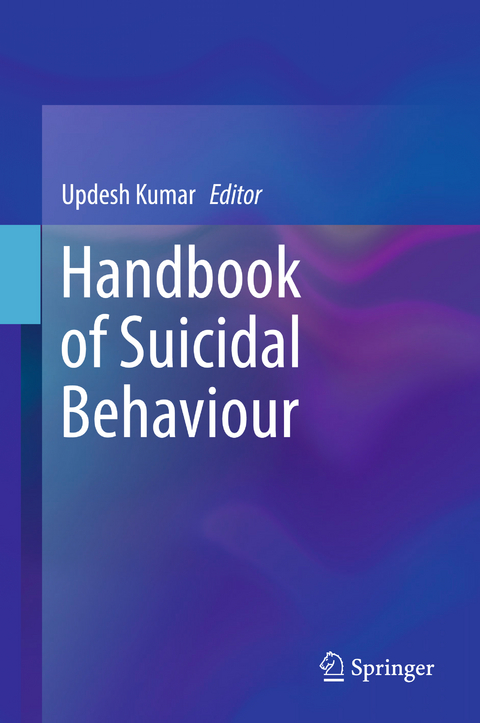
Handbook of Suicidal Behaviour (eBook)
XXXIX, 557 Seiten
Springer Singapore (Verlag)
9789811048166 (ISBN)
This essential reference volume in the field of suicidology brings forth leading-edge conceptualizations of suicidal behaviour by including emerging trends and recent research advances in the field across the globe. It highlights the trajectories of suicidal behaviour, emphasizing the psyche behind attempting suicide, identifying vulnerable groups, and bridging the gap between theoretical underpinnings and application for addressing the aftermath of suicide. The handbook delineates research progress on risk assessment among vulnerable groups of varied milieu. Furthermore, it introduces various avenues of change and well-being. It also addresses important concerns related to terrorism and suicide in the armed forces.
This handbook is a comprehensive repository of the latest research synergized with theoretical conceptualizations that pave the way for newer approaches towards management and prevention of suicidal behaviour. It includes contributions by eminent authors across the globe, and is a must-have resource for scholars, academics and professionals in the areas of mental health and social work.
This essential reference volume in the field of suicidology brings forth leading-edge conceptualizations of suicidal behaviour by including emerging trends and recent research advances in the field across the globe. It highlights the trajectories of suicidal behaviour, emphasizing the psyche behind attempting suicide, identifying vulnerable groups, and bridging the gap between theoretical underpinnings and application for addressing the aftermath of suicide. The handbook delineates research progress on risk assessment among vulnerable groups of varied milieu. Furthermore, it introduces various avenues of change and well-being. It also addresses important concerns related to terrorism and suicide in the armed forces. This handbook is a comprehensive repository of the latest research synergized with theoretical conceptualizations that pave the way for newer approaches towards management and prevention of suicidal behaviour. It includes contributions by eminent authors acrossthe globe, and is a must-have resource for scholars, academics and professionals in the areas of mental health and social work.
Updesh Kumar, Ph.D., is Scientist ‘G’ and Head of the Mental Health Division at the Defence Institute of Psychological Research (DIPR), Defence Research and Development Organization, Ministry of Defence, India. His publications include Suicidal Behaviour: Assessment of People-at-Risk (Sage, 2010); Countering Terrorism: Psychosocial Strategies (Sage, 2012); Understanding Suicide Terrorism: Psychosocial Dynamics (Sage, 2014); Suicidal Behaviour: Underlying Dynamics (Routledge, 2015); Positive Psychology: Applications in Work, Health and Well-being (Pearson Education, 2015); The Wiley Handbook of Personality Assessment (John Wiley & Sons, 2016 and most recently The Routledge International Handbook of Psychosocial Resilience (Routledge, 2016). Among many achievements, he was conferred the DRDO’s Best Popular Science Communication Award-2009 by Hon’ble Defence Minister of India and the prestigious DRDO’s Scientist of the Year Award-2013 by the Indian government.
Part I : Deconstructing the Phenomenon of Suicide 1. Theorising Suicide: Multiple Perspectives and Implications for Prevention- 2. Suicide in Ancient Hindu Scriptures: Condemned or Glorified?.- 3. “To Life”: Biblical Narratives, Positive Psychology and Suicide-Prevention.- 4. Genetic Basis of Suicidal Behaviour- 5. Impulsivity and Decision-Making and Their Role in Suicidal Behaviour.- 6. Gender Disparities, Mental Health Complexities and Social Connectedness: Exploring an Integrative Approach towards Suicidal Behaviour.- 7. Suicide as a Response to Trauma.- 8. The Decision Science of Self Sacrifice for a Greater Cause.- Part II: Risk Appraisal and Vulnerable Groups 9. Recognizing Persons At-Risk for Suicidal Behaviour in Clinical Setting.- 10. Suicidal Crises: The Clinical and Research Implications of Overlooking the Role of Suicidal Reactivity.- 11. Lethal Means Restriction: Historical, International, and Professional Considerations.- 12. Dissociation and Habituation as a Facilitating Processes among Suicidal Behaviours.- 13. Indirect Self-Destructive Behaviours and Suicide.- 14. Suicidal Behaviour in the African American Communities and other High Risk Groups.- 15. Suicidal Ideation in Adolescents – A Transcultural Analysis.- 16. Geriatric Suicide: Suicide as a Road to Relief or Release.- 17. Substance Abuse and Suicidal Behaviour.- 18. Antidepressants and Suicide Risk: Neither Harmful nor Useful.- 19. Chronic Suicidality and Personality Disorders.- 20. The Process of Bereavement for Suicide Survivors and Postvention.- Part III: Intervention and Prevention 21. Mapping Concepts and Weaving Field Narratives of Tragic Loss.- 22. Spirituality, Religion and Suicide.- 23. Suicide Through The Lens Of Positive Psychology.- 24. Crisis Theory and Intervention Strategies as a Way to Mitigate Suicide Risk.- 25. Psychological Intervention for Suicidal Patients.- 26. Using Acceptance and Commitment Therapy to Understand and Prevent Suicide.- 27. Attachment-Based Family Therapy for Depressed and Suicidal Adolescents: Development, Research and Clinical Practice.- 28. Addressing Suicides in Special Operations Forces: Enhancing Resilience in a Unique Population.- 29. Innovations in Military & Veteran Suicide Prevention.
| Erscheint lt. Verlag | 26.10.2017 |
|---|---|
| Zusatzinfo | XXXIX, 557 p. 13 illus., 9 illus. in color. |
| Verlagsort | Singapore |
| Sprache | englisch |
| Themenwelt | Geisteswissenschaften ► Psychologie ► Klinische Psychologie |
| Medizin / Pharmazie ► Medizinische Fachgebiete ► Psychiatrie / Psychotherapie | |
| Recht / Steuern ► Strafrecht ► Kriminologie | |
| Sozialwissenschaften ► Politik / Verwaltung | |
| Schlagworte | adolescent self-harm and suicide • comorbidity • depression and suicide • Family Therapy • geriatric suicide • military suicides • personality disorders • rehabilitation psychology • risk assessment • Self-injury • substance abuse and suicide • suicide in professions • suicide risk • suicide survivors • suicidology • terrorism and suicide • vulnerability to suicide • wellbeing and suicide prevention |
| ISBN-13 | 9789811048166 / 9789811048166 |
| Informationen gemäß Produktsicherheitsverordnung (GPSR) | |
| Haben Sie eine Frage zum Produkt? |
 PDF (Wasserzeichen)
DRM: Digitales Wasserzeichen
Dieses eBook enthält ein digitales Wasserzeichen und ist damit für Sie personalisiert. Bei einer missbräuchlichen Weitergabe des eBooks an Dritte ist eine Rückverfolgung an die Quelle möglich.
Dateiformat: PDF (Portable Document Format)
Mit einem festen Seitenlayout eignet sich die PDF besonders für Fachbücher mit Spalten, Tabellen und Abbildungen. Eine PDF kann auf fast allen Geräten angezeigt werden, ist aber für kleine Displays (Smartphone, eReader) nur eingeschränkt geeignet.
Systemvoraussetzungen:
PC/Mac: Mit einem PC oder Mac können Sie dieses eBook lesen. Sie benötigen dafür einen PDF-Viewer - z.B. den Adobe Reader oder Adobe Digital Editions.
eReader: Dieses eBook kann mit (fast) allen eBook-Readern gelesen werden. Mit dem amazon-Kindle ist es aber nicht kompatibel.
Smartphone/Tablet: Egal ob Apple oder Android, dieses eBook können Sie lesen. Sie benötigen dafür einen PDF-Viewer - z.B. die kostenlose Adobe Digital Editions-App.
Buying eBooks from abroad
For tax law reasons we can sell eBooks just within Germany and Switzerland. Regrettably we cannot fulfill eBook-orders from other countries.
aus dem Bereich