


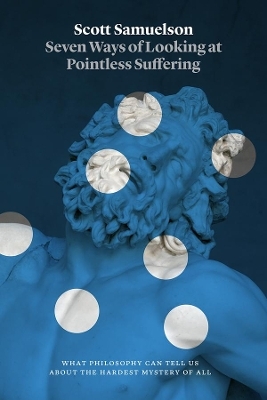
Seven Ways of Looking at Pointless Suffering
What Philosophy Can Tell Us about the Hardest Mystery of All
Seiten
2018
University of Chicago Press (Verlag)
978-0-226-40708-1 (ISBN)
University of Chicago Press (Verlag)
978-0-226-40708-1 (ISBN)
By engaging with thinkers such as Mill, Nietzsche, Arendt, and others, reading Job with inmates at local prisons, and showing how musical genres like jazz and blues harness the beauty and agony of suffering, Samuelson invites us to see how philosophy can help us understand suffering.
It's right there in the Book of Job: "Man is born unto trouble as the sparks fly upward." Suffering is an inescapable part of the human condition--which leads to a question that has proved just as inescapable throughout the centuries: Why? Why do we suffer? Why do people die young? Is there any point to our pain, physical or emotional? Do horrors like hurricanes have meaning?
In Seven Ways of Looking at Suffering, Scott Samuelson tackles that hardest question of all. To do so, he travels through the history of philosophy and religion, but he also attends closely to the real world we live in. While always taking the question of suffering seriously, Samuelson is just as likely to draw lessons from Bugs Bunny as from Confucius, from his time teaching philosophy to prisoners as from Hannah Arendt's attempts to come to terms with the Holocaust. He guides us through the arguments people have offered to answer this fundamental question, explores the many ways that we have tried to minimize or eliminate suffering, and examines people's attempts to find ways to live with pointless suffering. Ultimately, Samuelson shows, to be fully human means to acknowledge a mysterious paradox: we must simultaneously accept suffering and oppose it. And understanding that is itself a step towards acceptance.
Wholly accessible, and thoroughly thought-provoking, Seven Ways of Looking at Suffering is a masterpiece of philosophy, returning the field to its roots--helping us see new ways to understand, explain, and live in our world, fully alive to both its light and its darkness.
It's right there in the Book of Job: "Man is born unto trouble as the sparks fly upward." Suffering is an inescapable part of the human condition--which leads to a question that has proved just as inescapable throughout the centuries: Why? Why do we suffer? Why do people die young? Is there any point to our pain, physical or emotional? Do horrors like hurricanes have meaning?
In Seven Ways of Looking at Suffering, Scott Samuelson tackles that hardest question of all. To do so, he travels through the history of philosophy and religion, but he also attends closely to the real world we live in. While always taking the question of suffering seriously, Samuelson is just as likely to draw lessons from Bugs Bunny as from Confucius, from his time teaching philosophy to prisoners as from Hannah Arendt's attempts to come to terms with the Holocaust. He guides us through the arguments people have offered to answer this fundamental question, explores the many ways that we have tried to minimize or eliminate suffering, and examines people's attempts to find ways to live with pointless suffering. Ultimately, Samuelson shows, to be fully human means to acknowledge a mysterious paradox: we must simultaneously accept suffering and oppose it. And understanding that is itself a step towards acceptance.
Wholly accessible, and thoroughly thought-provoking, Seven Ways of Looking at Suffering is a masterpiece of philosophy, returning the field to its roots--helping us see new ways to understand, explain, and live in our world, fully alive to both its light and its darkness.
Scott Samuelson has taught philosophy to a wide range of people, including at Kirkwood Community College and the Iowa Medical and Classification Center (Oakdale Prison).A He is the author of The Deepest Human Life: An Introduction to Philosophy for Everyone.
| Erscheinungsdatum | 25.04.2018 |
|---|---|
| Sprache | englisch |
| Maße | 152 x 229 mm |
| Themenwelt | Geisteswissenschaften ► Philosophie ► Allgemeines / Lexika |
| ISBN-10 | 0-226-40708-X / 022640708X |
| ISBN-13 | 978-0-226-40708-1 / 9780226407081 |
| Zustand | Neuware |
| Informationen gemäß Produktsicherheitsverordnung (GPSR) | |
| Haben Sie eine Frage zum Produkt? |
Mehr entdecken
aus dem Bereich



aus dem Bereich
die letzten Jahre der Philosophie und der Beginn einer neuen …
Buch | Hardcover (2024)
Klett-Cotta (Verlag)
CHF 39,20


