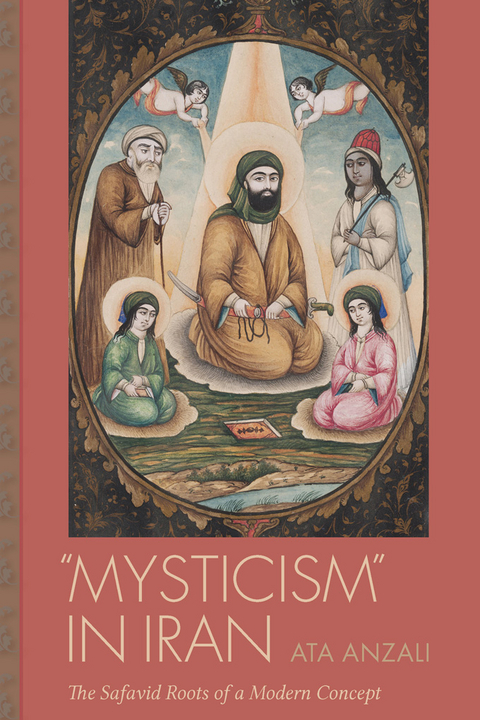
Mysticism in Iran (eBook)
292 Seiten
University of South Carolina Press (Verlag)
978-1-61117-808-1 (ISBN)
An original study of the transformation of Safavid Persia from a majority Sunni country to a Twelver Shi'i realm
An original study of the transformation of Safavid Persia from a majority Sunni country to a Twelver Shi'i realm
"Mysticism" in Iran is an in-depth analysis of significant transformations in the religious landscape of Safavid Iran that led to the marginalization of Sufism and the eventual emergence of 'irfan as an alternative Shi'i model of spirituality.
Ata Anzali draws on a treasure-trove of manuscripts from Iranian archives to offer an original study of the transformation of Safavid Persia from a majority Sunni country to a Twelver Shi'i realm. The work straddles social and intellectual history, beginning with an examination of late Safavid social and religious contexts in which Twelver religious scholars launched a successful campaign against Sufism with the tacit approval of the court. This led to the social, political, and economic marginalization of Sufism, which was stigmatized as an illegitimate mode of piety rooted in a Sunni past.
Anzali directs the reader's attention to creative and successful attempts by other members of the ulama to incorporate the Sufi tradition into the new Twelver milieu. He argues that the category of 'irfan, or "mysticism," was invented at the end of the Safavid period by mystically minded scholars such as Shah Muhammad Darabi and Qutb al-Din Nayrizi in reference to this domesticated form of Sufism. Key aspects of Sufi thought and practice were revisited in the new environment, which Anzali demonstrates by examining the evolving role of the spiritual master. This traditional Sufi function was reimagined by Shi'i intellectuals to incorporate the guidance of the infallible imams and their deputies, the ulama.
Anzali goes on to address the institutionalization of 'irfan in Shi'i madrasas and the role played by prominent religious scholars of the eighteenth and early nineteenth centuries in this regard. The book closes with a chapter devoted to fascinating changes in the thought and practice of 'irfan in the twentieth century during the transformative processes of modernity. Focusing on the little-studied figure of Kayvan Qazvini and his writings, Anzali explains how 'irfan was embraced as a rational, science-friendly, nonsectarian, and anticlerical concept by secular Iranian intellectuals.
Ata Anzali is an assistant professor of religion at Middlebury College. After undergoing extensive training in traditional Islamic disciplines in Shi'i seminaries of Iran, he moved to the United States and received his Ph.D. in religion from Rice University in 2012. In addition to a number of publications in Persian, his most recent publications in English include two co-authored books: Opposition to Philosophy in Safavid Iran and Comparing Religions: Coming to Terms.
| Erscheint lt. Verlag | 28.9.2017 |
|---|---|
| Reihe/Serie | Studies in Comparative Religion | Studies in Comparative Religion |
| Verlagsort | Columbia |
| Sprache | englisch |
| Maße | 150 x 150 mm |
| Themenwelt | Geisteswissenschaften ► Religion / Theologie ► Islam |
| Schlagworte | Ahmad Ghazali • Akhbari • Culture of Iran • Fazlallah Astarabadi (Naimi) • gilani • Hafez • Human rights in Iran • Ibn Taymiyyah • Iran • Iranian Studies • Islamic • Mansur Al-Hallaj • Mir Damad • Mohammad-Taqi Bahar • Muslim • Mysticism • naqshbandi • Persia • Persian Literature • Qutb al-Din Nayrizi • Religion • Ruhollah Khomeini • Safavid • School of Isfahan • Shia Islam • Shi‘i realm • Sufism • Sunni • The Occultation • The Sufis |
| ISBN-10 | 1-61117-808-8 / 1611178088 |
| ISBN-13 | 978-1-61117-808-1 / 9781611178081 |
| Informationen gemäß Produktsicherheitsverordnung (GPSR) | |
| Haben Sie eine Frage zum Produkt? |
 EPUB (Adobe DRM)
Kopierschutz: Adobe-DRM
Adobe-DRM ist ein Kopierschutz, der das eBook vor Mißbrauch schützen soll. Dabei wird das eBook bereits beim Download auf Ihre persönliche Adobe-ID autorisiert. Lesen können Sie das eBook dann nur auf den Geräten, welche ebenfalls auf Ihre Adobe-ID registriert sind.
Details zum Adobe-DRM
Dateiformat: EPUB (Electronic Publication)
EPUB ist ein offener Standard für eBooks und eignet sich besonders zur Darstellung von Belletristik und Sachbüchern. Der Fließtext wird dynamisch an die Display- und Schriftgröße angepasst. Auch für mobile Lesegeräte ist EPUB daher gut geeignet.
Systemvoraussetzungen:
PC/Mac: Mit einem PC oder Mac können Sie dieses eBook lesen. Sie benötigen eine
eReader: Dieses eBook kann mit (fast) allen eBook-Readern gelesen werden. Mit dem amazon-Kindle ist es aber nicht kompatibel.
Smartphone/Tablet: Egal ob Apple oder Android, dieses eBook können Sie lesen. Sie benötigen eine
Geräteliste und zusätzliche Hinweise
Buying eBooks from abroad
For tax law reasons we can sell eBooks just within Germany and Switzerland. Regrettably we cannot fulfill eBook-orders from other countries.
aus dem Bereich