


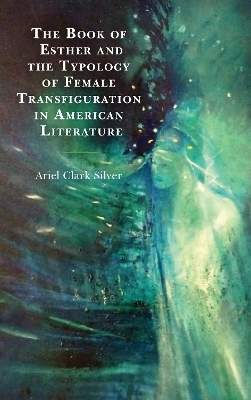
The Book of Esther and the Typology of Female Transfiguration in American Literature
Seiten
2017
Lexington Books (Verlag)
978-1-4985-6478-6 (ISBN)
Lexington Books (Verlag)
978-1-4985-6478-6 (ISBN)
This monograph treats the biblical figure of Esther and her reception in nineteenth-century American literature. After providing an understanding of the Book of Esther in the Hebrew Bible and its contested acceptance over centuries in various scriptural canons, the work focuses on the reception of the Esther text in America.
The enduring search for female salvation in American literature is first expressed through typology, an interpretive framework that pairs type with antitype, historical scriptural promise with future spiritual fulfillment. When Cotton Mather invokes the typos of Esther in Ornaments of the Daughters of Zion, a Puritan conduct book, he offers a female type of divine wisdom, authority and force. In the biblical Book of Esther, Esther acts as a female type of wisdom and redemption, but her story also engages the larger history of Hebrew salvation. In nineteenth-century America, Margaret Fuller seeks to extend the spiritual claims once made by Mather and establish the role of the divine female in the salvation of American culture and society. Fuller supplants the type of male sacrifice with a type of female transfiguration in works such as Woman in the Nineteenth Century. Nathaniel Hawthorne then transforms these iconoclastic ideals into literary life by engaging the multi-faceted figure of Esther as a typos of female redemption and salvation in “Legends of the Province House,” The Scarlet Letter, The Blithedale Romance, and The Marble Faun. Through his female characters -- Esther Dudley, Hester Prynne, Zenobia, and Miriam -- he seeks to fulfill the divine destiny of the American woman. Hawthorne discovers, however, that female redemption is followed by revenge, as Esther turns from saving her people to ensuring an end to their oppression. When Henry Adams later revives Esther Dudley in his novel Esther, he rejects male redemption for the American woman. In Democracy, Esther, Mont Saint Michel, and The Education of Henry Adams, Adams envisions an independent, eternal woman who can rival the political, scientific, artistic, and theological power of men. The movement from male to female salvation is achieved when the terms of female redemption are transformed and the American woman is established as her own source of divine wisdom, power, retribution, and force. The typology of female transfiguration in America is fulfilled by Fuller, Hawthorne, and Adams through the promise extended by the type of Esther.
The enduring search for female salvation in American literature is first expressed through typology, an interpretive framework that pairs type with antitype, historical scriptural promise with future spiritual fulfillment. When Cotton Mather invokes the typos of Esther in Ornaments of the Daughters of Zion, a Puritan conduct book, he offers a female type of divine wisdom, authority and force. In the biblical Book of Esther, Esther acts as a female type of wisdom and redemption, but her story also engages the larger history of Hebrew salvation. In nineteenth-century America, Margaret Fuller seeks to extend the spiritual claims once made by Mather and establish the role of the divine female in the salvation of American culture and society. Fuller supplants the type of male sacrifice with a type of female transfiguration in works such as Woman in the Nineteenth Century. Nathaniel Hawthorne then transforms these iconoclastic ideals into literary life by engaging the multi-faceted figure of Esther as a typos of female redemption and salvation in “Legends of the Province House,” The Scarlet Letter, The Blithedale Romance, and The Marble Faun. Through his female characters -- Esther Dudley, Hester Prynne, Zenobia, and Miriam -- he seeks to fulfill the divine destiny of the American woman. Hawthorne discovers, however, that female redemption is followed by revenge, as Esther turns from saving her people to ensuring an end to their oppression. When Henry Adams later revives Esther Dudley in his novel Esther, he rejects male redemption for the American woman. In Democracy, Esther, Mont Saint Michel, and The Education of Henry Adams, Adams envisions an independent, eternal woman who can rival the political, scientific, artistic, and theological power of men. The movement from male to female salvation is achieved when the terms of female redemption are transformed and the American woman is established as her own source of divine wisdom, power, retribution, and force. The typology of female transfiguration in America is fulfilled by Fuller, Hawthorne, and Adams through the promise extended by the type of Esther.
Ariel Clark Silver is institute faculty at the Columbus Ohio Institute of Religion
Preface
The Death of Male Sacrifice: Margaret Fuller and the Flowering of a New GodEsther as Type: The Search for a Figure of Female Redemption‘A’ is for Atonement: Hawthorne and HesterBeyond Redemption: Queen Esther, Zenobia, and MiriamThe Education Of Esther: Henry Adams and the Eternal WomanThe Face Of Female Salvation: Clover Adams and the Art of Transfiguration
| Erscheinungsdatum | 03.02.2018 |
|---|---|
| Sprache | englisch |
| Maße | 160 x 237 mm |
| Gewicht | 485 g |
| Themenwelt | Religion / Theologie ► Christentum ► Kirchengeschichte |
| Geisteswissenschaften ► Sprach- / Literaturwissenschaft ► Anglistik / Amerikanistik | |
| Geisteswissenschaften ► Sprach- / Literaturwissenschaft ► Literaturwissenschaft | |
| ISBN-10 | 1-4985-6478-X / 149856478X |
| ISBN-13 | 978-1-4985-6478-6 / 9781498564786 |
| Zustand | Neuware |
| Informationen gemäß Produktsicherheitsverordnung (GPSR) | |
| Haben Sie eine Frage zum Produkt? |
Mehr entdecken
aus dem Bereich


aus dem Bereich
eine andere Geschichte der Papststadt
Buch | Softcover (2024)
C.H.Beck (Verlag)
CHF 25,20
die Macht des Dunklen in unserer Zeit und wie wir ihr entgegentreten
Buch | Hardcover (2025)
Verlag Herder
CHF 27,90


