


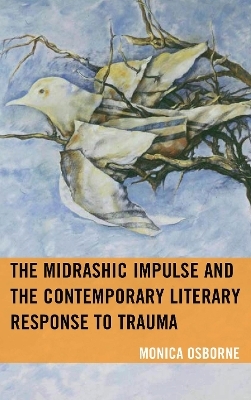
The Midrashic Impulse and the Contemporary Literary Response to Trauma
Seiten
2017
Lexington Books (Verlag)
978-1-4985-6490-8 (ISBN)
Lexington Books (Verlag)
978-1-4985-6490-8 (ISBN)
This book explores contemporary writers’ use of nonrepresentational techniques, similar to those of ancient rabbis who composed classical Midrash, as they grapple with the violence of our era. With particular attention paid to Holocaust literature, the book identifies an important trend in literature about collective trauma.
Since the end of World War II we have witnessed countless artistic responses to the Holocaust, yet we remain unable to adequately address the atrocities. While Theodor Adorno later rescinded his comments on the barbaric nature of writing poetry after Auschwitz, The Midrashic Impulse and the Contemporary Literary Response to Trauma begins with the possibility that he was right—that his admonition against poetry warns against employing representational modes that transgress the boundaries of the ethical when it comes to the Holocaust. There is a language, other than the language of representation, with which we might speak authentically about such atrocities. This study explores what it means for the world of literature to renounce the language of representation and retain the language of witness. Drawing on the work of Emmanuel Levinas, Maurice Blanchot, Geoffrey Hartman, and others the book focuses on the increasing tendency of contemporary writers to rely on non-representational approaches to storytelling in the context of trauma. This tendency is named the “midrashic impulse” given its similarity to ancient rabbinic approaches to the silences of the Hebrew bible through the creation of Midrash.
Since the end of World War II we have witnessed countless artistic responses to the Holocaust, yet we remain unable to adequately address the atrocities. While Theodor Adorno later rescinded his comments on the barbaric nature of writing poetry after Auschwitz, The Midrashic Impulse and the Contemporary Literary Response to Trauma begins with the possibility that he was right—that his admonition against poetry warns against employing representational modes that transgress the boundaries of the ethical when it comes to the Holocaust. There is a language, other than the language of representation, with which we might speak authentically about such atrocities. This study explores what it means for the world of literature to renounce the language of representation and retain the language of witness. Drawing on the work of Emmanuel Levinas, Maurice Blanchot, Geoffrey Hartman, and others the book focuses on the increasing tendency of contemporary writers to rely on non-representational approaches to storytelling in the context of trauma. This tendency is named the “midrashic impulse” given its similarity to ancient rabbinic approaches to the silences of the Hebrew bible through the creation of Midrash.
Monica Osborne is visiting assistant professor of Jewish studies at Pepperdine University.
Introduction
1. Midrashic Reading and Trauma
2. Heir to a Glimmering Tradition: Cynthia Ozick and Midrash
3. Secular Jews and Sacred Texts: E. L. Doctorow and the Midrashic Tradition
4. Representation as Betrayal in Anne Michaels' Fiction
5. Reading Ritual in a Post-Holocaust World: Dara Horn’s In the Image
Conclusion: Where do we go from here?
| Erscheinungsdatum | 10.05.2021 |
|---|---|
| Reihe/Serie | Bloomsbury Studies in Jewish Literature |
| Sprache | englisch |
| Maße | 162 x 236 mm |
| Gewicht | 445 g |
| Themenwelt | Geisteswissenschaften ► Sprach- / Literaturwissenschaft ► Anglistik / Amerikanistik |
| Geisteswissenschaften ► Sprach- / Literaturwissenschaft ► Literaturwissenschaft | |
| ISBN-10 | 1-4985-6490-9 / 1498564909 |
| ISBN-13 | 978-1-4985-6490-8 / 9781498564908 |
| Zustand | Neuware |
| Informationen gemäß Produktsicherheitsverordnung (GPSR) | |
| Haben Sie eine Frage zum Produkt? |
Mehr entdecken
aus dem Bereich

aus dem Bereich
Poetik eines sozialen Urteils
Buch | Hardcover (2023)
De Gruyter (Verlag)
CHF 83,90


