


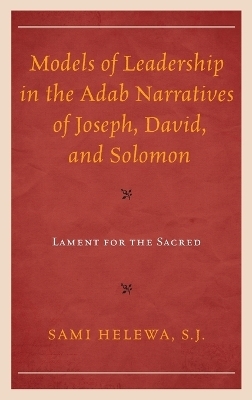
Models of Leadership in the Adab Narratives of Joseph, David, and Solomon
Lament for the Sacred
Seiten
2017
Lexington Books (Verlag)
9781498552660 (ISBN)
Lexington Books (Verlag)
9781498552660 (ISBN)
The author links the religious Qiṣaṣ al-anbiyāʾ to adab with the intent of showing that these tales reflect an inward look of the two cities of Baghdād and Nīshāpūr as well as the expectations of leadership for the rulers at the time of al-Ṭabarī and al-Thaʿlabī.
Sami Helewa’s book opens anew the Qi?a? al-anbiya? (Tales of the Prophets) in terms of the leadership of ancient prophets in a Muslim context of friendship and enmity in the narrative detail of the prophets Joseph, David, and Solomon. Although the Qi?a? genre is not court-based, advice literature, these tales could function as advisory literature through the legendary-prophetic figures. It is hardly surprising that the prophets of ancient times have been moral prototypes for the Judo-Islamic search for religio-political leaders. However, the themes of leadership, friendship, and enmity are embedded in these tales in the writing of great Medieval-Muslims like al-?abari of Baghdad and al-Tha?labi of Nishapur, who were great scholars () and men of literature (). Like the religious side of these tales, Helewa maintains that the adab side of the Qi?a? has equal importance of meaning to the struggle of ancient prophets in their friendships and hostilities. These tales, as astutely compiled from Baghdad and Nishapur, mirror interesting cultural nuances of expected leadership inherent in these great cities of learning. This book will be a great value for those interested in the Sira genre, the overall Qi?a? genre, the inheritance of prophets, the adab of religious writing, the advice literature, and the history of Baghdad and Nishapur.
Sami Helewa’s book opens anew the Qi?a? al-anbiya? (Tales of the Prophets) in terms of the leadership of ancient prophets in a Muslim context of friendship and enmity in the narrative detail of the prophets Joseph, David, and Solomon. Although the Qi?a? genre is not court-based, advice literature, these tales could function as advisory literature through the legendary-prophetic figures. It is hardly surprising that the prophets of ancient times have been moral prototypes for the Judo-Islamic search for religio-political leaders. However, the themes of leadership, friendship, and enmity are embedded in these tales in the writing of great Medieval-Muslims like al-?abari of Baghdad and al-Tha?labi of Nishapur, who were great scholars () and men of literature (). Like the religious side of these tales, Helewa maintains that the adab side of the Qi?a? has equal importance of meaning to the struggle of ancient prophets in their friendships and hostilities. These tales, as astutely compiled from Baghdad and Nishapur, mirror interesting cultural nuances of expected leadership inherent in these great cities of learning. This book will be a great value for those interested in the Sira genre, the overall Qi?a? genre, the inheritance of prophets, the adab of religious writing, the advice literature, and the history of Baghdad and Nishapur.
Sami Helewa is assistant professor of religious studies and director of Catholic studies at Campion College, University of Regina.
Introduction
Chapter One: The Qi?a? al-anbiya?: Between Religious and Cultivated Literature
Chapter Two: Historical Context
Chapter Three: Just Leadership
Chapter Four: Friendship
Chapter Five: Enmity
Chapter Six: Final Thoughts
| Erscheinungsdatum | 31.01.2018 |
|---|---|
| Sprache | englisch |
| Maße | 160 x 236 mm |
| Gewicht | 476 g |
| Themenwelt | Geisteswissenschaften ► Religion / Theologie ► Islam |
| ISBN-13 | 9781498552660 / 9781498552660 |
| Zustand | Neuware |
| Informationen gemäß Produktsicherheitsverordnung (GPSR) | |
| Haben Sie eine Frage zum Produkt? |
Mehr entdecken
aus dem Bereich



aus dem Bereich


