Neo-Confucianism (eBook)
John Wiley & Sons (Verlag)
978-1-118-61918-6 (ISBN)
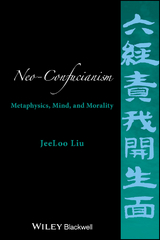
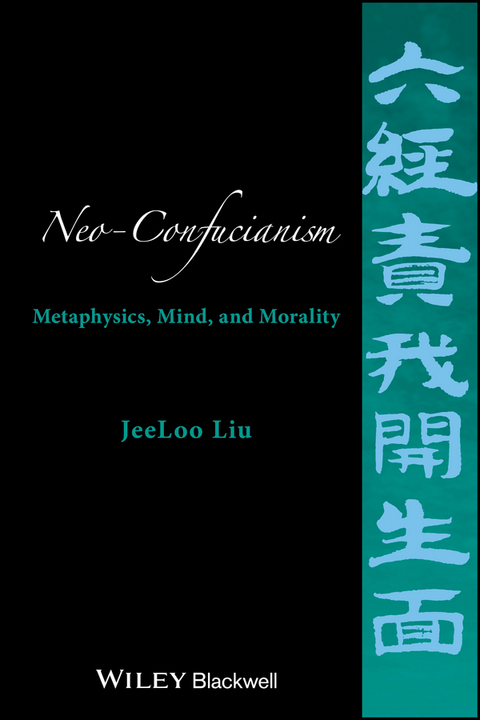
Solidly grounded in Chinese primary sources, Neo Confucianism: Metaphysics, Mind, and Morality engages the latest global scholarship to provide an innovative, rigorous, and clear articulation of neo-Confucianism and its application to Western philosophy.
- Contextualizes neo-Confucianism for contemporary analytic philosophy by engaging with today's philosophical questions and debates
- Based on the most recent and influential scholarship on neo-Confucianism, and supported by primary texts in Chinese and cross-cultural secondary literature
- Presents a cohesive analysis of neo-Confucianism by investigating the metaphysical foundations of neo-Confucian perspectives on the relationship between human nature, human mind, and morality
- Offers innovative interpretations of neo-Confucian terminology and examines the ideas of eight major philosophers, from Zhou Dunyi and Cheng-Zhu to Zhang Zai and Wang Fuzhi
- Approaches neo-Confucian concepts in an penetrating yet accessible way
JeeLoo Liu is Professor of Philosophy at California State University, Fullerton. She is the author of An Introduction to Chinese Philosophy: From Ancient Philosophy to Chinese Buddhism (Wiley-Blackwell 2006), co-editor of Consciousness and the Self (2012), and co-editor of Nothingness in Asian Philosophy (2014). She is currently the Executive Director of the International Society for Chinese Philosophy.
Solidly grounded in Chinese primary sources, Neo Confucianism: Metaphysics, Mind, and Morality engages the latest global scholarship to provide an innovative, rigorous, and clear articulation of neo-Confucianism and its application to Western philosophy. Contextualizes neo-Confucianism for contemporary analytic philosophy by engaging with today s philosophical questions and debates Based on the most recent and influential scholarship on neo-Confucianism, and supported by primary texts in Chinese and cross-cultural secondary literature Presents a cohesive analysis of neo-Confucianism by investigating the metaphysical foundations of neo-Confucian perspectives on the relationship between human nature, human mind, and morality Offers innovative interpretations of neo-Confucian terminology and examines the ideas of eight major philosophers, from Zhou Dunyi and Cheng-Zhu to Zhang Zai and Wang Fuzhi Approaches neo-Confucian concepts in an penetrating yet accessible way
JeeLoo Liu is Professor of Philosophy at California State University, Fullerton. She is the author of An Introduction to Chinese Philosophy: From Ancient Philosophy to Chinese Buddhism (Wiley-Blackwell 2006), co-editor of Consciousness and the Self (2012), and co-editor of Nothingness in Asian Philosophy (2014). She is currently the Executive Director of the International Society for Chinese Philosophy.
Preface ix
Acknowledgments xi
Introduction 1
Part I Neo?]Confucian Metaphysics: From Cosmology to Ontology 29
1 From Nothingness to Infinity: The Origin of Zhou Dunyi's Cosmology 31
2 The Basic Constituent of Things: Zhang Zai's Monist Theory of Qi 61
3 Cheng-Zhu School's Normative Realism: The Principle of the Universe 85
4 Wang Fuzhi's Theory of Principle Inherent in Qi 103
Part II Human Nature, Human Mind, and the Foundation of Human Morality 123
5 Zhu Xi's Internal Moral Realism: Human Nature Is Principle 125
6 Lu Xiangshan and Wang Yangming's Doctrine of Mind Is Principle 139
7 Wang Fuzhi's Theory of Daily Renewal of Human Nature and His Moral Psychology 157
Part III The Cultivation of Virtue, Moral Personality, and the Construction of a Moral World 181
8 Zhang Zai on Cultivating Moral Personality 183
9 The Cheng Brothers' Globaist Virtue Ethics and Virtue Epistemology 205
10 Zhu Xi's Methodology for Cultivating Sagehood: Moral Cognitivism and Ethical Rationalism 227
11 Wang Yangming';s Intuitionist Model of Innate Moral Sense and Moral Reflexivism 245
12 Constructing a Moral World: Wang Fuzhi's Social Sentimentalism 265
References 285
Index 301
"This book is clearly one of the greatest accomplishments among English Neo-Confucian philosophical studies in recent decades. JeeLoo Liu uses clear language and rigorous philosophical reasoning to analyze eight pivotal Neo-Confucian figures regarding three major areas: metaphysics, moral theory and moral practice. The book can be aptly used as both an introduction to Neo-Confucianism for beginners and a top reference for researchers, which is itself a rare achievement."
Reviewed by Bin Song, Washington College
Notre Dame Philosophical Reviews, March 2019
Introduction
This book gives a detailed philosophical analysis of eight central figures in Chinese neo‐Confucianism from the Song‐Ming era (between the eleventh and the seventeenth centuries). It is a sequel to the author’s first book An Introduction to Chinese Philosophy: From Ancient Philosophy to Chinese Buddhism (Blackwell, 2006), which examines five major philosophical schools in the ancient period as well as four principal schools of Chinese Buddhism. This book continues the analytical introduction to Chinese philosophy given in the first book and focuses on neo‐Confucianism.
The book draws comparisons to analytic philosophy in regard to its main issues and concerns. This approach helps to bring neo‐Confucianism into the context of contemporary philosophy and to show how issues expressed in distinctively neo‐Confucian terminology relate to issues in contemporary philosophy. One of the aims of this comparative approach is to show that even though Chinese philosophers used different terms, narrative strategies, and analytic modes, their concerns were often similar to those of their Western counterparts, for example: What is the nature of reality? Wherein lies the foundation of our moral values? Is human nature fundamentally good or bad? How do human beings connect to the whole universe? What is the foundation of our knowledge of the world and of moral reality? Such an approach will make these issues accessible to Western thinkers by shedding light on their universality through the analytic explication of these texts. This book will enable Western readers who are not familiar with Chinese philosophical terminology or its intellectual history to gain a philosophical appreciation of neo‐Confucianism. Furthermore, by consulting both English secondary sources and representative Chinese works on neo‐Confucianism, it will facilitate a more active philosophical exchange between Western philosophers working on neo‐Confucianism and contemporary Chinese scholars by coming to see the shared concerns as well as the common pursuits laid out in a clear and accessible language.
What Is Neo‐Confucianism?
“Neo‐Confucianism” typically refers to the revival of classical Confucianism developed between eleventh and eighteenth centuries in China, spanning over four dynasties in Chinese history: Song, Yuan, Ming, and Qing dynasties. Neo‐Confucianism was a new form of Confucianism that came after the dominance of Daoism and subsequently Buddhism within Chinese intellectual circles. Comparable to what “Modern Philosophy” accomplished in Western philosophy, neo‐Confucianism also revitalized classical philosophy and expanded the traditional philosophical discourse, adding new dimensions and attaining new heights. The transformation of Confucianism as a result of the challenge and influence of Daoism and Buddhism was the most remarkable and significant development in the history of Chinese philosophy. Neo‐Confucianism invigorated the metaphysical speculation found in classics such as the Yijing, and incorporated different concepts and perspectives derived from Daoism and Buddhism into its discourse. Also, partly as a response to the Daoist skeptical attitude toward the possibility of knowledge, neo‐Confucianism brought the theory of knowledge asserted in classics such as The Great Learning to a much more sophisticated level.
Frank Perkins gives neo‐Confucianism an apt summary: Neo‐Confucianism “can be broadly characterized as the attempt to integrate a speculative, systematic metaphysics influenced by Buddhism and Daoism into the ethically and socially oriented system of Confucianism” (Perkins 2004, 20–21). Neo‐Confucians were fundamentally concerned with the role humans play in the moral reconstruction of the world around them. In their view, humans not only endow the world of nature with meaning but also share moral attributes with natural phenomena. Neo‐Confucians’ metaphysical views lay the foundation for their moral theories. The goal of this book is to explicate Song‐Ming neo‐Confucianism in its three major themes (metaphysics, mind, and morality) and to show how they exemplify a coherent underlying concern: the relation between nature and human beings. In their various debates, neo‐Confucians touched on the possibility of an innate moral sense and the various means of moral knowledge. In addition, neo‐Confucianism contains an intriguing discourse on the possibility and foundation of morality. In neo‐Confucians’ views, morality takes its root either in the universal goodness of human nature or in the individual’s moral reflection and cultivation of the human mind. This debate between the School of Nature and the School of Mind was one of the major themes in neo‐Confucianism. Finally, in neo‐Confucianism we see a consistent effort not only to redefine a realist worldview that affirms the world as existing independently of human conception, but also to reassert a humanist worldview that places human beings at the center of meaning and values. Both the realist and the humanist commitments were direct responses to the challenges of Daoism and Buddhism, and they delineate the spirit of neo‐Confucianism.
Neo‐Confucians were generally concerned with establishing a moralistic naturalism, that is, the natural world in which we live demonstrates many good attributes that are worthy of humans’ emulation. We may say that they developed a form of moral metaphysics. According to a contemporary scholar on neo‐Confucianism, Yong Huang, “what is more unique about neo‐Confucianism is its development of moral metaphysics as an ontological articulation of moral values advocated by classical Confucians” (Huang 2014, 195). What distinguishes neo‐Confucianism from classical Confucianism is exactly this moral metaphysics. According to neo‐Confucians, there is a higher order governing the world, which they call “heavenly principle,”, and the content of this higher order is also the objective moral principle for human beings. At the same time, neo‐Confucians also embraced the Chinese philosophical tradition (founded in the Yijing) of positing a basic element of qi as the material/physical foundation of the universe. The core thesis in Neo‐Confucian metaphysics is view that qi is the primary constituent of all things and that there is an inherent order in the operation of qi.
With regard to the psychological foundation of human morality, neo‐Confucians were predominately in the Mencian camp. Mencius advocates moral internalism—the foundation of human morality lies within the agent’s internal psychological makeup. According to Mencius, humans are different from other animals because they are born with moral sentiments. Humans alone are moral creatures. This is what defines the notion “human” (ren 人), which in his usage is not a natural kind but a moral category. There are, according to Mencius, four universal moral sentiments in the mankind: (i) the sentiment of commiseration, (ii) the sentiment of shame and disgust, (iii) the sense of reverence and deference, and (iv) the sense of right and wrong. Since humans are endowed with these moral sentiments, morality is a natural extension of what humans have within themselves. Evil is the result of not cultivating one’s “moral sprouts.” According to him, morality is not the sheer result of social conditioning and is not derived from social contract or rational consensus based on calculated mutual self‐interests. On the contrary, human morality is possible only because we humans are moral creatures.
Neo‐Confucians identified the internal source of moral agency in humans’ moral sense, moral judgment, moral intuition, or moral sentiments. What they shared in common was the view that moral action is an autonomous act springing from an individual’s heart. They dismissed Xunzi’s teaching that morality is the product of humans’ contrived conditioning (wei 偽). According to Xunzi, we need to use rules of propriety and rituals to curtail the bad traits in human nature. Morality is the result of human endeavor and social institutions, while evil is simply the result of following inborn human nature without societal restraints. There is no such thing as “innate goodness,” though Xunzi does claim that humans have reason and can appeal to the mind’s moral cognition to learn good. From a moral externalist’s point of view, morality derives from social conditioning for the purpose of peaceful coexistence. The external social environment is responsible for the existence or the lack of our moral sense. According to this view, humans’ moral consciousness and sense of morality are taught and learned. Hence, different social backgrounds and cultural rearing could generate incompatible moral views or even create diverse moral standards. In other words, cultural relativism is a natural extension of moral externalism. One characteristic in neo‐Confucianism is their unequivocal conviction in the existence of the objective, universal moral standard, which they identify as heavenly principle. To them, the existence of a moral reality is an indisputable fact of nature, and the universality of moral truths is grounded in humans’ shared moral sense.
Neo‐Confucians based their moral theories on their metaphysical view of the objective moral reality in the world of nature. This worldview...
| Erscheint lt. Verlag | 9.6.2017 |
|---|---|
| Sprache | englisch |
| Themenwelt | Geisteswissenschaften ► Philosophie ► Allgemeines / Lexika |
| Geisteswissenschaften ► Philosophie ► Metaphysik / Ontologie | |
| Geisteswissenschaften ► Philosophie ► Östliche Philosophie | |
| Geisteswissenschaften ► Religion / Theologie ► Weitere Religionen | |
| Schlagworte | Comparative & World Religions • moral psychology • Moral Rationalism • moral sentimentalism • Neo-Confucianism • Philosophie • Philosophy • Religion & Theology • Religion u. Theologie • Vergleichende Religionswissenschaft • Virtue Ethics • Weltphilosophie • World philosophy |
| ISBN-10 | 1-118-61918-8 / 1118619188 |
| ISBN-13 | 978-1-118-61918-6 / 9781118619186 |
| Informationen gemäß Produktsicherheitsverordnung (GPSR) | |
| Haben Sie eine Frage zum Produkt? |
 EPUB (Adobe DRM)
Kopierschutz: Adobe-DRM
Adobe-DRM ist ein Kopierschutz, der das eBook vor Mißbrauch schützen soll. Dabei wird das eBook bereits beim Download auf Ihre persönliche Adobe-ID autorisiert. Lesen können Sie das eBook dann nur auf den Geräten, welche ebenfalls auf Ihre Adobe-ID registriert sind.
Details zum Adobe-DRM
Dateiformat: EPUB (Electronic Publication)
EPUB ist ein offener Standard für eBooks und eignet sich besonders zur Darstellung von Belletristik und Sachbüchern. Der Fließtext wird dynamisch an die Display- und Schriftgröße angepasst. Auch für mobile Lesegeräte ist EPUB daher gut geeignet.
Systemvoraussetzungen:
PC/Mac: Mit einem PC oder Mac können Sie dieses eBook lesen. Sie benötigen eine
eReader: Dieses eBook kann mit (fast) allen eBook-Readern gelesen werden. Mit dem amazon-Kindle ist es aber nicht kompatibel.
Smartphone/Tablet: Egal ob Apple oder Android, dieses eBook können Sie lesen. Sie benötigen eine
Geräteliste und zusätzliche Hinweise
Buying eBooks from abroad
For tax law reasons we can sell eBooks just within Germany and Switzerland. Regrettably we cannot fulfill eBook-orders from other countries.
aus dem Bereich