


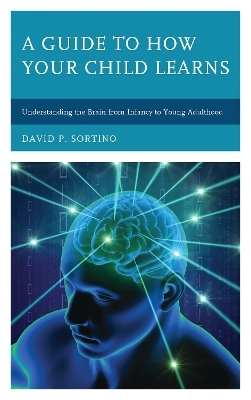
A Guide to How Your Child Learns
Understanding the Brain from Infancy to Young Adulthood
Seiten
2017
Rowman & Littlefield (Verlag)
9781475831832 (ISBN)
Rowman & Littlefield (Verlag)
9781475831832 (ISBN)
In order to create a better learning brain, students must be organized, adaptive, and passionate about learning. Research and follow-up studies of these traits with theoretical knowledge, may suggest why multiple intelligence, child development theory, learning styles, and cognitive development should be included in every teacher’s playbook.
In order to create a better learning brain, students must be organized, adaptive, passionate, and secure about learning. Research and follow-up studies of these traits with theoretical knowledge, may suggest why multiple intelligence, child development theory, learning styles, and cognitive development should be included in every teacher’s playbook.
Moreover, one very real challenge with this age group is how to preserve and protect elements of the magical child (fantasy and imagination), while expecting students to successfully transition to school learning, regardless of their ability or interest level.
Walk into any school and observe the writing or artwork on the school’s walls and you will see an incredible mixture of abilities and imagination. This mixture could be a barometer of your child’s learning abilities and actual school success.
In order to create a better learning brain, students must be organized, adaptive, passionate, and secure about learning. Research and follow-up studies of these traits with theoretical knowledge, may suggest why multiple intelligence, child development theory, learning styles, and cognitive development should be included in every teacher’s playbook.
Moreover, one very real challenge with this age group is how to preserve and protect elements of the magical child (fantasy and imagination), while expecting students to successfully transition to school learning, regardless of their ability or interest level.
Walk into any school and observe the writing or artwork on the school’s walls and you will see an incredible mixture of abilities and imagination. This mixture could be a barometer of your child’s learning abilities and actual school success.
David Sortino holds a Master’s Degree in Human Development from Harvard University and a Doctorate in Clinical Psychology from Saybrook University, as well as multiple subject and learning handicapped teaching credentials. He has spent 35 years as a teacher, counselor, director and resource specialist in public and private schools, as well as training teachers and counselors at the university level.
List of Articles
Acknowledgments
Introduction
Section 1: Early Childhood (ages 2 to 6 years)
Section 2: Late Childhood (ages 7-10 years)
Section 3: Early Adolescence (ages 11-16 years)
Section 4: Late Adolescence to Early Adulthood (ages 17-21 years)
About the Author
References
| Erscheinungsdatum | 03.02.2018 |
|---|---|
| Reihe/Serie | Brain Smart |
| Zusatzinfo | 5 BW Photos |
| Sprache | englisch |
| Maße | 152 x 229 mm |
| Themenwelt | Sachbuch/Ratgeber ► Gesundheit / Leben / Psychologie ► Familie / Erziehung |
| Geisteswissenschaften ► Psychologie ► Entwicklungspsychologie | |
| ISBN-13 | 9781475831832 / 9781475831832 |
| Zustand | Neuware |
| Informationen gemäß Produktsicherheitsverordnung (GPSR) | |
| Haben Sie eine Frage zum Produkt? |
Mehr entdecken
aus dem Bereich

aus dem Bereich
erfolgreiche Strategien für Erwachsene und Kinder
Buch | Softcover (2023)
Klett-Cotta (Verlag)
CHF 38,90
das Handbuch für die individuelle Impfentscheidung
Buch | Softcover (2023)
Knaur MensSana (Verlag)
CHF 31,90


