


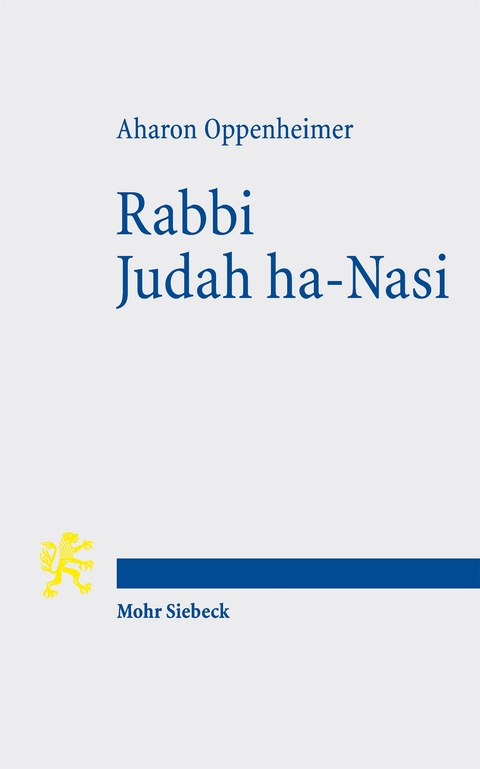
Rabbi Judah ha-Nasi
Statesman, Reformer, and Redactor of the Mishnah
Seiten
Rabbi Jehuda der Fürst (ha-Nassi) leitete um die Wende vom 2. zum 3. Jahrhundert n.Chr. die Einrichtungen der jüdischen Selbstverwaltung im Land Israel. Aharon Oppenheimer verfolgt den Weg dieser mächtigen Persönlichkeit und sucht, ihre Bedeutung und bleibende Wirkung nachzuzeichnen.
The patriarch Rabbi Judah ha-Nasi headed the independent Jewish leadership institutions in Roman Palestine at the turn of the second and third centuries CE. He was also incredibly rich, a consummate politician, and close to the Roman authorities. He made taqqanot (reforms) in the light of circumstances, and tried to cancel mitzvoth (religious regulations), such as the regulations about shemita (not using the land in the sabbatical year), which entailed hardship for the Jews of his time. He was ahead of his times in his humane and liberal decisions. Rabbi completed the redaction of the Mishnah and thus gave the Jewish people the work that is second in importance only to the Torah, although by so doing he put a brake on the development of the oral law. Aharon Oppenheimer attempts to present Rabbi Jehuda ha-Nassi's character and his life as well as examining the significance of his work for his own generation and succeeding ones.
The patriarch Rabbi Judah ha-Nasi headed the independent Jewish leadership institutions in Roman Palestine at the turn of the second and third centuries CE. He was also incredibly rich, a consummate politician, and close to the Roman authorities. He made taqqanot (reforms) in the light of circumstances, and tried to cancel mitzvoth (religious regulations), such as the regulations about shemita (not using the land in the sabbatical year), which entailed hardship for the Jews of his time. He was ahead of his times in his humane and liberal decisions. Rabbi completed the redaction of the Mishnah and thus gave the Jewish people the work that is second in importance only to the Torah, although by so doing he put a brake on the development of the oral law. Aharon Oppenheimer attempts to present Rabbi Jehuda ha-Nassi's character and his life as well as examining the significance of his work for his own generation and succeeding ones.
(1940-2022) 1993-2000 editor of "Zion - a quarterly for research in Jewish history"; 1996-2000 Sir Isaac Wolfson Professor of Jewish Studies at Tel Aviv University; currently Professor emeritus of Jewish History at Tel Aviv University.
| Erscheinungsdatum | 31.10.2017 |
|---|---|
| Verlagsort | Tübingen |
| Sprache | englisch |
| Maße | 113 x 184 mm |
| Gewicht | 282 g |
| Themenwelt | Geisteswissenschaften ► Religion / Theologie ► Judentum |
| Geisteswissenschaften ► Sprach- / Literaturwissenschaft ► Literaturwissenschaft | |
| Schlagworte | Biografien/Erinnerungen • History • Jewish • Jewish social history • Judentum • Ordinance • Ordination • Palestine • Rabbiner • Rabbinical • Rabbinical Ordination • Roman • roman palestine • Sabbatical • Sabbatical Year • Social • year |
| ISBN-13 | 9783161506857 / 9783161506857 |
| Zustand | Neuware |
| Informationen gemäß Produktsicherheitsverordnung (GPSR) | |
| Haben Sie eine Frage zum Produkt? |
Mehr entdecken
aus dem Bereich



aus dem Bereich


