


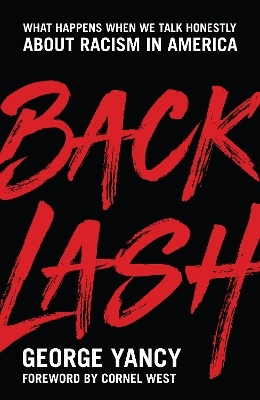
Backlash
What Happens When We Talk Honestly about Racism in America
Seiten
2018
Rowman & Littlefield (Verlag)
978-1-5381-0405-7 (ISBN)
Rowman & Littlefield (Verlag)
978-1-5381-0405-7 (ISBN)
When George Yancy penned a New York Times article entitled “Dear White America,” he knew he was courting controversy. Here, Yancy chronicles the ensuing blowback as he seeks to understand what it was that created so much rage among so many white readers. He challenges white Americans to develop a new empathy for the African American experience.
When George Yancy penned a New York Times op-ed entitled “Dear White America” asking white Americans to confront the ways that they benefit from racism, he knew his article would be controversial. But he was unprepared for the flood of vitriol in response.
The resulting blowback played out in the national media, with critics attacking Yancy in every form possible—including death threats—and supporters rallying to his side. Despite the rhetoric of a “post-race” America, Yancy quickly discovered that racism is still alive, crude, and vicious in its expression. In Backlash, Yancy expands upon the original article and chronicles the ensuing controversy as he seeks to understand what it was about the op-ed that created so much rage among so many white readers. He challenges white Americans to rise above the vitriol and to develop a new empathy for the African American experience.
When George Yancy penned a New York Times op-ed entitled “Dear White America” asking white Americans to confront the ways that they benefit from racism, he knew his article would be controversial. But he was unprepared for the flood of vitriol in response.
The resulting blowback played out in the national media, with critics attacking Yancy in every form possible—including death threats—and supporters rallying to his side. Despite the rhetoric of a “post-race” America, Yancy quickly discovered that racism is still alive, crude, and vicious in its expression. In Backlash, Yancy expands upon the original article and chronicles the ensuing controversy as he seeks to understand what it was about the op-ed that created so much rage among so many white readers. He challenges white Americans to rise above the vitriol and to develop a new empathy for the African American experience.
George Yancy is Professor of Philosophy at Emory University. He is the author, editor and co-editor of over 18 books. He is known for his influential essays and interviews in the New York Times' philosophy column, The Stone. He resides in Atlanta, Georgia.
Foreword: The End of White Innocence
Acknowledgments
Introduction: Talking About Racism: When Honesty Feels Like Too much to Bear
Chapter 1: The Letter: Dear White America
Chapter 2: Dear Nigger Professor
Chapter 3: Risking the White Self
Chapter 4: Accepting the Gift
Notes
Index
About the Author
| Erscheinungsdatum | 17.04.2018 |
|---|---|
| Vorwort | Cornel West |
| Sprache | englisch |
| Maße | 146 x 225 mm |
| Gewicht | 331 g |
| Themenwelt | Geisteswissenschaften ► Philosophie |
| Sozialwissenschaften ► Ethnologie | |
| Sozialwissenschaften ► Soziologie | |
| ISBN-10 | 1-5381-0405-9 / 1538104059 |
| ISBN-13 | 978-1-5381-0405-7 / 9781538104057 |
| Zustand | Neuware |
| Informationen gemäß Produktsicherheitsverordnung (GPSR) | |
| Haben Sie eine Frage zum Produkt? |
Mehr entdecken
aus dem Bereich



aus dem Bereich
Band 8: Ästhetik (1961/62)
Buch | Hardcover (2025)
Suhrkamp (Verlag)
CHF 109,15
wie Tiere den Tod verstehen
Buch | Hardcover (2025)
Insel Verlag
CHF 42,90
eine Ethik des Verzichts
Buch | Softcover (2025)
Reclam (Verlag)
CHF 9,80


