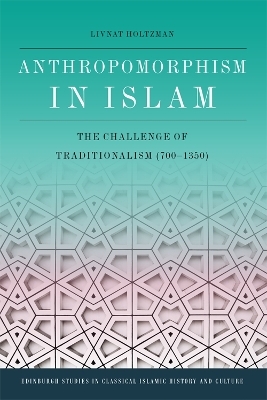
Anthropomorphism in Islam
Edinburgh University Press (Verlag)
978-0-7486-8956-9 (ISBN)
Livnat Holtzman is an expert in Islamic theology. She specializes in traditionalist theology from the inception of Islam until the 15th century, and has published extensively on the thought of Ibn Taymiyya and Ibn Qayyim al-Jawziyya. Currently she is Senior Lecturer in the Department of Arabic at Bar-Ilan University, Israel.
Introduction
Chapter 1: The Narrator and the Narrative: A Literary Analysis of Ahādīth al-sifāt Introduction I. A Preliminary Remark on Hadith and NarratologyII. The Framing NarrativeIII. The Embedded Narrative IV. The Narrator and His AudienceV. The Motives of the Narrator VI. The Narrator’s Role
Chapter 2: A Tale of Two Narrators: Some Historical, Geographical, and Cultural Considerations IntroductionI. Two Different Narrators II. The Proliferation of the Abu Razin Narrative III. Two Narrators and One Narrative: The Tribal Connection IV. The Proliferation of the Jarir NarrativeV. The Jarir Narrative and the Miḥna
Chapter 3: Gestures and Aḥādīth al-Ṣifāt IntroductionI. The Prophet’s Gestures: Iconic, Metaphoric, and Deictic II. ‘The Instance of Narrating’: The Narrator and His Audience III. The Performing Trend IV. The Ultimate Performer of Aḥādīth al-Ṣifāt V. The Predicament of the Traditionalists
Chapter 4: The Diversified Solution to the Challenge of Islamic Traditionalism: Aḥādīth al-Ṣifāt and Bi-Lā Kayfa IntroductionI. Drawing the Borderlines of the Traditionalistic Discourse II. The Earliest DebateIII. Transmission, Censorship, and EuphemismsIV. The All-Inclusive Tanzīh: The Ashʿarite Solution V. Expanding the Borders of the Traditionalistic Discourse
Chapter 5: Iconic Books and Gestures: Aḥādīth al-Ṣifāt in the Public SphereIntroductionI. The Iconicity of the Qadiri CreedII. The Three Dimensions of Kitāb al-Tawḥīd III. Fakhr al-Din al-Razi’s Response to Kitāb al-Tawḥīd IV. Ibn Taymiyya’s al-Ḥamawiyya al-Kubrā and Two Iconic Gestures V. Iconic Gestures and the Hashwiyya
Final Remarks and ConclusionsAppendix I: Full Translations of Lengthy Traditions 1. A Marginal Version of Ḥadīth al-Nuzūl 2. The Lengthy Ḥadīth al-Ruʼya3. The Lengthy Ḥadīth Fidāʼ al-Muʼmin from Ibn ʿAsakir’s Tārīkh DimashqAppendix II: Full Translation of ‘the Ḥadīth of Allegiance’ of Abu Razin Appendix III: Chains of TransmissionAppendix IV: Chains of TransmissionAppendix V: Chains of Transmission
BIBLIOGRAPHYI. Primary SourcesII. Secondary Sources
| Erscheinungsdatum | 01.06.2017 |
|---|---|
| Reihe/Serie | Edinburgh Studies in Classical Islamic History and Culture |
| Verlagsort | Edinburgh |
| Sprache | englisch |
| Maße | 156 x 234 mm |
| Gewicht | 790 g |
| Themenwelt | Geisteswissenschaften ► Archäologie |
| Geschichte ► Allgemeine Geschichte ► Mittelalter | |
| Geisteswissenschaften ► Religion / Theologie ► Islam | |
| ISBN-10 | 0-7486-8956-7 / 0748689567 |
| ISBN-13 | 978-0-7486-8956-9 / 9780748689569 |
| Zustand | Neuware |
| Informationen gemäß Produktsicherheitsverordnung (GPSR) | |
| Haben Sie eine Frage zum Produkt? |
aus dem Bereich