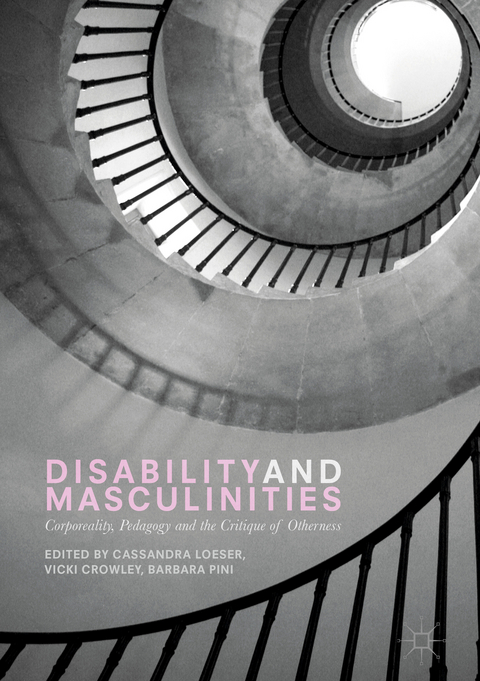
Disability and Masculinities (eBook)
247 Seiten
Palgrave Macmillan UK (Verlag)
978-1-137-53477-4 (ISBN)
In recent years, attending to diversity in the cultivation of embodied identity has been given additional impetus as a result of intersectionality theory. Despite this, a key gap remains in terms of knowledge about masculinity and disability. This book addresses this lacuna through ten empirical chapters organised through the inter-related themes of corporeality, pedagogy and the critique of otherness. Each of the chapters positions the subject of masculinity and disability as a site of cultural pedagogy by affirming different ways of knowing of masculinity beyond dominant ideologies that normalise a particular masculine body and relegate disabled masculinities to the position of abnormal 'Other'.
Part One focuses on pedagogy. Through the materialities of 'medicalized colonialism', imprimaturs of 'relational genealogies', 'compounding differences' and an analytical exposition of some of the neo-colonial conditions of the Global South within spatially-considered places of the Global North, Chapter 1 examines the denial of human rights to the Indigenous Anishinaabe community of Shoal Lake 40 in Canada. Chapter 1 theorises masculine corporeality in terms that take seriously First Nations', national and transnational body politics seriously. Chapter 2 examines the ways that movement and affect serve as a form of pedagogy for boys with autism spectrum in schools.
Part Two's focus on corporeality includes an examination of the nexus of disability and diagnosis in the context of transgender men's experiences of mental health, and a discussion of the ways that intersex individuals who identify as men and have experienced 'genital normalising surgery' actively negotiate pluralised masculinities. The focus on media in Part Three encompasses a study of the mis-interpellation of the disabled male subject in Australian male literature, research on the discursive strategies utilised in media representations of disabled veterans in Turkey, and an analysis of the political implications of depictions of masculinity, disability and sexualities in a variety television program. Part Four's theme of self-stylisation takes up the questions of men's reconstructions of masculinity in light of Lyme Disease, the potential pleasures of heterosexuality for young men with a hearing disability in the realm of Australian-Rules Football, and the diverse ways that disabled men negotiate patriarchal masculinity in intimate relationships.
In recent years, attending to diversity in the cultivation of embodied identity has been given additional impetus as a result of intersectionality theory. Despite this, a key gap remains in terms of knowledge about masculinity and disability. This book addresses this lacuna through ten empirical chapters organised through the inter-related themes of corporeality, pedagogy and the critique of otherness. Each of the chapters positions the subject of masculinity and disability as a site of cultural pedagogy by affirming different ways of knowing of masculinity beyond dominant ideologies that normalise a particular masculine body and relegate disabled masculinities to the position of abnormal 'Other'.Part One focuses on pedagogy. Through the materialities of 'medicalized colonialism', imprimaturs of 'relational genealogies', 'compounding differences' and an analytical exposition of some of the neo-colonial conditions of the Global South within spatially-considered places ofthe Global North, Chapter 1 examines the denial of human rights to the Indigenous Anishinaabe community of Shoal Lake 40 in Canada. Chapter 1 theorises masculine corporeality in terms that take seriously First Nations', national and transnational body politics seriously. Chapter 2 examines the ways that movement and affect serve as a form of pedagogy for boys with autism spectrum in schools. Part Two's focus on corporeality includes an examination of the nexus of disability and diagnosis in the context of transgender men's experiences of mental health, and a discussion of the ways that intersex individuals who identify as men and have experienced 'genital normalising surgery' actively negotiate pluralised masculinities. The focus on media in Part Three encompasses a study of the mis-interpellation of the disabled male subject in Australian male literature, research on the discursive strategies utilised in media representations of disabled veteransin Turkey, and an analysis of the political implications of depictions of masculinity, disability and sexualities in a variety television program. Part Four's theme of self-stylisation takes up the questions of men's reconstructions of masculinity in light of Lyme Disease, the potential pleasures of heterosexuality for young men with a hearing disability in the realm of Australian-Rules Football, and the diverse ways that disabled men negotiate patriarchal masculinity in intimate relationships.
Dr Cassandra Loeser is a Lecturer in Research Education at the University of South Australia and Director of the Research Centre for Gender Studies in the Hawke Research Institute, Australia. Dr Vicki Crowley is an adjunct Senior Lecturer in communication, cultural studies and gender studies at the University of South Australia, Australia. She is also an independent creative producer, writer and editor.Barbara Pini is a Professor in the School of Humanities, Languages and Social Sciences at Griffith University Brisbane, Australia.
Part 1. Of pedagogy,.- Chapter1. ‘O Canada’ or ‘Freedom Road’?.- Chapter 2. A Pedagogy of Movement and Affect.- Part 2. Corporeality,.- Chapter 3. The Disability and Diagnosis Nexus.- Chapter 4. Intersex Men, Masculinities and ‘Disabled’ Penises.- Part 3. (Re)presentation,.- Chapter 5. More than Puddles.- Chapter 6. Media Representations of Disabled Veterans of the Kurdish Conflict.- Chapter 7. Formatting Disability in Contemporary Variety TV.- Part 4. and critical self-stylisation.- Chapter 8. Men, Chronic Illness and the Negotiation of Masculinity.- Chapter 9. Hearing (Dis)abled Masculinities in Australian Rules Football.- Chapter 10. Disidentification and Ingenuity in the Sex Lives of Disabled Men
| Erscheint lt. Verlag | 2.5.2017 |
|---|---|
| Zusatzinfo | LXXIV, 247 p. 9 illus. in color. |
| Verlagsort | London |
| Sprache | englisch |
| Themenwelt | Geisteswissenschaften |
| Sozialwissenschaften ► Pädagogik | |
| Sozialwissenschaften ► Politik / Verwaltung | |
| Sozialwissenschaften ► Soziologie ► Allgemeines / Lexika | |
| Sozialwissenschaften ► Soziologie ► Gender Studies | |
| Schlagworte | Corporeality • Critical disability studies • Disability • Gender • Gender Studies • Identity • Masculinity • Masculinity Studies • Men • Pedagogy • Sexuality • Subjectivity |
| ISBN-10 | 1-137-53477-X / 113753477X |
| ISBN-13 | 978-1-137-53477-4 / 9781137534774 |
| Informationen gemäß Produktsicherheitsverordnung (GPSR) | |
| Haben Sie eine Frage zum Produkt? |
 PDF (Wasserzeichen)
DRM: Digitales Wasserzeichen
Dieses eBook enthält ein digitales Wasserzeichen und ist damit für Sie personalisiert. Bei einer missbräuchlichen Weitergabe des eBooks an Dritte ist eine Rückverfolgung an die Quelle möglich.
Dateiformat: PDF (Portable Document Format)
Mit einem festen Seitenlayout eignet sich die PDF besonders für Fachbücher mit Spalten, Tabellen und Abbildungen. Eine PDF kann auf fast allen Geräten angezeigt werden, ist aber für kleine Displays (Smartphone, eReader) nur eingeschränkt geeignet.
Systemvoraussetzungen:
PC/Mac: Mit einem PC oder Mac können Sie dieses eBook lesen. Sie benötigen dafür einen PDF-Viewer - z.B. den Adobe Reader oder Adobe Digital Editions.
eReader: Dieses eBook kann mit (fast) allen eBook-Readern gelesen werden. Mit dem amazon-Kindle ist es aber nicht kompatibel.
Smartphone/Tablet: Egal ob Apple oder Android, dieses eBook können Sie lesen. Sie benötigen dafür einen PDF-Viewer - z.B. die kostenlose Adobe Digital Editions-App.
Buying eBooks from abroad
For tax law reasons we can sell eBooks just within Germany and Switzerland. Regrettably we cannot fulfill eBook-orders from other countries.
aus dem Bereich