


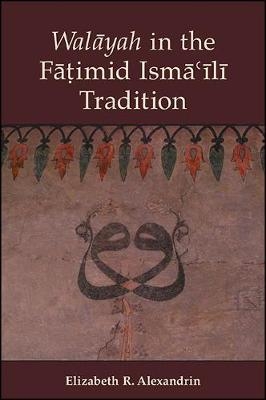
Walāyah in the Fāṭimid Ismāʿīlī Tradition
Seiten
2017
State University of New York Press (Verlag)
978-1-4384-6627-9 (ISBN)
State University of New York Press (Verlag)
978-1-4384-6627-9 (ISBN)
- Titel z.Zt. nicht lieferbar
- Versandkostenfrei
- Auch auf Rechnung
- Artikel merken
Explores the relationship between revelation and reason in medieval Islamic intellectual history.
In this original study, Elizabeth R. Alexandrin examines the complex relationships that can be inscribed between medieval Ismā'īlī thought as an intellectual tradition with a devotional practice of reliance on the imām, and as a politico-esoteric system that redefined governance during the Fāṭimid caliphate in the eleventh century. Alexandrin's work is a departure from recent Western scholarship that focuses on similarities among early Islamic traditions. She argues instead that, under the guidance of the Fāṭimid Ismā'īlī chief missionary al-Mu'ayyad fī al-Dīn al-Shīrāzī (d. 1078 CE), the concept of walāyah (divine guidance) became closely associated with religio-political authority, on the one hand, and the perfection of the individual human being, on the other. By signaling and affirming how the Fāṭimid caliph-imāms were the heirs of walāyah and by proposing new definitions of the "seal of God's friends" (khātim al-awliyā' Allāh), al- Mu'ayyad broadened the contexts of making esoteric knowledge public and shifted the apocalyptic frameworks of Islamic messianism.
In this original study, Elizabeth R. Alexandrin examines the complex relationships that can be inscribed between medieval Ismā'īlī thought as an intellectual tradition with a devotional practice of reliance on the imām, and as a politico-esoteric system that redefined governance during the Fāṭimid caliphate in the eleventh century. Alexandrin's work is a departure from recent Western scholarship that focuses on similarities among early Islamic traditions. She argues instead that, under the guidance of the Fāṭimid Ismā'īlī chief missionary al-Mu'ayyad fī al-Dīn al-Shīrāzī (d. 1078 CE), the concept of walāyah (divine guidance) became closely associated with religio-political authority, on the one hand, and the perfection of the individual human being, on the other. By signaling and affirming how the Fāṭimid caliph-imāms were the heirs of walāyah and by proposing new definitions of the "seal of God's friends" (khātim al-awliyā' Allāh), al- Mu'ayyad broadened the contexts of making esoteric knowledge public and shifted the apocalyptic frameworks of Islamic messianism.
Elizabeth R. Alexandrin is Associate Professor of Islamic Studies and Senior Fellow at St. John's College, the University of Manitoba, Canada.
Acknowledgments
Transliteration
Introduction
1. Walāyah in Practice
2. The Majālis al-Mu'ayyadiyyah
3. The "Sphere of Walāyah"
4. Sealing Walāyah and Spiritual Resurrection
Conclusions
Notes
Works Cited
Index of People and Places
Index of Qur'anic Citations
General Index
| Erscheinungsdatum | 03.02.2018 |
|---|---|
| Verlagsort | Albany, NY |
| Sprache | englisch |
| Maße | 152 x 229 mm |
| Gewicht | 590 g |
| Themenwelt | Geisteswissenschaften ► Geschichte ► Regional- / Ländergeschichte |
| Geschichte ► Teilgebiete der Geschichte ► Religionsgeschichte | |
| Geisteswissenschaften ► Religion / Theologie ► Islam | |
| ISBN-10 | 1-4384-6627-7 / 1438466277 |
| ISBN-13 | 978-1-4384-6627-9 / 9781438466279 |
| Zustand | Neuware |
| Informationen gemäß Produktsicherheitsverordnung (GPSR) | |
| Haben Sie eine Frage zum Produkt? |
Mehr entdecken
aus dem Bereich


aus dem Bereich
von der Antike bis zur Gegenwart
Buch | Softcover (2025)
C.H.Beck (Verlag)
CHF 16,80


