Understanding Christian Doctrine (eBook)
John Wiley & Sons (Verlag)
978-1-118-96475-0 (ISBN)
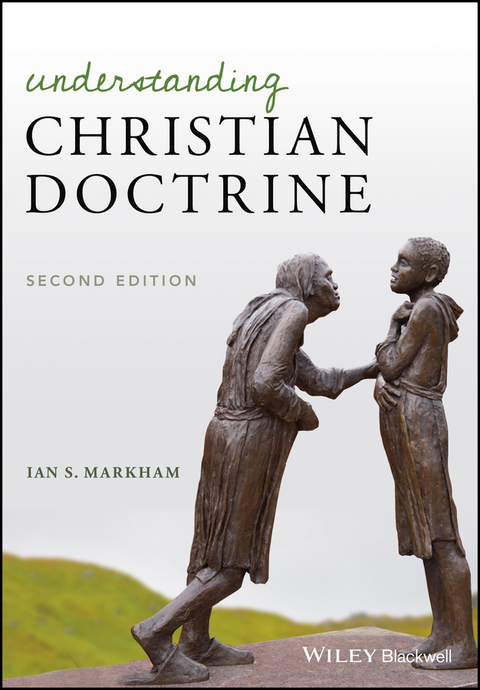
The comprehensive and engaging introduction to contemporary Christianity, revised and updated
The second edition of Understanding Christian Doctrine presents a completely updated and revised edition that builds on the most popular features of the first edition to offer a lively overview to the central beliefs of Christianity. Ian S Markham, a noted authority of Christianity, discusses the great thinkers of the Christian tradition and puts them in conversation with contemporary progressive theologies in a book that goes from Augustine, Aquinas, and Luther to Liberationist, Feminist, and Queer theologies. Designed to be a basic primer, the text is written in a manner that assumes the reader has no prior knowledge of theology or Christian doctrine.
The book is designed to present the basic options in all the key areas of Christianity as well as information on how to make complex theological decisions. The author tackles all the key questions from creation to eschatology. Furthermore, Markham makes his own distinctive contribution: he argues that theodicy (traditionally seen as a major difficulty with belief) is actually a theme that links many aspects of Christian doctrine. The revised second edition includes a wealth of new information, including:
- A lively and comprehensive introduction to Christianity that assumes no prior knowledge of the faith
- An overview to the great thinkers of Christian tradition that puts them in conversation with progressive liberationist theologies
- Suggestions that help even the most skeptical to learn to understand and possibly embrace theological assertions
- Breakout boxes that explain the significance of the text's various philosophical ideas and positions
The text is ideal for anyone interested in learning about the foundations of Christianity as well as new ideas about the faith. Christianity is presented in a manner that embraces the richness of the tradition and affirms the central claims of the historical creeds, while engaging with liberationist challenges to the tradition.
Ian S. Markham is the Dean and President of Virginia Theological Seminary. He is also a Visiting Professor at Leeds Metropolitan University. Awards include the Robertson Fellow 2006, Teape Lecturer in India 2004, Claggett Fellow attached to Washington National Cathedral in 2000, and Frank Woods Fellow at Trinity College, Melbourne in 1997. He is the author and editor of twelve books, including A World Religions Reader, 2nd edition (Blackwell, 2000) and Do Morals Matter (Blackwell, 2006).
The comprehensive and engaging introduction to contemporary Christianity, revised and updated The second edition of Understanding Christian Doctrine presents a completely updated and revised edition that builds on the most popular features of the first edition to offer a lively overview to the central beliefs of Christianity. Ian S Markham, a noted authority of Christianity, discusses the great thinkers of the Christian tradition and puts them in conversation with contemporary progressive theologies in a book that goes from Augustine, Aquinas, and Luther to Liberationist, Feminist, and Queer theologies. Designed to be a basic primer, the text is written in a manner that assumes the reader has no prior knowledge of theology or Christian doctrine. The book is designed to present the basic options in all the key areas of Christianity as well as information on how to make complex theological decisions. The author tackles all the key questions from creation to eschatology. Furthermore, Markham makes his own distinctive contribution: he argues that theodicy (traditionally seen as a major difficulty with belief) is actually a theme that links many aspects of Christian doctrine. The revised second edition includes a wealth of new information, including: A lively and comprehensive introduction to Christianity that assumes no prior knowledge of the faith An overview to the great thinkers of Christian tradition that puts them in conversation with progressive liberationist theologies Suggestions that help even the most skeptical to learn to understand and possibly embrace theological assertions Breakout boxes that explain the significance of the text s various philosophical ideas and positions The text is ideal for anyone interested in learning about the foundations of Christianity as well as new ideas about the faith. Christianity is presented in a manner that embraces the richness of the tradition and affirms the central claims of the historical creeds, while engaging with liberationist challenges to the tradition.
Ian S. Markham is the Dean and President of Virginia Theological Seminary. He is also a Visiting Professor at Leeds Metropolitan University. Awards include the Robertson Fellow 2006, Teape Lecturer in India 2004, Claggett Fellow attached to Washington National Cathedral in 2000, and Frank Woods Fellow at Trinity College, Melbourne in 1997. He is the author and editor of twelve books, including A World Religions Reader, 2nd edition (Blackwell, 2000) and Do Morals Matter (Blackwell, 2006).
Title Page 5
Copyright Page 6
Contents 9
Preface to the Second Edition 11
Acknowledgments 13
Introduction 15
Chapter 1 Finding a Way In 19
The Social Dimension 20
Why Bother with the Christian Worldview? 22
Problems 22
It Looks Like Religion is on the Way Out 22
Science has Displaced Religion 24
Metaphysics is Impossible 25
Agnosticism Makes More Sense 28
Religion is Horrid and Cruel 30
Religion Reinforces Patriarchy 31
Faith is Just a Psychological Projection 33
The Next Stage 34
Questions for Reflection and Discussion 35
Glossary 35
Chapter 2 The Theistic Claim 37
Natural Theology 39
Arguments for the Existence of God 44
The Cosmological Argument 44
The Ontological Argument 47
The Design Argument 49
Contemporary Physics 51
Additional Arguments 53
Moral Experience 53
Love 54
Music, Literature, and Art 55
The Complex Relationship between Reason and Experience 57
Conclusion 60
Questions for Reflection and Discussion 61
Glossary 61
Chapter 3 The Nature of God 63
Alternative Approaches to Christian Doctrine 64
The Barthian Approach 64
The Schleiermacherian Approach 66
Revisionist Theologians 67
The Concept of God in the Hebrew Bible 73
The Classic Account of God 74
The Process Challenge 76
The Feminist Account of God 79
Between the Two Views 83
Questions for Reflection and Discussion 84
Glossary 84
Chapter 4 The Trinity 87
Sources for Theology 88
Biblical Roots for the Doctrine of the Trinity 91
Development of the Doctrine of the Trinity 91
Three Dangers in Interpreting the Trinity 93
Modern Accounts of the Trinity 95
Standing Back 99
Conclusion 101
Questions for Reflection and Discussion 101
Glossary 102
Chapter 5 The Problem of Evil and Suffering 103
The Different Types of Suffering and Evil 104
The Reason Why Suffering and Evil is a Problem 105
The Inadequacy of the Traditional Responses 107
Ivan’s Question and Critique 111
Doctrine as the Christian Response 113
Questions for Reflection and Discussion 115
Glossary 115
Chapter 6 Creation and the Significance of Humanity 117
The Scientific Narrative 118
The Biblical Narrative 118
Reconciling Different Narratives 123
The Fall 127
Standing Back 129
Questions for Reflection and Discussion 130
Glossary 131
Chapter 7 God Incarnate 133
Reasons for the Doctrine of the Incarnation 134
New Testament Witness 135
Sorting It Out in the Early Church 138
Feminist Reflections 141
Making Sense of the Incarnation Today 144
Radical Implications of the Incarnation 145
Questions for Reflection and Discussion 147
Glossary 147
Chapter 8 Dying to Sin, Living to Redemption 149
Biblical Roots of the Atonement 150
Different Theories 151
Christ as Sacrifice 151
Christ Who Pays the Debt 152
Christ as Victor 153
Christ as Moral Example 156
Problems with Atonement 157
Moral Authority and Forgiveness 158
Conclusion 161
Questions for Reflection and Discussion 162
Chapter 9 The Holy Spirit and the Church 163
Biblical Roots of the Doctrine of the Holy Spirit 164
The Development of the Holy Spirit in the Early Church 166
The Work of the Holy Spirit within the Church 168
The Work of the Holy Spirit outside the Church 170
Ecclesiology 171
Biblical Images of the Church 172
Marks of the Church 173
One and Unity 173
Holy 174
Catholic 175
Apostolic 176
Other Perspectives on the Church 176
Conclusion 178
Questions for Reflection and Discussion 179
Glossary 179
Chapter 10 Sacraments and the Life of Virtue 181
Definition of Sacraments 181
The Classic Roman Catholic Understanding 182
Reformation and Protestant Views 185
Standing Back 188
Questions for Reflection and Discussion 190
Glossary 191
Chapter 11 Religious Diversity: What is God Up To? 193
Other Religions as a Problem 194
The Pluralist Hypothesis 196
Exclusivism 199
Inclusivism 201
Theologians Critical of the Categories 203
Moving the Debate Forward 205
Conclusion 206
Questions for Reflection and Discussion 206
Glossary 207
Chapter 12 Hope Beyond the Grave 209
Accounts of Life after Death in the Different Religions 210
The Christian Tradition 211
The Resurrection of Jesus 211
Jesus as a Model of the Life to Come 213
A Redeemed Creation 215
Hell 216
Conclusion 217
Questions for Reflection and Discussion 218
Glossary 218
Chapter 13 The End of the Age 219
The Scientific Account 219
The Fundamentalist Account 220
Standing Back 224
Questions for Reflection and Discussion 230
Glossary 230
Chapter 14 Participating in the Conversation 231
Participating in the Tradition 233
Internet Resources 234
Index 237
EULA 243
| Erscheint lt. Verlag | 16.3.2017 |
|---|---|
| Sprache | englisch |
| Themenwelt | Religion / Theologie ► Christentum ► Kirchengeschichte |
| Schlagworte | basic Christianity • Christianity in the modern world • Christian theology • claims of Christianity</p> • contemporary theology • Great Christian theologians • historic Christian creeds • historic christianity • historic Christian teachings • Ian Markham • ideas about the Christianity • introduction to Christian Doctrine • </i>Christianityfoundations of Christianity • <i>Understanding Christian Doctrine • <p>Introduction to Christianity • Moderne Theologie • Religion & Theology • Religion u. Theologie • Systematic Theology • Systematische Theologie • teaching Christianity • theologians who are Christian • Theological assertions • theology and Christianity • traditional christianity • Traditions of Christianity |
| ISBN-10 | 1-118-96475-6 / 1118964756 |
| ISBN-13 | 978-1-118-96475-0 / 9781118964750 |
| Informationen gemäß Produktsicherheitsverordnung (GPSR) | |
| Haben Sie eine Frage zum Produkt? |
 PDF (Adobe DRM)
Kopierschutz: Adobe-DRM
Adobe-DRM ist ein Kopierschutz, der das eBook vor Mißbrauch schützen soll. Dabei wird das eBook bereits beim Download auf Ihre persönliche Adobe-ID autorisiert. Lesen können Sie das eBook dann nur auf den Geräten, welche ebenfalls auf Ihre Adobe-ID registriert sind.
Details zum Adobe-DRM
Dateiformat: PDF (Portable Document Format)
Mit einem festen Seitenlayout eignet sich die PDF besonders für Fachbücher mit Spalten, Tabellen und Abbildungen. Eine PDF kann auf fast allen Geräten angezeigt werden, ist aber für kleine Displays (Smartphone, eReader) nur eingeschränkt geeignet.
Systemvoraussetzungen:
PC/Mac: Mit einem PC oder Mac können Sie dieses eBook lesen. Sie benötigen eine
eReader: Dieses eBook kann mit (fast) allen eBook-Readern gelesen werden. Mit dem amazon-Kindle ist es aber nicht kompatibel.
Smartphone/Tablet: Egal ob Apple oder Android, dieses eBook können Sie lesen. Sie benötigen eine
Geräteliste und zusätzliche Hinweise
Buying eBooks from abroad
For tax law reasons we can sell eBooks just within Germany and Switzerland. Regrettably we cannot fulfill eBook-orders from other countries.
aus dem Bereich