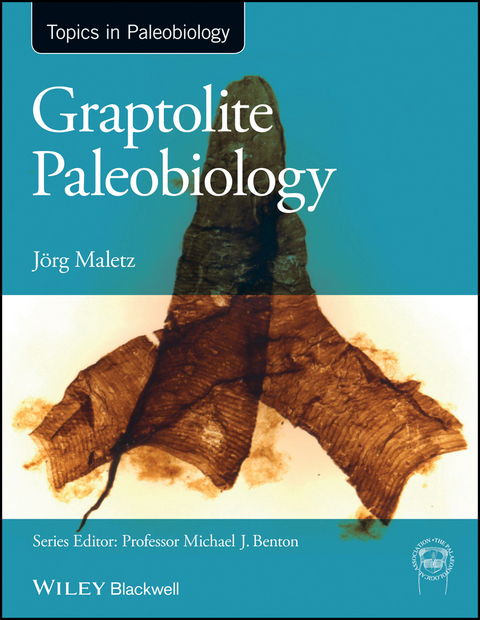
Graptolite Paleobiology (eBook)
John Wiley & Sons (Verlag)
978-1-118-51578-5 (ISBN)
The graptolites constitute one of the geologically most useful taxonomic groups of fossils for dating rock successions, understanding paleobiogeography and reconstructing plate tectonic configurations in the Lower Palaeozoic. Graptolites were largely planktic, marine organisms, and as one of the first groups that explored the expanses of the world's oceans are vital for understanding Palaeozoic ecology. They are the best and often the only fossil group for dating Lower Palaeozoic rock successions precisely. Thousands of taxa have been described from all over the planet and are used for a wide variety of geological and palaeontological (biological) research topics. The recent recognition of the modern pterobranch Rhabdopleura as a living benthic graptolite enables a much better understanding and interpretation of the fossil Graptolithina.
In the decades since the latest edition of the Graptolite Treatise, the enormous increase of knowledge on this group of organisms has never been synthesised in a compelling and coherent way, and information is scattered in scientific publications and difficult to sort through. This volume provides an up-to-date insight into research on graptolites. Such research has advanced considerably with the use of new methods of investigation and documentation. SEM investigation and research on ultrastructure of the tubaria has made it possible to compare extant and extinct taxa in much more detail. Cladistic interpretation of graptolite taxonomy and evolution has advanced the understanding of this group of organisms considerably in the last two decades, and has highlighted their importance in our understanding of evolutionary processes. This book will show graptolites, including their modern, living relatives, in a quite new and fascinating light, and will demonstrate the impact that the group has had on the evolution of the modern marine ecosystem.
This book is aimed not only at earth scientists but also at biologists, ecologists and oceanographers. It is a readable and comprehensible volume for students at the MSc level, while remaining accessible to undergraduates and non-specialists seeking up-to-date information about this fascinating topic in palaeobiology.
Jörg Maletz is a researcher based at the Freie Universität Berlin, Germany.
The graptolites constitute one of the geologically most useful taxonomic groups of fossils for dating rock successions, understanding paleobiogeography and reconstructing plate tectonic configurations in the Lower Palaeozoic. Graptolites were largely planktic, marine organisms, and as one of the first groups that explored the expanses of the world s oceans are vital for understanding Palaeozoic ecology. They are the best and often the only fossil group for dating Lower Palaeozoic rock successions precisely. Thousands of taxa have been described from all over the planet and are used for a wide variety of geological and palaeontological (biological) research topics. The recent recognition of the modern pterobranch Rhabdopleura as a living benthic graptolite enables a much better understanding and interpretation of the fossil Graptolithina. In the decades since the latest edition of the Graptolite Treatise, the enormous increase of knowledge on this group of organisms has never been synthesised in a compelling and coherent way, and information is scattered in scientific publications and difficult to sort through. This volume provides an up-to-date insight into research on graptolites. Such research has advanced considerably with the use of new methods of investigation and documentation. SEM investigation and research on ultrastructure of the tubaria has made it possible to compare extant and extinct taxa in much more detail. Cladistic interpretation of graptolite taxonomy and evolution has advanced the understanding of this group of organisms considerably in the last two decades, and has highlighted their importance in our understanding of evolutionary processes. This book will show graptolites, including their modern, living relatives, in a quite new and fascinating light, and will demonstrate the impact that the group has had on the evolution of the modern marine ecosystem. This book is aimed not only at earth scientists but also at biologists, ecologists and oceanographers. It is a readable and comprehensible volume for students at the MSc level, while remaining accessible to undergraduates and non-specialists seeking up-to-date information about this fascinating topic in palaeobiology.
Jörg Maletz is a researcher based at the Freie Universität Berlin, Germany.
List of Contributors vii
Preface viii
Acknowledgments x
1 Graptolites: An Introduction 1
Jan Zalasiewicz and Jörg Maletz
2 Biological Affinities 15
Jörg Maletz
3 Construction of Graptolite Tubaria 31
Jörg Maletz, Alfred C. Lenz and Denis E. B. Bates
4 Paleoecology of the Pterobranchia 50
Jörg Maletz and Denis E. B. Bates
5 Graptolites as Rock Components 76
Jörg Maletz
6 Graptolites and Stratigraphy 94
Jörg Maletz
7 Taxonomy and Evolution 111
Jörg Maletz
8 Bound to the Sea Floor: The Benthic Graptolites 124
Jörg Maletz
9 The Planktic Revolution 139
Jörg Maletz
10 Early Ordovician Diversity Burst 153
Jörg Maletz and Yuandong Zhang
11 The Biserial Graptolites 181
Jörg Maletz
12 The Retiolitid Graptolites 207
Jörg Maletz, Denis E. B. Bates, Anna Koz³owska and Alfred C. Lenz
13 The Monograptids 221
Jörg Maletz
14 Collection, Preparation and Illustration of Graptolites 244
Denis E. B. Bates and Jörg Maletz
15 History of Graptolite Research 254
Jörg Maletz
References 270
Index 311
Graptolites might have lost some of their utilitarian appeal even to Palaeozoic biostratigraphers but they have gained in palaeobiological interest over the last few decades. Graptolite Paleobiology marks a useful point in graptolite studies when it is appropriate to take stock of what has been achieved.
Arguably the last time this happened was in 1955 when Bulman wrote the first edition of the graptolite volume of the Treatise. Maletz and contributors are to be congratulated on pulling together such a considerable body of research, stretching back nearly 300 years, and for producing such a beautifully illustrated and informative book, which deserves a place in every geological library.
It was 1735 when Linnaeus first noticed this somewhat enigmatic group of fossils. He coined the name Graptolithus, derived from the Greek via modern Latin and meaning 'written rock', although he thought that they were the fossil remains of plants.
Maletz reviews the progress that has been made, especially since the early decades of the 19th Century. At that time, graptolite studies were broadly divided between a European academic tradition with a biological approach to the fossils (especially in Sweden and subsequently Poland), whereas in Britain the approach was more utilitarian and biostratigraphical. Although there was of course a more general international interest in the taxonomy and evolution of the graptolites, this progressed quite independently of any need to understand their biological affinities. Conodont research had a similar history of development.
Only in the mid-20th Century did palaeobiological and biostratigraphical approaches begin to merge. As with that other group of enigmatic marine Palaeozoic fossils (conodonts), the underlying biological problem with graptolites was the zoological identity of the graptolite organism. Although microscope studies of chemically isolated specimens by Swedish palaeontologists had already presented clues as to the graptolites' pterobranch affinity, it took another 70 years before the new technologies of scanning and transmission electron microscopy revealed the true connection.
Despite a diminishing number of researchers, great progress has been made across the whole range of graptolite studies in recent decades. Palaeobiology cannot stand alone without support from taxonomic and evolutionary research. As Maletz shows so clearly, all have benefited from the ability to examine chemically isolated specimens by electron microscopy both SEM and TEM. Crowther's 'breakthrough' recognition in the late 1970s of the nature and origin of cortical 'bandages' in the structure of the graptolite stipe led the way.
Much of the graptolite research literature is notoriously scattered and often hard to access but Graptolite Paleobiology provides an excellent digest and is essential reading for all advanced students. (Reviewed by Douglas Palmer)
"Maletz and contributors are to be congratulated on pulling together such a considerable body of research... a beautifully illustrated and informative book." (Geoscientist, March 2018)
1
Graptolites: An Introduction
Jan Zalasiewicz and Jörg Maletz
What are graptolites? To many geologists, they are somewhat scratch mark‐like markings on rocks that represent one of the more strange fossil groups, lacking the ferocity of the dinosaurs, the smooth elegance of the ammonites or the charisma of the trilobites. And yet, observed closely, they represent one of the most beautiful, mysterious and useful of all of the fossil groups.
Their beauty is often concealed by the unkindness of geological preservation, all too many specimens being crushed by the weight of overlying strata, or distorted by the tectonic forces that raise mountains. They are also, simply, too small for casual human observation. Many are smaller than a matchstick, and their tiny shapes can appear as mere scratch‐like markings on the rocks. Others are quite large, with some umbrella‐shaped colonies in the Ordovician measuring about 1 m in diameter, and some stick‐like straight Silurian monograptids measuring more than 1 m in length.
But there are – more commonly than one might think – those specimens that have managed to resist the twin pressures of burial and tectonics, perhaps because a rigid mass of pyrite (fool’s gold) crystallized within their remains, or because they were encased in chemically precipitated calcium carbonate or silica before they were deeply buried. These, when looked at through a hand lens, or, better, a stereo microscope, reveal a rich diversity of extraordinary, other‐worldly geometric patterns, finely engineered for purposes that we still, for the most part, can only guess at. The precision of their construction, and the distinct architectures shown by different species are, of course, key to their identification (Figure 1.1) and hence to their use by geologists.
Figure 1.1 Images of well‐preserved graptolites, showing the complexity and beauty of their construction. (A) Archiclimacograptus sp., obverse view, SEM photo, Table Head Group, western Newfoundland, Canada. (B) Dicranograptus irregularis, obverse view, relief specimen, Scania, Sweden. (C) Spirograptus turriculatus (Barrande, 1850), proximal end, SEM photo, Kallholn Shale, Llandovery, Dalarna, Sweden. Scale indicated by 1 mm long bar in each photo.
The exquisite morphological detail can, in some specimens, extend to the finest scale of observation, where minute parts of these fossils, magnified hundreds of thousands of times by an electron microscope, show traces of their original molecular architecture, relics of the biological processes that built the entire fossils but also remain largely mysterious.
Biology
Graptolites are biological enigmas of the first order. They were all colonial, and seemingly obliged to be so. A few colonies went down to just a handful of individuals, while some had thousands. They are represented today by the colonial pterobranch hemichordate Rhabdopleura, which, through modern taxonomic analyses, is now regarded as lying within the graptolite clade (Chapter 2). Rhabdopleura comprises bottom‐living colonies (Figure 1.2E) that share a pattern of behaviour with corals and bryozoans. They are animal architects constructing the “homes”, the collagenous tubes, in which they live. One of the major differences, however, is that their housing constructions are formed from an organic compound, not from minerals like the calcium carbonate used by the corals. Rhabdopleura is most closely related to the cephalodiscids (order Cephalodiscida), a second, less well organized and not truly colonial group of pterobranchs forming their tubaria from organic material in a very similar fashion (Figure 1.2 F, G).
Figure 1.2 Pterobranchs and their housing constructions (tubaria). Extant Cephalodiscus (A, B, F, G) and Rhabdopleura (C–E) to show the zooids (A–D) and their tubaria. Illustrations after Sars 1874 (C, D), Lester 1985 (B), Dilly et al. 1986 (A), Emig 1977 (F), and M’Intosh 1887 (G). Illustrations not to scale.
[(A) adapted from Dilly et al. (1986) with permission from John Wiley & Sons. (B) adapted from Lester (1985) with permission from Springer Science + Business Media.]
Thus, graptolites built the robust, easily fossilizable constructions, or more precisely their tubaria, while the architects themselves, the delicate and perishable zooids of the colony, were almost never preserved in the fossil record, and we know of them only through their living representatives. The discovery of that evidence, in the 1980s (Chapter 2), in the form of the “fuselli” and “cortical bandages” with which the graptolites, quite literally, wrapped their homes, is one of the classic paradigm shifts in the whole of paleontology. Moreover, in the intricacy, complexity and integration of these homes, which were not skeletons, the planktic graptolites far surpassed the often crude and untidy constructions of the living, benthic taxa (Chapter 8), especially those of the encrusting forms.
Analysis of the command‐and‐control systems by which the graptolite zooids, acting cooperatively, carried out these scarcely believable constructional feats is in its infancy, while the implications for graptolite evolution, and, more widely, for understanding the evolution of animal behaviour, have scarcely been examined at all. There must be implications here, too, for the extremely rapid evolution shown by the graptolites, or, to be specific, by the planktic graptoloids (Chapter 9). Again, these implications have yet to be seriously examined. We are, in a very real sense, at the beginning – we trust – of a new phase of graptolite research.
Evolution
The planktic graptolites in particular provide splendid examples of evolution (Chapter 7). Their evolutionary changes can be followed, often stratum by stratum, through the geological column. In Darwin’s concept of “descent with modification”, they show clear changes in graptolite species assemblages and morphology through successions of strata and also, importantly, provide the basis for biostratigraphy.
The overall pattern of change (Figure 1.3) has been clear since Lapworth’s day: the change from the many‐branched early forms that, already by the Lower Ordovician, settled into myriad forms of two‐ to four‐branched dichograptids, including the classic “tuning‐fork” species or pendent didymograptids (Chapter 10). Early in the Ordovician there was the development of graptolites with two “back‐to‐back” branches, the biserial graptolites that dominated faunas from then on, and into the early Silurian, with some then reverting wholly or partly to a uniserial state, such as the V‐shaped dicellograptids or the Y‐shaped dicranograptids (Chapter 11). Following the end‐Ordovician crisis when graptolites nearly became extinct, the monograptid graptolites arose. It is somewhat counterintuitive that this morphology, seemingly so simple, took so long to appear. Single‐stiped graptoloids, though, had been around since early Ordovician times and evolved several times independently, as can be seen in the Lower Ordovician genus Azygograptus (see Beckly & Maletz 1991) and the Upper Ordovician Pseudazygograptus (see Mu et al. 1960). The monograptids, liberated of the need to involve another stipe in their construction, rapidly evolved a dazzling – and often highly complex – range of overall forms and thecal shapes, including many variations on the spiral theme, and developed secondary branches in some cases.
Figure 1.3 Large‐scale evolutionary changes in graptoloids. (A) Encrusting benthic graptolite, Rhabdopleura normani Allman, 1869. (B) Benthic dendroid, Dictyonema cavernosum Wiman, 1896. (C) Multiramous Goniograptus thureaui (M’Coy, 1876). (D) Two‐stiped, reclined Isograptus mobergi Maletz, 2011d. (E) Biserial graptolite, Archiclimacograptus sp. (F) Straight monograptid Monograptus priodon (Bronn, 1834). (G) Coiled monograptid Demirastrites sp. (H) Secondarily multiramous Abiesgraptus sp. Graptolite illustrations not to scale.
There were many other innovations. At least twice in their history, graptolites found means to largely replace their solid‐walled living chambers with elaborate, delicate meshworks: the archiretiolitids of the Ordovician (Chapter 11) and the retiolitids of the Silurian (Chapter 12). The latter represent the peak of graptolite complexity, at least as far as the architecture of their living chambers is concerned, and their study is a highly specialized endeavour, even within the specialist world of graptolite paleontology.
The evidence that is preserved is that of the graptolite tubaria, collected from various levels in strata in various parts of the world. Sampling by paleontologists reflects only tiny fragments of the ancient world of the Early Paleozoic. These fragments may be more or less representative of that world, but much evolution must have taken place in regions where strata were not preserved, or have not yet been recovered. Given this, what can be said about the patterns of evolution, when looking more closely?
One can look, most simply, for...
| Erscheint lt. Verlag | 14.3.2017 |
|---|---|
| Reihe/Serie | TOPA Topics in Paleobiology |
| TOPA Topics in Paleobiology | TOPA Topics in Paleobiology |
| Sprache | englisch |
| Themenwelt | Geisteswissenschaften ► Archäologie |
| Geschichte ► Allgemeine Geschichte ► Vor- und Frühgeschichte | |
| Naturwissenschaften ► Biologie | |
| Naturwissenschaften ► Geowissenschaften ► Geologie | |
| Naturwissenschaften ► Geowissenschaften ► Mineralogie / Paläontologie | |
| Technik | |
| Schlagworte | benthic graptolite • biologists • Biowissenschaften • dating Lower Palaeozoic rock successions • dating rock successions • earth sciences • earth scientists • ecologists • evolutionary biology • Evolutionsbiologie • fossils • Geological research • Geowissenschaften • graptolite evolution • Graptolite Paleobiology • graptolites • graptolite taxonomy • Graptolite Treatise • Graptolithen • Graptolithina • Jan Zalasiewicz • Jorg Maletz • Life Sciences • Marine ecosystem • Oceanographers • palaeobiology • palaeontological research • Palaeozoic ecology • Paläontologie • Paläontologie, Paläobiologie u. Geobiologie • Paleobiogeography • Paleontology, Paleobiology & Geobiology • pterobranch Rhabdopleura • reconstructing plate tectonic configurations in the Lower Palaeozoic • SEM investigation |
| ISBN-10 | 1-118-51578-1 / 1118515781 |
| ISBN-13 | 978-1-118-51578-5 / 9781118515785 |
| Informationen gemäß Produktsicherheitsverordnung (GPSR) | |
| Haben Sie eine Frage zum Produkt? |
 EPUB (Adobe DRM)
Kopierschutz: Adobe-DRM
Adobe-DRM ist ein Kopierschutz, der das eBook vor Mißbrauch schützen soll. Dabei wird das eBook bereits beim Download auf Ihre persönliche Adobe-ID autorisiert. Lesen können Sie das eBook dann nur auf den Geräten, welche ebenfalls auf Ihre Adobe-ID registriert sind.
Details zum Adobe-DRM
Dateiformat: EPUB (Electronic Publication)
EPUB ist ein offener Standard für eBooks und eignet sich besonders zur Darstellung von Belletristik und Sachbüchern. Der Fließtext wird dynamisch an die Display- und Schriftgröße angepasst. Auch für mobile Lesegeräte ist EPUB daher gut geeignet.
Systemvoraussetzungen:
PC/Mac: Mit einem PC oder Mac können Sie dieses eBook lesen. Sie benötigen eine
eReader: Dieses eBook kann mit (fast) allen eBook-Readern gelesen werden. Mit dem amazon-Kindle ist es aber nicht kompatibel.
Smartphone/Tablet: Egal ob Apple oder Android, dieses eBook können Sie lesen. Sie benötigen eine
Geräteliste und zusätzliche Hinweise
Buying eBooks from abroad
For tax law reasons we can sell eBooks just within Germany and Switzerland. Regrettably we cannot fulfill eBook-orders from other countries.
aus dem Bereich