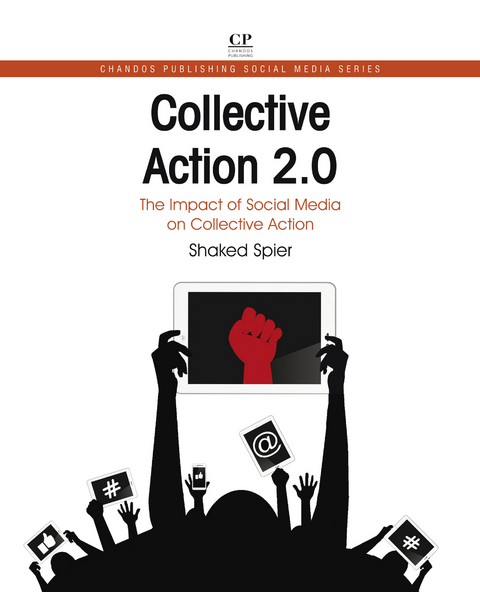
Collective Action 2.0 (eBook)
198 Seiten
Elsevier Science (Verlag)
978-0-08-100579-8 (ISBN)
Shaked Spier graduated in Information Science and Gender Studies at the Humboldt University, Berlin. His research and writing analyzes a variety of topics related to the connection between ICTs and society, information ethics, digital policies, and digital rights using interdisciplinary approaches. At present, he works as projectmanager in diverse information technology projects. Additionally, he volunteers as spokesperson of a German political working group on internet policy, digital society, and digital rights as well as cooperates with various non-governmental organizations (NGOs) in this field.
Collective Action 2.0 explores the issues related to information and communication technologies (ICTs) in detail, providing a balanced insight into how ICTs leverage and interact with collective action, which will have an impact on the current discourse. Recent events in different authoritarian regimes, such as Iran and Egypt, have drawn global attention to a developing phenomenon in collective action: People tend to organize through different social media platforms for political protest and resistance. This phenomenon describes a change in social structure and behavior tied to ICT. Social media platforms have been used to leverage collective action, which has in some cases arguably lead, to political revolution. The phenomenon also indicates that the way information is organized affects the organization of social structures with which it interoperates. The phenomenon also has another side, which is the use of social media for activist suppression, state and corporate surveillance, commodifi cation of social processes, demobilization, or for the mobilization of collective action toward undesirable ends. - Analyzes social media and collective action in an in-depth and balanced manner- Presents an account of avoiding technological determinism, utopianism, and fundamentalism- Considers the underlying theory behind quick-paced social media- Takes an interdisciplinary approach that will resonate with all those interested in social media and collective action, regardless of fi eld specialism
| Erscheint lt. Verlag | 28.2.2017 |
|---|---|
| Sprache | englisch |
| Themenwelt | Geisteswissenschaften ► Sprach- / Literaturwissenschaft |
| Mathematik / Informatik ► Informatik ► Web / Internet | |
| Recht / Steuern ► Privatrecht / Bürgerliches Recht ► IT-Recht | |
| Sozialwissenschaften ► Kommunikation / Medien ► Buchhandel / Bibliothekswesen | |
| Sozialwissenschaften ► Kommunikation / Medien ► Medienwissenschaft | |
| Sozialwissenschaften ► Politik / Verwaltung | |
| ISBN-10 | 0-08-100579-2 / 0081005792 |
| ISBN-13 | 978-0-08-100579-8 / 9780081005798 |
| Informationen gemäß Produktsicherheitsverordnung (GPSR) | |
| Haben Sie eine Frage zum Produkt? |
 PDF (Adobe DRM)
Kopierschutz: Adobe-DRM
Adobe-DRM ist ein Kopierschutz, der das eBook vor Mißbrauch schützen soll. Dabei wird das eBook bereits beim Download auf Ihre persönliche Adobe-ID autorisiert. Lesen können Sie das eBook dann nur auf den Geräten, welche ebenfalls auf Ihre Adobe-ID registriert sind.
Details zum Adobe-DRM
Dateiformat: PDF (Portable Document Format)
Mit einem festen Seitenlayout eignet sich die PDF besonders für Fachbücher mit Spalten, Tabellen und Abbildungen. Eine PDF kann auf fast allen Geräten angezeigt werden, ist aber für kleine Displays (Smartphone, eReader) nur eingeschränkt geeignet.
Systemvoraussetzungen:
PC/Mac: Mit einem PC oder Mac können Sie dieses eBook lesen. Sie benötigen eine
eReader: Dieses eBook kann mit (fast) allen eBook-Readern gelesen werden. Mit dem amazon-Kindle ist es aber nicht kompatibel.
Smartphone/Tablet: Egal ob Apple oder Android, dieses eBook können Sie lesen. Sie benötigen eine
Geräteliste und zusätzliche Hinweise
Buying eBooks from abroad
For tax law reasons we can sell eBooks just within Germany and Switzerland. Regrettably we cannot fulfill eBook-orders from other countries.
aus dem Bereich