


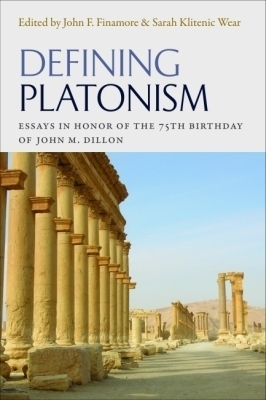
Defining Platonism
Essays on Plato, Middle and Neoplatonism, and Modern Platonism
Seiten
2017
Franciscan Academic Press (Verlag)
978-0-9969305-3-6 (ISBN)
Franciscan Academic Press (Verlag)
978-0-9969305-3-6 (ISBN)
- Titel nicht im Sortiment
- Artikel merken
Surveys a wide range of methods of Platonic interpretation, ranging from the dialogues themselves, to Middle and Neoplatonic interpretations of Plato's writings, to modern uses of Platonism. As a philosophical movement, Platonism is broadly conceived, covering schools and philosophers beginning with Plato and his immediate followers and extending through contemporary philosophers.
This collection of essays surveys a wide range of methods of Platonic interpretation, ranging from the dialogues themselves, to Middle and Neoplatonic interpretations of Plato’s writings, to modern uses of Platonism. As a philosophical movement, Platonism is broadly conceived, covering schools and philosophers beginning with Plato and his immediate followers and extending through contemporary philosophers. The history of Platonism begins, of course, with Plato himself. But his adoption of the dialogue style and his active engagement with students in his Academy, where he certainly used dialectic techniques, led almost immediately to questioning what Plato’s doctrines actually were. His student Aristotle raised questions of interpretations and invoked esoteric teachings not present in the written works. The earliest heads of the Academy struggled with Plato’s texts as well, creating rival interpretations. These early discussions gave rise to later ones, and Platonism became simultaneously a dogmatic philosophy and a source of sometimes-heated debate of what the master intended. From its inception, Platonism was a dynamic philosophy, open to varied interpretations on different fronts while also maintaining a common core of beliefs. Platonism gave rise to methods of interpretation that centered on historical, ethical, political, or metaphysical questions engendered by Plato’s writings. The ancient commentators reflected the teachings of their predecessors, and with only a few schools in the Greco-Roman world, many of their students studying under the same teachers, meant a heightened continuity in the tradition of interpretation. This volume honors the seventy-fifth birthday of John Dillon, the great scholar of Platonism whose scholarship had a pivotal role in defining Platonism as a philosophical movement in contemporary academia.
This collection of essays surveys a wide range of methods of Platonic interpretation, ranging from the dialogues themselves, to Middle and Neoplatonic interpretations of Plato’s writings, to modern uses of Platonism. As a philosophical movement, Platonism is broadly conceived, covering schools and philosophers beginning with Plato and his immediate followers and extending through contemporary philosophers. The history of Platonism begins, of course, with Plato himself. But his adoption of the dialogue style and his active engagement with students in his Academy, where he certainly used dialectic techniques, led almost immediately to questioning what Plato’s doctrines actually were. His student Aristotle raised questions of interpretations and invoked esoteric teachings not present in the written works. The earliest heads of the Academy struggled with Plato’s texts as well, creating rival interpretations. These early discussions gave rise to later ones, and Platonism became simultaneously a dogmatic philosophy and a source of sometimes-heated debate of what the master intended. From its inception, Platonism was a dynamic philosophy, open to varied interpretations on different fronts while also maintaining a common core of beliefs. Platonism gave rise to methods of interpretation that centered on historical, ethical, political, or metaphysical questions engendered by Plato’s writings. The ancient commentators reflected the teachings of their predecessors, and with only a few schools in the Greco-Roman world, many of their students studying under the same teachers, meant a heightened continuity in the tradition of interpretation. This volume honors the seventy-fifth birthday of John Dillon, the great scholar of Platonism whose scholarship had a pivotal role in defining Platonism as a philosophical movement in contemporary academia.
John F. Finamore is professor of classics at the University of Iowa. Sarah Klitenic Wear is associate professor of classics at the Franciscan University of Steubenville.
| Erscheinungsdatum | 16.08.2017 |
|---|---|
| Verlagsort | Steubenville |
| Sprache | englisch |
| Maße | 160 x 236 mm |
| Gewicht | 730 g |
| Themenwelt | Literatur ► Essays / Feuilleton |
| Geisteswissenschaften ► Philosophie ► Philosophie Altertum / Antike | |
| Geisteswissenschaften ► Philosophie ► Philosophie der Neuzeit | |
| ISBN-10 | 0-9969305-3-1 / 0996930531 |
| ISBN-13 | 978-0-9969305-3-6 / 9780996930536 |
| Zustand | Neuware |
| Informationen gemäß Produktsicherheitsverordnung (GPSR) | |
| Haben Sie eine Frage zum Produkt? |
Mehr entdecken
aus dem Bereich

aus dem Bereich
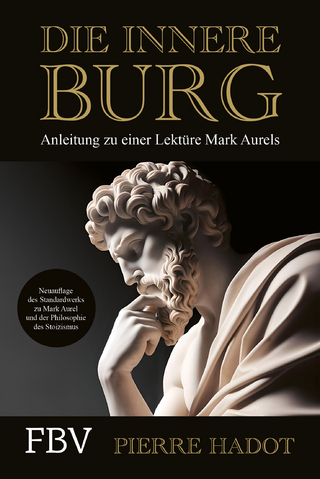
Anleitung zu einer Lektüre Mark Aurels
Buch | Hardcover (2025)
FinanzBuch Verlag
CHF 27,95


