


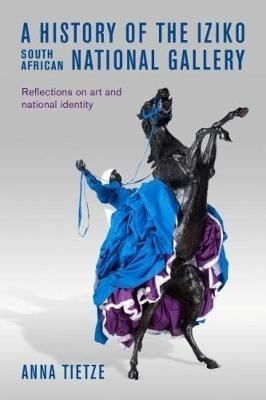
A history of the Iziko South African National Gallery
Reflections on art and national identity
Seiten
2017
University of Cape Town Press (Verlag)
978-1-77582-216-5 (ISBN)
University of Cape Town Press (Verlag)
978-1-77582-216-5 (ISBN)
- Keine Verlagsinformationen verfügbar
- Artikel merken
In South Africa, with its highly contested and changing understandings of national identity, its National Gallery is no less a contested space. A History of the Iziko South African National Gallery considers questions of artistic and cultural identity, from the late 19th century to the present day.
Questions today about what art should be represented in public spaces in South Africa are in fact part of a debate that is more than a century old. The Iziko South African National Gallery (SANG) is no less a contested space. Is the chief role of a national art gallery to showcase the host nation’s art? Or is its mission an internationalist and historical one? The gallery is a microcosm of a greater debate — how the South African nation relates to the larger world and how, if at all, it understands the concept of a shared culture. Art and National Identity considers questions of artistic and cultural identity through a history of the South African National Gallery from the late 19th century to the present day. It explores the question of how the gallery has understood its function and its public, as a `national’ gallery (from 1930) and, before that, the chief gallery of the Cape Colony. These questions are explored through a study of the gallery’s administration, collection and exhibition practices, as well as the public response to exhibitions. In the last 20 years, museum studies have become a major part of the field of cultural studies. There is a vast literature on what might be called the `history’ museum, but far less on the art museum or gallery, and there has been no largescale historical inquiry into the Iziko SANG, the country’s national gallery. This study aims to fill this gap.
Questions today about what art should be represented in public spaces in South Africa are in fact part of a debate that is more than a century old. The Iziko South African National Gallery (SANG) is no less a contested space. Is the chief role of a national art gallery to showcase the host nation’s art? Or is its mission an internationalist and historical one? The gallery is a microcosm of a greater debate — how the South African nation relates to the larger world and how, if at all, it understands the concept of a shared culture. Art and National Identity considers questions of artistic and cultural identity through a history of the South African National Gallery from the late 19th century to the present day. It explores the question of how the gallery has understood its function and its public, as a `national’ gallery (from 1930) and, before that, the chief gallery of the Cape Colony. These questions are explored through a study of the gallery’s administration, collection and exhibition practices, as well as the public response to exhibitions. In the last 20 years, museum studies have become a major part of the field of cultural studies. There is a vast literature on what might be called the `history’ museum, but far less on the art museum or gallery, and there has been no largescale historical inquiry into the Iziko SANG, the country’s national gallery. This study aims to fill this gap.
Anna Tietze is a cultural and art historian with an interest in past and present conceptions of art, academic art history and the art museum. She has taught at the University of Cape Town for many years, in the departments of Cultural History, History of Art, Historical Studies and Michaelis School of Fine Art, and has had extensive curatorial experience with the Iziko South African National Gallery.
Introduction: the aims and scope of a national gallery; Chapter 1: The colonial gallery: acquisitions and identity, 1875-1930; Chapter 2: Collecting for a national gallery, 1930-47; Chapter 3: The post-war years, 1947-72; Chapter 4: The protest years, 1973-1989; Chapter 5: Transformation post-apartheid, 1990-2017; Conclusion.
| Erscheinungsdatum | 31.01.2017 |
|---|---|
| Verlagsort | Cape Town |
| Sprache | englisch |
| Maße | 152 x 228 mm |
| Gewicht | 500 g |
| Themenwelt | Kunst / Musik / Theater |
| Geisteswissenschaften ► Geschichte ► Hilfswissenschaften | |
| ISBN-10 | 1-77582-216-8 / 1775822168 |
| ISBN-13 | 978-1-77582-216-5 / 9781775822165 |
| Zustand | Neuware |
| Informationen gemäß Produktsicherheitsverordnung (GPSR) | |
| Haben Sie eine Frage zum Produkt? |
Mehr entdecken
aus dem Bereich

aus dem Bereich
die Geburt der Grafiksammlung des Kunstmuseums Stuttgart im …
Buch | Hardcover (2024)
VDG Weimar - Verlag und Datenbank für Geisteswissenschaften
CHF 36,90
kulturelles Erbe und Identität in historischen und jüdischen Museen …
Buch | Hardcover (2025)
De Gruyter Oldenbourg (Verlag)
CHF 41,90
kartografische Wissenskulturen um 1448
Buch | Hardcover (2024)
De Gruyter (Verlag)
CHF 139,90


