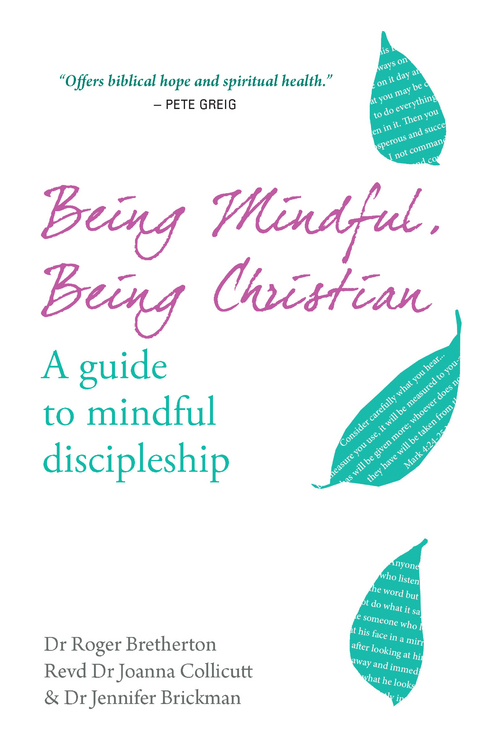
Being Mindful, Being Christian (eBook)
256 Seiten
Lion Hudson Plc (Verlag)
978-0-85721-786-8 (ISBN)

Given the rapid spread of mindfulness programmes for issues as wide-ranging as depression, pain, employee engagement and character development, this book is aimed at the numerous Christians who are wondering what to make of all this.Ultimately, it will allow questioning Christians to get to grips with mindfulness in a way that is both discerning and sympathetic. By offering background information about 'being mindful' the book will allow readers to disconnect mindfulness from the background of Buddhism in which it is frequently framed.This then allows them to decide the extent to which they wish to learn and practice mindfulness without feeling the need to embrace Eastern philosophy in its entirety. In addition, by profiling the rich Christian tradition of mindful-like practice, it offers a distinctively Jesus-centred approach to non-judgemental awareness, and then applies this beneficially to many different areas of faith.On putting the book down the reader will be encouraged not to be fearful of the widespread teaching of mindfulness, emboldened to discern the point at which they politely part company with Eastern meditative practices, and equipped to use all that is good in the practice of mindfulness to develop their relationship with Jesus and with others.
The Mindful God
In the beginning
Before human beings discovered mindfulness, God was mindful.
The mindfulness of God is attentive and watchful; it is open and hospitable to what it encounters, rather than defensive and reactive; it describes without rushing to judgment. In many ways it is very like human mindfulness. But it is also profoundly different. After all we’re talking about God here: “For My thoughts are not your thoughts, nor are your ways My ways, says the Lord. For as the heavens are higher than the earth, so are My ways higher than your ways, and My thoughts than your thoughts” (Isaiah 55:8–9 NKJV).
God’s mindfulness comes before all human attempts at mindfulness (just as his love and forgiveness come before all human attempts at love and forgiveness). It is first: through it all mindful creatures were brought into being. It is fundamentally creative and re-creative. Healthy human mindfulness is a participation in this creative and re-creative mindfulness of God. The world could not have been brought into being without the mindfulness of God, and it could not continue to be sustained without the mindfulness of God.
God thinks therefore I am
The Old Testament links the mindfulness of God to his loving care of human beings. The psalmist asks “What is man that you are mindful of him, and the son of man that you care for him?” (Psalm 8:4 ESV). On the face of it this verse seems to be posing the question of why God would bother with puny little creatures like us, but some scholars have seen something deeper here. They suggest that the psalmist is instead pondering what it means to be human – “what is man?”, and he comes to the answer “that you are mindful of him”. That is, we are human precisely because God is mindful of us! If God were to stop keeping us in mind we would cease to be. God’s mindfulness is what gives us our souls. Elsewhere in the psalms, God’s constant non-judgmental scrutiny is linked with the very act of forming the psalmist as a developing foetus: “My frame was not hidden from you when I was made in the secret place, when I was woven together in the depths of the earth. Your eyes saw my unformed body; all the days ordained for me were written in your book before one of them came to be” (Psalm 139:15–16).
Where Did it Come From?
Hebrew and Greek
In the Hebrew Old Testament the word for “be mindful” is zākar and in the Greek version of the Old Testament (which dates from the third century bc) the word is mimneskomai – the same word used by the thief on the cross in the Greek New Testament.
In the Old Testament God’s mindfulness is not just psychological; it is “ontological”. This means that when God is mindful things come into existence and when he ceases to be mindful of something it ceases to exist.
Hebrew poetry often uses “parallelisms”, which means that it says the same thing twice but using different words. This helps us to work out what the words mean. In the case of Psalm 8 we find the parallelism “What is man that you are mindful of him, and the son of man that you care for him?” This tells us that being mindful means something very like “caring for”. The “care for” word is pāqad, which can mean “visit”, and so it has overtones of hospitality, something that is also characteristic of human mindfulness.
Yes… but…
Is it right to use the word “mindful” to describe God?
The Jews had their own understanding of mindfulness before Buddhism developed its version. There are similarities and differences between them.
In Judaism mindfulness is primarily a divine attribute, closely related to God’s loving-kindness (hesed), but one that human beings can emulate. In addition to being contemplative it is also active; this more active aspect of mindfulness corresponds well to a psychological state called “flow”.
The mindfulness of Christ reflects the mindfulness of the God of the Old Testament. So, while Christian understandings of mindfulness are later than Buddhism, their origin in Judaism is older. And of course Christian mindfulness is older than modern psychotherapy. There is a sense in which “we had it first”, and we need to be confident about acknowledging this.
The Hebrew word that is translated “mindful” in English Bibles has a range of meanings that include “remember”, “keep in mind”, “call to mind”, “be concerned about”, and – interestingly – “meditate”. It describes a kind of loving attentiveness, a calling to consciousness – as when we remember a friend’s birthday and communicate our remembering by sending a card. It’s what we mean when we say to someone who is going through a difficult time, “I’ll be thinking of you”.
God asserts that his basic nature is to be mindful of his people: “Can a mother forget the baby at her breast and have no compassion on the child she has borne? Though she may forget, I will not forget you! See, I have engraved you on the palms of my hands” (Isaiah 49:15–16a). Jesus himself describes this divine mindfulness in one of his parables: all the time the prodigal son was away in a far country his father was mindful of him.
The hospitable God
When the watchful and attentive father of the prodigal is finally reunited with his son he runs with open arms to greet him and hosts a great party. This is a picture of the hospitable God of Psalm 23 who not only feeds and guides the psalmist, but also lays a table for him and anoints him as an honoured guest. Psalm 23 ends with a statement of trust in God’s goodness and “loving-kindness”. It sums up God’s starting attitude to human beings – an attitude of love that treats us as if he is pleased with us even when we don’t look very worthy of this approval. It shows itself in compassionate action – an opening of the arms and the heart that makes you vulnerable to being hurt, abused, and rejected. Reflecting with wonder on this attribute of God, Paul writes: “God demonstrates his own love for us in this: While we were still sinners, Christ died for us” (Romans 5:8).
Hospitality, openness, and refraining from judging are key aspects of human mindfulness. The practitioner is encouraged to take a hospitable attitude to whatever thoughts and experiences arise, to consider them as they are, without evaluating them or getting bogged down in analysing them. Just as the father of the prodigal resists the urging of his older son to judge, the practitioner of mindfulness aims to resist the habit of evaluating. Of course there are times and places for judging and evaluating, but what is distinctive about mindfulness, and extraordinary about God, is that judgment is suspended for a while.
Jesus often talks about this suspension of judgment in terms of seed time and harvest. At the end of time the productivity of the fig tree will be evaluated, but for now we should “Leave it alone” (Luke 13:8); the wheat will be separated from the weeds but until then “let both grow together” (Matthew 13:30). We have to resist our human tendency to knee-jerk reactions and the rush to judgment because this is not God’s way. Jesus taught that right up until the one and final judgment God gives the benefit of the doubt.
“Jesus, remember me”
Jesus didn’t only teach this; he showed it in his acceptance of a dying thief who turned to him at the end of a life of crime (Luke 23:42). We are inclined to be cynical about “deathbed conversions”; they seem to be too easy – a way of getting the benefits of heaven even after a lifetime’s sinning. Yet somehow God sees it differently. Indeed, this is one way in which “my thoughts are not your thoughts”. Jesus saw something in the man who hung beside him, perhaps something missed by others. Whatever it was, it was enough for Jesus to give him the benefit of the doubt and to invite him into paradise.
By the Book
“Be opened”
The whole of this chapter focuses on the Bible, but if you are eager for more take a look at Mark 7:24–37.
This is the account of the meeting between Jesus and a foreign woman on foreign soil. At first Jesus does not seem inclined to offer this woman the hospitality of his table, appearing to judge her on the basis of her ethnicity. But in response to her words he sets this first instinct aside and is able to see her simply as herself without any further evaluation. Jesus’ mindfulness of the woman is depicted as a kind of opening up.
It is significant that he goes on from this to heal another foreigner, this time a deaf man, with the words “Ephphatha” – “be opened”. As Jesus touches this man in a deeply intimate way it’s as if he is passing his own recent opening up on to him.
To be healed by Jesus is to be opened – to become hospitable like Jesus. This is an insight we can bring to reading the Bible. To read the Bible mindfully is to read it with an openness to the healing presence of Jesus
The thief asks Jesus to “remember” him in that same word that is translated “be mindful of” in Psalm...
| Erscheint lt. Verlag | 18.11.2016 |
|---|---|
| Sprache | englisch |
| Themenwelt | Religion / Theologie ► Christentum ► Kirchengeschichte |
| Religion / Theologie ► Christentum ► Moraltheologie / Sozialethik | |
| Religion / Theologie ► Christentum ► Pastoraltheologie | |
| ISBN-10 | 0-85721-786-0 / 0857217860 |
| ISBN-13 | 978-0-85721-786-8 / 9780857217868 |
| Informationen gemäß Produktsicherheitsverordnung (GPSR) | |
| Haben Sie eine Frage zum Produkt? |
 EPUB (Adobe DRM)
Kopierschutz: Adobe-DRM
Adobe-DRM ist ein Kopierschutz, der das eBook vor Mißbrauch schützen soll. Dabei wird das eBook bereits beim Download auf Ihre persönliche Adobe-ID autorisiert. Lesen können Sie das eBook dann nur auf den Geräten, welche ebenfalls auf Ihre Adobe-ID registriert sind.
Details zum Adobe-DRM
Dateiformat: EPUB (Electronic Publication)
EPUB ist ein offener Standard für eBooks und eignet sich besonders zur Darstellung von Belletristik und Sachbüchern. Der Fließtext wird dynamisch an die Display- und Schriftgröße angepasst. Auch für mobile Lesegeräte ist EPUB daher gut geeignet.
Systemvoraussetzungen:
PC/Mac: Mit einem PC oder Mac können Sie dieses eBook lesen. Sie benötigen eine
eReader: Dieses eBook kann mit (fast) allen eBook-Readern gelesen werden. Mit dem amazon-Kindle ist es aber nicht kompatibel.
Smartphone/Tablet: Egal ob Apple oder Android, dieses eBook können Sie lesen. Sie benötigen eine
Geräteliste und zusätzliche Hinweise
Buying eBooks from abroad
For tax law reasons we can sell eBooks just within Germany and Switzerland. Regrettably we cannot fulfill eBook-orders from other countries.
aus dem Bereich