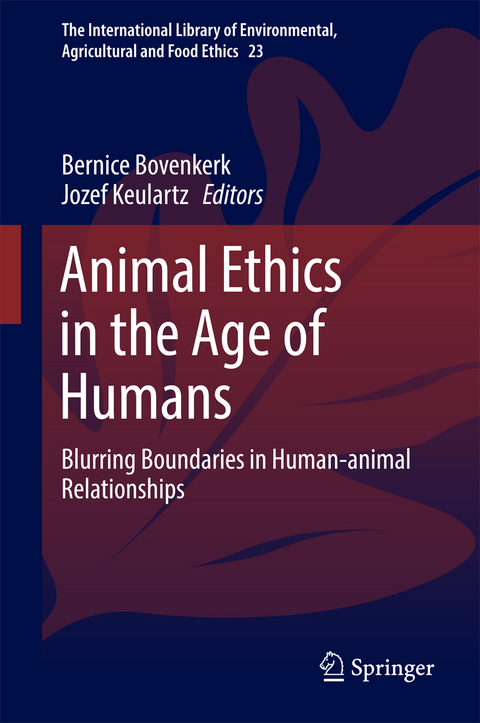
Animal Ethics in the Age of Humans (eBook)
414 Seiten
Springer International Publishing (Verlag)
978-3-319-44206-8 (ISBN)
This book provides reflection on the increasingly blurry boundaries that characterize the human-animal relationship. In the Anthropocene humans and animals have come closer together and this asks for rethinking old divisions. Firstly, new scientific insights and technological advances lead to a blurring of the boundaries between animals and humans. Secondly, our increasing influence on nature leads to a rethinking of the old distinction between individual animal ethics and collectivist environmental ethics. Thirdly, ongoing urbanization and destruction of animal habitats leads to a blurring between the categories of wild and domesticated animals. Finally, globalization and global climate change have led to the fragmentation of natural habitats, blurring the old distinction between in situ and ex situ conservation. In this book, researchers at the cutting edge of their fields systematically examine the broad field of human-animal relations, dealing with wild, liminal, and domestic animals, with conservation, and zoos, and with technologies such as biomimicry. This book is timely in that it explores the new directions in which our thinking about the human-animal relationship are developing. While the target audience primarily consists of animal studies scholars, coming from a wide range of disciplines including philosophy, sociology, psychology, ethology, literature, and film studies, many of the topics that are discussed have relevance beyond a purely theoretical one; as such the book also aims to inspire for example biologists, conservationists, and zoo keepers to reflect on their relationship with animals.
Dr. Bernice Bovenkerk is assistant professor at the Philosophy Group at Wageningen University. Previously she was post-doc and lecturer at the Ethics Institute at Utrecht University. She received her PhD from the University of Melbourne, Australia, on a dissertation titled The Biotechnology Debate. Democracy in the face of intractable disagreement (which she published with Springer). She received her Master’s title at the University of Amsterdam on a thesis titled Pluralism in Environmental Ethics. Bernice Bovenkerk is currently working on an Innovative Research Grant about the ethics of animal domestication. She has recently carried out research about the moral status and welfare of fish. Her research interests concern issues in animal and environmental ethics and political philosophy. Current topics are the moral status of animals and other natural entities, climate ethics, and deliberative democracy. Jozef Keulartz is emeritus Professor of Environmental Philosophy at the Radboud University Nijmegen, and senior researcher Applied Philosophy at Wageningen University and Research Centre. He has published extensively in different areas of science and technology studies, social and political philosophy, bioethics, environmental ethics and nature policy. His books include Die verkehrte Welt des Jürgen Habermas [The Topsy-Turvy World of Jürgen Habermas, 1995], Van bestraffing naar behandeling [From Punishment to Treatment, 1996, 4rd ed], Struggle for Nature – A Critique of Radical Ecology (1998), and Werken aan de grens – een pragmatische visie op natuur en milieu [Boundary-Work: A Pragmatist View on Nature and Environment, 2005]. He is editor of Wilhelm Dilthey: Kritiek van de historische rede [Wilhelm Dilthey: Critique of Historical Reason, 1994] and co-editor of Foucault herdenken [In Memory of Foucault, 1995], Museum Aarde [Museum Earth, 1997], Pragmatist Ethics for a Technological Culture (Kluwer, 2002), Legitimacy in European Nature Conservation Policy (Springer, 2008), New Visions of Nature (Springer, 2009), Environmental Aesthetics. Crossing Divides and Breaking Ground (Fordham University Press, 2013), and Old World and New World Perspectives in Environmental Philosophy (Springer, 2014).
Acknowledgments 6
Contents 7
Editors and Contributors 10
1 Changing Relationships with Non-human Animals in the Anthropocene—An Introduction 17
Abstract 17
1 The Anthropocene—Questions of Definition and Dating 17
1.1 The Stages of the Anthropocene 19
1.2 The Planetary Boundary Framework 20
1.3 Novel Ecosystems as Hallmark of the Anthropocene 21
2 The Anthropocene as Apple of Discord 21
2.1 Two French Philosophers 22
2.2 Two Converts 24
2.3 Resistance and Reconciliation 24
3 Biodiversity Conservation Options in the Anthropocene 26
3.1 The Translocation Spectrum 26
3.2 Controversies Over Translocations 29
4 Blurring Boundaries: An Overview 30
4.1 Between Human and Animal 31
4.2 Between Wild and Domestic 32
4.3 Between Freedom and Captivity 34
4.4 Between Animal Ethics and Conservation Ethics 35
References 36
Between Human and Animal 39
2 Deep History, Evolutionary History, and Animals in the Anthropocene 40
Abstract 40
1 History in the Anthropocene 40
2 Animal Histories 42
3 Expanding Time 44
4 History, Prehistory, and the Human 46
5 Animals, Natural History, and Evolution 47
6 Evolution in Play: Rewriting History 49
7 Conclusion 50
References 51
3 Organisms as Teachers? The Promise of Biomimicry 53
Abstract 53
1 The Biomimicry Revolution 53
2 The Conscious Emulation of Life’s Genius 55
3 Biomimicry as a Tutorial Practice 56
4 Organisms as Teachers 57
5 Biomimicry in Action 60
6 Humans as Nature’s Students 62
7 Lessons from The Sorcerer’s Apprentice 63
8 Concluding Remarks 64
References 64
4 Interspecies Democracies 66
Abstract 66
1 Introduction 66
2 Political Animal Rights 68
3 Silencing Animals in the Anthropocene 70
4 Categorizing Animals 72
5 Interspecies Recognition 75
6 Moving Towards Interspecies Democracies 77
6.1 Group Decisions and Material Interventions 77
6.2 Animal Agency and Changing the Rules of the Game 79
6.3 New Forms of Politics: Greeting 81
7 Future Directions 82
References 84
5 Human-Animal Interfaces from a Pragmatist Perspective 86
Abstract 86
1 Introduction 86
2 Animals as Objects of Moral Concern 87
3 Other, Often Implicit, Traits of Animals: Broadening the Meaning of Animals 90
4 Learning from Animals in Biomimicry 93
5 Animals Have Their Own Life, Meaning, and Connections with Humans 94
6 World-Destroying and World-Disclosing Values of Human-Animal Interaction 95
7 Is It Possible to Integrate These Less Prominent Traits in Pig Farming? 97
8 Conclusion 99
References 100
6 What Is It Like to Be a Bird? Epistemic Humility and Human-Animal Relations 101
Abstract 101
1 What Is It Like to Be a Bird? 101
2 Schopenhauer’s Transcendental Idealism 105
3 Epistemic Humility 107
4 Humility and Receptivity 108
5 A Caspian Tern 111
References 112
7 Unfeeling Brutes 114
Abstract 114
References 127
8 Comment: Between Human and Animal 130
Abstract 130
1 The False Modesty of Biomimicry 130
2 The Worlds of Birds 132
3 Political Animals? 135
4 Emotions, Practices and History 136
5 From Humility to Hubris 137
References 138
Between Wild and Domestic 139
9 Climate Change, Ethics, and the Wildness of Wild Animals 140
Abstract 140
1 Introduction 140
2 Key Terms and Assumptions 142
3 Likely Effects of Climate Change on Wild Animals 142
3.1 Changing Temperature and Precipitation 143
3.2 Changes in Phenology and Migration 144
3.3 Changes in the Oceans 144
4 Values and Ethical Theories 145
5 The Meaning of Wildness 146
5.1 Constitutive Wildness 147
5.2 Self-willed Wildness 148
6 Climate Change and Animal Wildness 149
6.1 Climate Change and Constitutive Wildness 149
6.2 Climate Change and Self-willed Wildness 151
7 The Value of Lost Wildness 152
8 Responses to the Loss of Wildness Value in Animals 154
8.1 Response to the Loss of Constitutive Value from Climate Change 155
8.2 Response to the Loss of Self-willed Wildness from Climate Change 156
9 Conclusion 157
References 158
10 Animal Captivity: Justifications for Animal Captivity in the Context of Domestication 160
Abstract 160
1 Introduction 160
2 Inherent Objections to Animal Captivity 161
3 General Justifications for Captivity 164
3.1 Human Interests 164
3.2 Animal Interests 168
4 Adaptation 169
5 Domestication 170
6 The Domestication Contract 171
7 The Limits of Individualist Approaches in Animal Ethics 173
8 Beyond the Individual 175
9 Conclusion 178
Acknowledgments 179
References 179
11 Care for the Wild in the Anthropocene 181
Abstract 181
1 Introduction 181
2 Domestication 183
3 Rewilding 184
4 Human-Animal Relationships 186
5 A Contextual Care Approach 188
6 Why Should We Care? 191
Acknowledgments 194
References 194
12 The Wolf and the Animal Lover 197
Abstract 197
1 Friendships Between Humans and Animals 197
2 Being Friends with a Wolfhound 201
3 Friendship with Wild Animals? 204
4 The Wolf in the Netherlands 205
5 A Tense Friendship 208
6 Close 208
References 210
13 Blurred Boundaries in Wildlife Management Practices 211
Abstract 211
1 Introduction 212
2 Drawing Boundaries with Wild Creatures 215
3 Wild Boar Management at the Veluwe 219
4 Black Bear Management on the Colorado Front Range 223
5 Discussion 227
References 230
14 Comment: Between Wild and Domesticated: Rethinking Categories and Boundaries in Response to Animal Agency 232
Abstract 232
1 Introduction 233
2 Rethinking the Wild-Domestic Continuum Politically 235
3 Rethinking the Contact Zone: The Feral Horses of Assateague Island 239
4 Positive Intervention Versus Domination 242
5 Boundaries Versus Captivity 244
References 246
Between Freedom and Captivity 247
15 Towards an Animal Ethics for the Anthropocene 248
Abstract 248
1 Introduction 248
2 The Pros and Cons of Nussbaum’s Capabilities Approach 250
3 The Predator Problem 252
4 Wilderness Areas and the Care for Habitat 253
5 Zoos and Species-Specific Care 258
6 Performing Animals and Individual Care 262
7 Concluding Remarks 266
References 267
16 Animals, Freedom, and the Ethics of Veganism 270
Abstract 270
1 Introduction 270
2 The Argument from Suffering and Death 272
3 The Argument from Freedom 273
4 Farm Animals in a Vegan World 278
5 Conclusion 282
References 282
17 Should Captive Primates Have Reproductive Rights? 283
Abstract 283
1 Introduction 283
2 Reproductive Rights for Human Beings 285
3 Reasons to Grant Procreative Rights to Captive Primates 287
4 Problems with Granting Procreative Rights to Captive Primates 289
5 Welfare Costs of Using Contraception on Primates 291
6 Meaningful Reproductive Rights? 293
Acknowledgments 295
References 295
18 Wild Animals in Entertainment 298
Abstract 298
1 Introduction 298
2 Criteria for Assessing the Condition of Performing Animals 300
2.1 Animal Welfare 301
2.2 Animal Flourishing 303
2.3 Animal Dignity 303
3 Performing Wild Animals in Circuses 304
3.1 Animal Training 305
3.2 Housing and Transport 306
3.3 Restraints to the Freedom to Express Natural Behavior 307
4 Wild Zoo Animals: The Case of Marine Mammals 309
4.1 Social Life 309
4.2 Environment 310
4.3 Feeding 310
4.4 Cognition and Communication 311
4.5 Interactive Programs 312
4.6 Education and Conservation 313
5 Discussion and Conclusions 314
6 Closing Remarks 317
References 318
19 Comment: Caring for Captive Communities by Looking for Love and Loneliness, or Against an Overly Individualist Liberal Animal Ethics 322
Abstract 322
1 Introduction 322
2 Liberating Animals One by One 323
3 Sex as an Individual Animal Right 326
4 Individualist Capabilities? 330
5 Relational Welfare and Rights 332
6 Conclusion 333
References 334
Between Animal Ethics and Conservation Ethics 336
20 Captivity for Conservation? Zoos at a Crossroads 337
Abstract 337
1 Introduction 337
2 The Animal Ethics/Environmental Ethics Debate 339
3 Balancing Animal Welfare/Rights Against Species Conservation 341
4 Noah’s Ark in Rough Water 342
5 Implications of the Integrated Approach for the Zoo’s Core Tasks 345
5.1 Education, Awareness and Advocacy 345
5.2 Financial Support and Fundraising 346
5.3 Research and Training 346
5.4 Population Management 347
6 Collection Policy Options 347
6.1 Link Between Collection and In Situ Conservation Projects 348
6.2 Emphasis on Local Species and the Local Biogeographical Region 349
6.3 Exchange of Animals Among Zoos and Between Zoos and Wildlife 349
6.4 A Shift Towards Smaller Species 350
7 Towards a New Balance Between Animal Welfare/Rights and Wildlife Conservation? 351
References 352
21 The Flights of the Monarch Butterfly: Between In Situ and Ex Situ Conservation 356
Abstract 356
1 Introduction 356
2 The Flights of the Monarch 359
3 In Situ and Ex Situ Conservation of the Monarch 361
4 Interweaving In Situ and Ex Situ Conservation 364
5 Concluding Thoughts 366
References 367
22 Between Individualistic Animal Ethics and Holistic Environmental Ethics Blurring the Boundaries 370
Abstract 370
1 Introduction 370
2 Individualism in Animal Ethics 372
3 Animal Versus Environmental Ethics 373
4 From Is to Good to Ought 376
5 Ways to Conceptualize Collective Dimensions 378
6 Integrity and Wildness 382
7 Practical Implications 383
8 Conclusion 384
Acknowledgments 384
References 385
23 Compassion as a Practical and Evolved Ethic for Conservation 387
1 Introduction 387
2 Blockages in Conservation Decision-Making 388
3 Conservation Is Ethically Challenged 389
4 Compassion in Conservation 390
5 Cause for Optimism and a Call to Action 392
Acknowledgments 392
References 393
24 Comment: We All Live in a Planetary Ark (Planetary Ark, Planetary Ark…) 396
Abstract 396
1 Introduction 396
2 The Archetypal Ark 397
3 Animal Ethics and the Anthropocene 400
4 The Ark, the Anthropocene and the Noosphere 402
5 The Planetary Ark: An Outline 404
References 405
Index 407
| Erscheint lt. Verlag | 21.9.2016 |
|---|---|
| Reihe/Serie | The International Library of Environmental, Agricultural and Food Ethics | The International Library of Environmental, Agricultural and Food Ethics |
| Zusatzinfo | XVII, 414 p. 5 illus. |
| Verlagsort | Cham |
| Sprache | englisch |
| Themenwelt | Geisteswissenschaften ► Philosophie ► Erkenntnistheorie / Wissenschaftstheorie |
| Technik | |
| Schlagworte | animal and human emotions • Animal ethics • animal labour • animals in captivity • assisted migration for animals • Biomimicry • enrvironmental ethics • ethics of captivity • ethics of wild animals • human-animal distinction • nature conservation • the wilderness status of the wolf • wild and domestic animals • wild animals and climate change • wildlife management |
| ISBN-10 | 3-319-44206-6 / 3319442066 |
| ISBN-13 | 978-3-319-44206-8 / 9783319442068 |
| Informationen gemäß Produktsicherheitsverordnung (GPSR) | |
| Haben Sie eine Frage zum Produkt? |
 PDF (Wasserzeichen)
DRM: Digitales Wasserzeichen
Dieses eBook enthält ein digitales Wasserzeichen und ist damit für Sie personalisiert. Bei einer missbräuchlichen Weitergabe des eBooks an Dritte ist eine Rückverfolgung an die Quelle möglich.
Dateiformat: PDF (Portable Document Format)
Mit einem festen Seitenlayout eignet sich die PDF besonders für Fachbücher mit Spalten, Tabellen und Abbildungen. Eine PDF kann auf fast allen Geräten angezeigt werden, ist aber für kleine Displays (Smartphone, eReader) nur eingeschränkt geeignet.
Systemvoraussetzungen:
PC/Mac: Mit einem PC oder Mac können Sie dieses eBook lesen. Sie benötigen dafür einen PDF-Viewer - z.B. den Adobe Reader oder Adobe Digital Editions.
eReader: Dieses eBook kann mit (fast) allen eBook-Readern gelesen werden. Mit dem amazon-Kindle ist es aber nicht kompatibel.
Smartphone/Tablet: Egal ob Apple oder Android, dieses eBook können Sie lesen. Sie benötigen dafür einen PDF-Viewer - z.B. die kostenlose Adobe Digital Editions-App.
Buying eBooks from abroad
For tax law reasons we can sell eBooks just within Germany and Switzerland. Regrettably we cannot fulfill eBook-orders from other countries.
aus dem Bereich