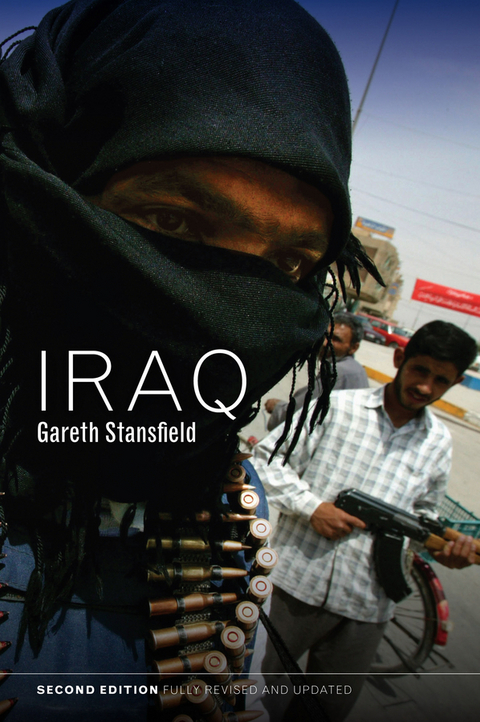
Iraq (eBook)
John Wiley & Sons (Verlag)
978-1-5095-1118-1 (ISBN)

Few countries can claim to have endured such a difficult and tortuous history as that of Iraq. Its varied peoples have had to contend with externally imposed state-building at the end of the First World War, through to the rise of authoritarian military regimes, to the all-encompassing power of Saddam Hussein?s dictatorship. They have endured destructive wars, internationally-imposed sanctions, and a further bout of destabilizing regime change and subsequent state-building from 2003. The recent rise of the Islamic State, the consolidation of the Kurdistan Region, and the response of the Shi?i populace have brought the country to a de facto partition that may bring about Iraq?s final demise.
The second edition of Iraq: People, History, Politics provides a comprehensive analysis of the political, societal, and economic dynamics that have governed Iraq?s modern development. Situating recent events within a longer historical timeframe, this book is a must-read for anyone wanting to understand the deep histories that underpin the contemporary politics of this war-torn and troubled state.
Few countries can claim to have endured such a difficult and tortuous history as that of Iraq. Its varied peoples have had to contend with externally imposed state-building at the end of the First World War, through to the rise of authoritarian military regimes, to the all-encompassing power of Saddam Hussein's dictatorship. They have endured destructive wars, internationally-imposed sanctions, and a further bout of destabilizing regime change and subsequent state-building from 2003. The recent rise of the Islamic State, the consolidation of the Kurdistan Region, and the response of the Shi'i populace have brought the country to a de facto partition that may bring about Iraq's final demise. The second edition of Iraq: People, History, Politics provides a comprehensive analysis of the political, societal, and economic dynamics that have governed Iraq's modern development. Situating recent events within a longer historical timeframe, this book is a must-read for anyone wanting to understand the deep histories that underpin the contemporary politics of this war-torn and troubled state.
Gareth Stansfield is Al-Qasimi Professor of Arab Gulf Studies at the University of Exeter and a Senior Associate Fellow of the Royal United Services Institute (RUSI), London. He is also a Global Fellow of the Wilson Center, Washington DC
Introduction: Artificiality, Identity, Dictatorship, and State-Building
Chapter 1: Legacies of Civilizations and Empires
Chapter 2: State Formation, Monarchy, and Mandate, 1918-1932
Chapter 3: Conceptualizing Iraqi Society
Chapter 4: From Authoritarian to Totalitarian State, 1933-1979
Chapter 5: Iraq at War, 1979-1989
Chapter 6: The Pariah State, 1989-2003
Chapter 7: Regime Change, 2003-
Chapter 8: From the Brink, to the Brink
Chapter 9: The Disintegration of Iraq
Chapter 10: The Rise of the Islamic State
Conclusion
Abbreviations and Glossary
| ADM | Assyrian Democratic Movement. Political party representing Chaldo-Assyrian community, headed by Younadam Youssef Kanna. |
| Al-Qaeda (Iraq) | Sunni Islamist organization attacking foreign influences in Muslim countries. Headed by Ayman al-Zawahiri following the death of Osama bin Laden. Al-Qaeda Iraq (AQI – or tanzim qa'idat al-Jihad fi bilad al-Rafidayn) headed by Abu Musab al-Zarqawi until his death in 2006, and formed basis of the Islamic State of Iraq (ISI) that led to the formation of the Islamic State of Iraq and al-Sham (ISIS), then the Islamic State (IS). |
| Anfal | Codename of Government of Iraq campaign in 1987–88 for systematic depopulation of rural Kurdistan. Anfal refers to the eighth sura of the Quran. |
| Ansar al-Islam | Partisans of Islam. Kurdish Islamist group that formed part of the Ansar al-Sunnah group that emerged in the years following regime change. |
| Asa'ib Ahl al-Haq | League of the Righteous. Shiʿi militia group led by Qais Al-Khazali. Formed in 2006 as splinter of Mahdi Army and fought against US forces. Close relationship with Iranian IRGC, and, since 2014, part of the Hashed al-Sha'abi. |
| Ayatollah | Literally, ‘Sign of God’. Highest clerical rank in Shiʿi religious establishment. |
| Badr Organization | Originally the military wing of SCIRI then ISCI. Operates independently as a Shiʿi militia headed by Hadi Al-Amiri. The Badr organization is part of the Hashed al-Sha'bi. |
| Baʿth Party | Arab Socialist Baʿth Party. Founded in 1947 as a secular Arab nationalist party by Michel Aflaq. Came to power in Iraq in 1963 coup, then again in 1968 when Saddam Hussein quickly became the leading figure. |
| Caliphate | An Islamic government led by a caliph (Khalifa in Arabic). The caliph has to be recognized as a successor to the Prophet Mohammed and would then lead the worldwide Muslim community. Abu Bakr al-Baghdadi proclaimed himself caliph in Mosul in July 2014, but has not received global recognition among Muslims as being a legitimate caliph. |
| CIA | (US) Central Intelligence Agency. |
| CPA | Coalition Provisional Authority. Replaced ORHA. Headed by Ambassador L. Paul Bremer III. |
| Daʿwa | Hizb al-Daʿwa Islamiyya (Party of the Islamic Call). Shiʿi party formed in late 1950s under guidance of Ayatollah Mohammed Baqr Al-Sadr. Fractured into several wings. Prominent figures include Haidar Al-Abadi, Nouri Al-Maliki and Ibrahim Al-Jaʿfari. |
| Hashed al-Sha'abi | People's Mobilization Forces (PMF). Umbrella Shiʿi militia organization formed in 2014 in response to rise of ISIS. Overall Chairman is Dr Falih Al-Fayyadh. Most prominent components include Asaib Ahl al-Haq, Badr Organization, Peace Companies and Kata'ib al-Imam Ali. |
| hawza | More fully, hawza al-marja'iyya. The religious establishment surrounding the leading clerical figures of Shiʿism. |
| GDP | Gross Domestic Product. |
| GNP | Gross National Product. |
| IAEA | International Atomic Energy Agency. |
| ICP | Iraqi Communist Party. Formed in 1934. |
| IGC | Iraqi Governing Council. Appointed by CPA to provide advice on governing Iraq between 13 July 2004 and 1 June 2005. |
| IIG | Interim Iraqi Government. Formed after the elections of 30 January 2005. Replaced on 3 May 2005 by the Iraqi Transitional Government. Dr Iyad Allawi served as prime minister with Ghazi Al-Yawer appointed president. |
| IIP | Iraqi Islamist Party. Sunni Arab Islamist party. Headed by Muhsin Abdel Hamid until July 2004, then by Tariq Al-Hashemi. |
| IKF | Iraqi Kurdistan Front. Political front of leading Kurdish parties in Iraq formed in the late 1980s. |
| IMK | Islamic Movement of Kurdistan. Kurdish Islamist party. |
| INA | Iraqi National Accord. Opposition political party from the 1990s, representing dissident figures from the Baʿth Party and the Iraqi military. Led by Dr Iyad Allawi. |
| INC | Iraqi National Congress. Opposition political party from the 1990s, forming an umbrella movement. Headed by Dr Ahmed Chalabi. |
| IRGC | Iranian Revolutionary Guards' Corp, otherwise known as Sepah or Pasdaran. |
| IS | Islamic State, or al-Dawla al-Islamiyya. Proclaimed in June 2014 by Abu Bakr al-Baghdadi as the Caliphate. |
| ISF | Iraqi Security Forces. |
| ISI | Islamic State of Iraq, or Dawlat al-Iraq al-Islamiyyah. Formed in October 2006 from AQI and other Sunni insurgent groups. Led at first by Abu Omar al-Baghdadi, then Abu Ayyub al-Masri, and then Abu Bakr al-Baghdadi, from 2010. |
| ISIS | Islamic State of Iraq and al-Sham, or al-Dawla al-Islamiyya fi al-Iraq wa al-Sham, formed in 2013, following an announcement by ISI leader Abu Bakr al-Baghdadi of the merger of ISI with the ISI off-shoot in Syria, Jabhat al-Nusra. |
| ISCI | Islamic Supreme Council of Iraq, previously SCIRI (the Supreme Council for the Islamic Revolution in Iraq), and consistently known as ‘al-majlis’ (the Council). Formed in Tehran in 1982 to bring together Shiʿi opposition groups in Iraq. Headed by Sayyed Ammar al-Hakim. |
| JRTN | Jaish al-Rijal al-Tarika al-Naqshabandiyya. Translated as the Army of the Men of the Naqshabandiyya Order, the JRTN emerged as one of several Baʿthist insurgency groups established in the summer of 2003 following the invasion of Iraq. They came to public prominence in 2006, following the execution of Saddam Hussein. Linked to Saddam's former deputy, Izzet Ibrahim al-Douri, the group entered an uneasy alliance with ISIS. |
| KDP | Kurdistan Democratic Party. Established 1946 and remains one of the two main Kurdish political parties. Led by Massoud Barzani. |
| KIU | Kurdistan Islamic Union. The mainstream Kurdish Islamist party. Formed in 1994. |
| KNA | Kurdistan National Assembly. The 111-seat parliament of the Kurdistan Region of Iraq. |
| KRG | Kurdistan Regional Government. The executive authority of the Kurdistan Region of Iraq, based in Erbil. |
| KRI | Kurdistan Region of Iraq. The federal autonomous region established in 1991 and enshrined in the Constitution of 2005, subsequently expanded in the summer of 2014. |
| Mahdi Army | The militia movement of Muqtada al-Sadr in 2003 and disbanded in 2008. Replaced by the Peace Companies (Saraya al-Salam) in 2014. |
| marja' al-taqlid | ‘Source of Emulation’. Honorific name given to the most important religious figures in Shiʿism. |
| MNF-I | Multi-National Forces Iraq. The name of Coalition forces in Iraq following the 2003 invasion. |
| mujtahid | A scholar of Islam qualified to interpret Islamic law. |
| neo-cons | Neo-conservatives. Right-wing ideological grouping in US in early 2000s that advocated interventionist strategies in the Middle East. |
| OECD | Organization for Economic Cooperation and Development. |
| OIP | (UN) Office of the Iraq Program. |
| OPEC | Organization of Petroleum Exporting Countries. |
| ORHA | Office of Reconstruction and Humanitarian Assistance. |
| pasdaran | The Iranian Revolutionary Guard Corps, otherwise known as the IRGC. |
| peshmerga | Kurdish fighters in general, but most often used to refer to the military organizations of the KDP and PUK, and now the Kurdistan Army nominally under the command of the KRG. Literally means ‘those who face death’. |
| PKK | Parti Karkaren Kurdistan or Kurdistan Workers' Party. Formed in 1970s by Abdullah Ocalan against the Turkish state. |
| PUK | Patriotic Union of Kurdistan. One of the two main parties of the Kurdistan Region of Iraq. Formed in 1975 and led by Jalal Talabani, with factions led by Hero Ibrahim, Kosrat Rasoul, and Barham Salih. |
| PYD | Partiya Yekitiya Demokrat or Democratic Union Party. Syrian Kurdish political party formed in 2003 and becoming... |
| Erscheint lt. Verlag | 22.9.2016 |
|---|---|
| Reihe/Serie | Global Political Hot Spots |
| Global Political Hot Spots | Hot Spots in Global Politics |
| Sprache | englisch |
| Themenwelt | Geschichte ► Allgemeine Geschichte ► Zeitgeschichte |
| Geisteswissenschaften ► Geschichte ► Regional- / Ländergeschichte | |
| Geschichte ► Teilgebiete der Geschichte ► Kulturgeschichte | |
| Geschichte ► Teilgebiete der Geschichte ► Militärgeschichte | |
| Sozialwissenschaften ► Politik / Verwaltung ► Politische Theorie | |
| Sozialwissenschaften ► Politik / Verwaltung ► Staat / Verwaltung | |
| Sozialwissenschaften ► Politik / Verwaltung ► Vergleichende Politikwissenschaften | |
| Schlagworte | Civil War • Failed State • History • International Relations • Irak • Iraq • IS • Islamic State • Middle East • Militär, Sicherheitsdienste, Geheimdienste • Militär, Sicherheitsdienste, Geheimdienste • Military / Security / Intelligence • Political Science • Politics • Politikwissenschaft • war |
| ISBN-10 | 1-5095-1118-0 / 1509511180 |
| ISBN-13 | 978-1-5095-1118-1 / 9781509511181 |
| Informationen gemäß Produktsicherheitsverordnung (GPSR) | |
| Haben Sie eine Frage zum Produkt? |
 EPUB (Adobe DRM)
Kopierschutz: Adobe-DRM
Adobe-DRM ist ein Kopierschutz, der das eBook vor Mißbrauch schützen soll. Dabei wird das eBook bereits beim Download auf Ihre persönliche Adobe-ID autorisiert. Lesen können Sie das eBook dann nur auf den Geräten, welche ebenfalls auf Ihre Adobe-ID registriert sind.
Details zum Adobe-DRM
Dateiformat: EPUB (Electronic Publication)
EPUB ist ein offener Standard für eBooks und eignet sich besonders zur Darstellung von Belletristik und Sachbüchern. Der Fließtext wird dynamisch an die Display- und Schriftgröße angepasst. Auch für mobile Lesegeräte ist EPUB daher gut geeignet.
Systemvoraussetzungen:
PC/Mac: Mit einem PC oder Mac können Sie dieses eBook lesen. Sie benötigen eine
eReader: Dieses eBook kann mit (fast) allen eBook-Readern gelesen werden. Mit dem amazon-Kindle ist es aber nicht kompatibel.
Smartphone/Tablet: Egal ob Apple oder Android, dieses eBook können Sie lesen. Sie benötigen eine
Geräteliste und zusätzliche Hinweise
Buying eBooks from abroad
For tax law reasons we can sell eBooks just within Germany and Switzerland. Regrettably we cannot fulfill eBook-orders from other countries.
aus dem Bereich