


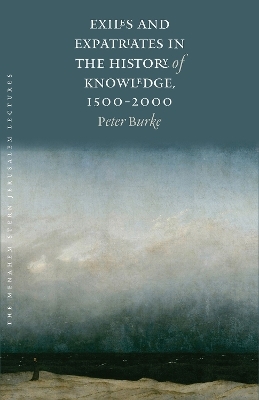
Exiles and Expatriates in the History of Knowledge, 1500–2000
Seiten
2017
Brandeis University Press (Verlag)
978-1-5126-0038-4 (ISBN)
Brandeis University Press (Verlag)
978-1-5126-0038-4 (ISBN)
- Titel z.Zt. nicht lieferbar
- Versandkostenfrei
- Auch auf Rechnung
- Artikel merken
The impact of intellectual diasporas
In this wide-ranging consideration of intellectual diasporas, historian Peter Burke questions what distinctive contribution to knowledge exiles and expatriates have made. The answer may be summed up in one word: deprovincialization. Historically, the encounter between scholars from different cultures was an education for both parties, exposing them to research opportunities and alternative ways of thinking. Deprovincialization was in part the result of mediation, as many émigrés informed people in their “hostland” about the culture of the native land, and vice versa. The detachment of the exiles, who sometimes viewed both homeland and hostland through foreign eyes, allowed them to notice what scholars in both countries had missed. Yet at the same time, the engagement between two styles of thought, one associated with the exiles and the other with their hosts, sometimes resulted in creative hybridization, for example, between German theory and Anglo-American empiricism. This timely appraisal is brimming with anecdotes and fascinating findings about the intellectual assets that exiles and immigrants bring to their new country, even in the shadow of personal loss.
In this wide-ranging consideration of intellectual diasporas, historian Peter Burke questions what distinctive contribution to knowledge exiles and expatriates have made. The answer may be summed up in one word: deprovincialization. Historically, the encounter between scholars from different cultures was an education for both parties, exposing them to research opportunities and alternative ways of thinking. Deprovincialization was in part the result of mediation, as many émigrés informed people in their “hostland” about the culture of the native land, and vice versa. The detachment of the exiles, who sometimes viewed both homeland and hostland through foreign eyes, allowed them to notice what scholars in both countries had missed. Yet at the same time, the engagement between two styles of thought, one associated with the exiles and the other with their hosts, sometimes resulted in creative hybridization, for example, between German theory and Anglo-American empiricism. This timely appraisal is brimming with anecdotes and fascinating findings about the intellectual assets that exiles and immigrants bring to their new country, even in the shadow of personal loss.
PETER BURKE is professor emeritus, Cambridge University, and a noted historian of the early modern era. He specializes in the relevance of social and cultural history to modern issues.
| Erscheinungsdatum | 19.03.2017 |
|---|---|
| Reihe/Serie | The Menahem Stern Jerusalem Lectures |
| Sprache | englisch |
| Themenwelt | Geisteswissenschaften ► Geschichte ► Allgemeine Geschichte |
| ISBN-10 | 1-5126-0038-5 / 1512600385 |
| ISBN-13 | 978-1-5126-0038-4 / 9781512600384 |
| Zustand | Neuware |
| Informationen gemäß Produktsicherheitsverordnung (GPSR) | |
| Haben Sie eine Frage zum Produkt? |
Mehr entdecken
aus dem Bereich
aus dem Bereich
eine Reise um die Welt zu außergewöhnlichen Persönlichkeiten, …
Buch | Softcover (2023)
Piper (Verlag)
CHF 25,20
Eine wahre Geschichte von Schiffbruch, Mord und Meuterei
Buch | Hardcover (2024)
C.Bertelsmann (Verlag)
CHF 34,95


