


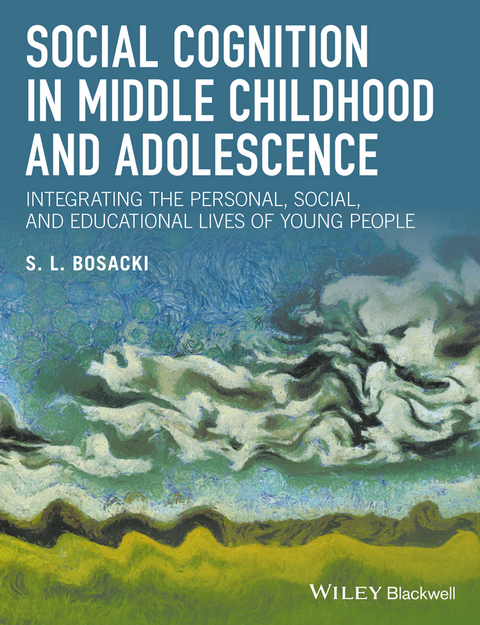
Social Cognition in Middle Childhood and Adolescence (eBook)
John Wiley & Sons (Verlag)
978-1-118-93801-0 (ISBN)
Bridging psychological theory and educational practice, this is an innovative textbook on the emotional and social aspects of young people's development. Bosacki's Social Cognition in Middle Childhood and Adolescence, First Edition moves beyond tradition cognitivist representations of how children learn and grow, focusing on how to integrate the emotional, cognitive, moral, spiritual and social in young people's experiences. This text bridges the gap between theory and practice; analyses cutting edge research and translates it into culturally sensitive and developmentally appropriate strategies for future educational practice.
Sandra Bosacki is Professor in the Department of Graduate and Undergraduate Studies in Education, at Brock University, Canada, where she teaches graduate courses in applied developmental psychology. Her teaching and research interests include socio-cognitive, emotional, moral, and spiritual development within diverse cultural and educational contexts. She is Assistant Editor of the Journal of Adolescence, and the author of numerous journal articles and books, including Culture of Ambiguity (2012), Children's Emotional Lives (2008), and The Culture of Classroom Silence (2005).
Bridging psychological theory and educational practice, this is an innovative textbook on the emotional and social aspects of young people's development. Bosacki's Social Cognition in Middle Childhood and Adolescence, First Edition moves beyond tradition cognitivist representations of how children learn and grow, focusing on how to integrate the emotional, cognitive, moral, spiritual and social in young people s experiences. This text bridges the gap between theory and practice; analyses cutting edge research and translates it into culturally sensitive and developmentally appropriate strategies for future educational practice.
Sandra Bosacki is Professor in the Department of Graduate and Undergraduate Studies in Education, at Brock University, Canada, where she teaches graduate courses in applied developmental psychology. Her teaching and research interests include socio-cognitive, emotional, moral, and spiritual development within diverse cultural and educational contexts. She is Assistant Editor of the Journal of Adolescence, and the author of numerous journal articles and books, including Culture of Ambiguity (2012), Children's Emotional Lives (2008), and The Culture of Classroom Silence (2005).
Title Page 5
Copyright Page 6
Contents 9
Preface 11
Acknowledgments 13
Introduction 15
Part I Foundations 27
Section Overview 27
Chapter 1 Social Cognitive Abilities and School Experiences of Young People: Theory and Evidence 29
Introduction 29
Research 29
Applications: So What? 41
Future Questions and Summary 42
References 42
Chapter 2 Developmental Social Cognition and Research Methodologies 48
Introduction 48
Research 49
Applications: So What? 56
Future Questions 61
Summary 62
References 62
Part II Social Cognitive Educational and Developmental Research: Self 69
Section Overview 69
Chapter 3 The Cognitive Self: Language and Executive Functions 71
Introduction 71
Research 72
Applications: So What? 84
Future Questions 89
Summary 89
References 90
Chapter 4 The Emotional Self: Self-Development and Emotional Regulation 96
Introduction 96
Research: Emotions and Self 96
Language and Emotions 106
Self as Personal Fable: Self-Esteem and Narcissism 109
Applications: So What? 115
Future Questions 116
Summary 117
References 117
Chapter 5 The Moral Self: Morality, Spirituality, and Self-Development 123
Introduction 123
Research 123
Applications: So What? 133
Future Questions 138
Summary 139
References 139
Part III Social Cognitive Educational and Developmental Research: Social 147
Section Overview 147
Chapter 6 Peer Relationships 149
Introduction 149
Research 149
Applications: So What? 163
Future Questions 164
Summary 165
References 165
Chapter 7 Family Relationships 171
Introduction 171
Research 171
Applications: So What? 185
Future Questions 190
Summary 192
References 193
Chapter 8 Gender and Culture 202
Introduction 202
Research 202
Applications: So What? 222
Summary 227
References 228
Part IV Ecologies of Social Cognitive Development 237
Section Overview 237
Chapter 9 Digital Worlds and Social Media 239
Introduction 239
Research 240
Applications: So What? 248
Future Questions 252
Summary 255
References 256
Chapter 10 Social Cognition and Behavioral and Emotional Challenges 262
Introduction 262
Research 263
Applications: So What? 276
Future Questions 280
Summary 282
References 282
Part V Future Questions and Implications for Practice: Helping Young People to Move Forward 291
Section Overview 291
Chapter 11 Developmental Social Cognitive Pedagogy 293
Introduction 293
Pedagogical Directions: Creation of a Caring Curriculum to Promote Connectivity 294
Setting the Stage: Communication Facilitates Psychological Comfort 295
A Caring and Connected Curriculum: Psychocultural Educational Strategies 302
Humane Education Programs (HEP) for Youth 309
Future Questions: Global Educational Neuroscience 311
Summary 314
References 314
Chapter 12 Beyond Social Cognition 321
Introduction 321
Research 321
Applications: So What? 326
Summary 332
References 333
Conclusion: Closing Thoughts and New Questions 338
Index 342
EULA 353
| Erscheint lt. Verlag | 14.9.2016 |
|---|---|
| Sprache | englisch |
| Themenwelt | Geisteswissenschaften ► Psychologie ► Entwicklungspsychologie |
| Schlagworte | adolescence • Behavior • Developmental Psychology • Education • Educational & School Psychology • emotional self • Entwicklungspsychologie • Entwicklungspsychologie / Jugendalter • Erziehungs- u. Schulpsychologie • Jugend • Kindheit • <p>Cognitive abilities • neurocognitive science • neuroeducation • Peer relationships • Psychologie • Psychology • School psychology • SEL • sensitive • Social and Emotional Learning • social cognition</p> • Soziale Kognition • Theory of Mind • withdrawn |
| ISBN-10 | 1-118-93801-1 / 1118938011 |
| ISBN-13 | 978-1-118-93801-0 / 9781118938010 |
| Informationen gemäß Produktsicherheitsverordnung (GPSR) | |
| Haben Sie eine Frage zum Produkt? |
 PDF (Adobe DRM)
Kopierschutz: Adobe-DRM
Adobe-DRM ist ein Kopierschutz, der das eBook vor Mißbrauch schützen soll. Dabei wird das eBook bereits beim Download auf Ihre persönliche Adobe-ID autorisiert. Lesen können Sie das eBook dann nur auf den Geräten, welche ebenfalls auf Ihre Adobe-ID registriert sind.
Details zum Adobe-DRM
Dateiformat: PDF (Portable Document Format)
Mit einem festen Seitenlayout eignet sich die PDF besonders für Fachbücher mit Spalten, Tabellen und Abbildungen. Eine PDF kann auf fast allen Geräten angezeigt werden, ist aber für kleine Displays (Smartphone, eReader) nur eingeschränkt geeignet.
Systemvoraussetzungen:
PC/Mac: Mit einem PC oder Mac können Sie dieses eBook lesen. Sie benötigen eine
eReader: Dieses eBook kann mit (fast) allen eBook-Readern gelesen werden. Mit dem amazon-Kindle ist es aber nicht kompatibel.
Smartphone/Tablet: Egal ob Apple oder Android, dieses eBook können Sie lesen. Sie benötigen eine
Geräteliste und zusätzliche Hinweise
Buying eBooks from abroad
For tax law reasons we can sell eBooks just within Germany and Switzerland. Regrettably we cannot fulfill eBook-orders from other countries.
aus dem Bereich


