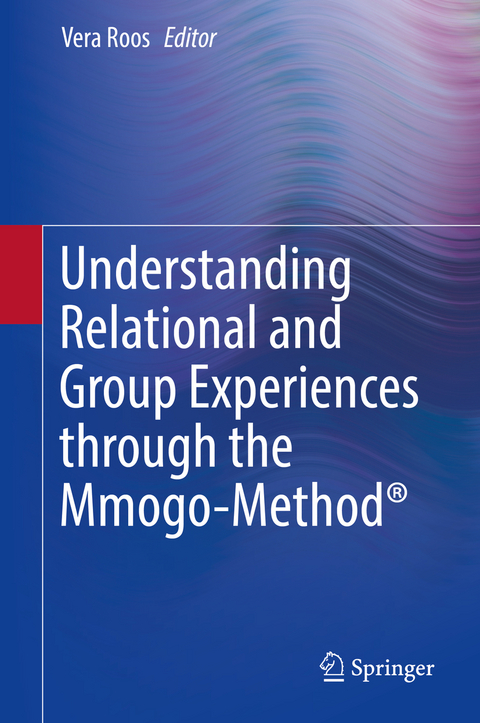
Understanding Relational and Group Experiences through the Mmogo-Method® (eBook)
XXVI, 265 Seiten
Springer International Publishing (Verlag)
978-3-319-31224-8 (ISBN)
Vera Roos is a Professor of Psychology at the North-West University's Potchefstroom Campus since 2004. To date she has published 65 peer reviewed papers in national and international journals and contributed to 20 chapters in textbooks. She has also presented various papers and posters at national and international conferences on topics related to community psychology with a focus on enabling contexts, relational psychology, intergenerational relations and the contributions of older persons in challenged contexts. Vera's theoretical approach, namely that the broader social environment informs the dynamic processes in complex systems, provided the background for the development of the Mmogo-method. This method assists social researchers to access the dynamic interactions between people in relation to their communities within a particular context and in a culturally sensitive manner. The Mmogo-method is regarded as a visual narrative that assists people to recount experiences and to make sense of the context in which they function. Vera is committed to promote the relational and collective wellbeing of older people and communities in relation to the contextual realities by eliciting strengths and competencies. Vera Roos is a NRF-rated scientist on level C2.
Vera Roos is a Professor of Psychology at the North-West University's Potchefstroom Campus since 2004. To date she has published 65 peer reviewed papers in national and international journals and contributed to 20 chapters in textbooks. She has also presented various papers and posters at national and international conferences on topics related to community psychology with a focus on enabling contexts, relational psychology, intergenerational relations and the contributions of older persons in challenged contexts. Vera's theoretical approach, namely that the broader social environment informs the dynamic processes in complex systems, provided the background for the development of the Mmogo-method. This method assists social researchers to access the dynamic interactions between people in relation to their communities within a particular context and in a culturally sensitive manner. The Mmogo-method is regarded as a visual narrative that assists people to recount experiences and to make sense of the context in which they function. Vera is committed to promote the relational and collective wellbeing of older people and communities in relation to the contextual realities by eliciting strengths and competencies. Vera Roos is a NRF-rated scientist on level C2.
Foreword 6
Preface 10
Book Outline 12
Acknowledgements 19
References 20
Contents 22
Contributing Authors 24
Part I: Foundations 28
Chapter 1: Introducing the Mmogo-method as a Visual Data-Collection Method 29
Introduction 30
Background to the Development of the Mmogo-method 30
First Application of the Mmogo-method 32
The Mmogo-method 34
Participant Involvement in the Data-Collection Process 35
The Importance of the Group 35
The Importance of Context 36
Pluralistic Data-Collection Method 37
Mmogo-method and Other Visual Data-Collection Methods 38
Conclusion 40
References 40
Chapter 2: Conducting the Mmogo-method 44
Introduction 44
Phases of the Research Process 46
Box 2.1: Suggested Recipe for Malleable Clay (One Portion) 46
Rationale for Using the Mmogo-method 55
Conclusion 55
References 56
Chapter 3: Theories and Heuristic Constructs Informing the Mmogo-method 57
Introduction 58
Research Approach Underlying the Mmogo-method 58
Hermeneutical Research Approach 58
Theories Underpinning the Mmogo-method 59
Participants´ Position 59
Researchers´ Position 60
Onto-Epistemological Approach 61
Conclusion 62
References 63
Chapter 4: Research Integrity and the Mmogo-method: Some Reflections 65
Introduction 65
The Politics of Integrity: Points of Departure 66
Concerns in Terms of Research Integrity 68
Research Process of the Mmogo-method and Its Operationalization 68
Researcher´s Responsiveness 70
Concluding Inferences 72
References 73
Part II: Data Collection and Analysis 76
Chapter 5: Implementing the Mmogo-method: A Group of Setswana-Speaking Older People´s Relational Experiences in a Rural Commun... 77
Introduction and Background 77
Choosing an Example 78
Contextualizing the Research 80
Phase 1. Creating Context for Participation 80
Phase 2. Construction Phase 81
Phase 3. Discussion Phase 81
Example 1: Setting the Scene to Promote Dialogue 83
Participant 1 83
Visual Representation by Participant 1 83
Verbatim Transcription of Translated Discussion with Participant 1 83
Summary of Participant 1´s Verbatim Discussion 86
Researcher´s Reflections on Participant 1 86
Example 2: Using the Visual Representation to Probe for Deeper Meanings 87
Participant 2 87
Visual Representation by Participant 2 87
Summary of Participant 2´s Discussion 87
Researcher´s Reflections on Participant 2 90
Example 3: Visual representation about future to discover current subjective experiences 90
Participant 3 90
Visual Representation by Participant 3 90
Verbatim Transcription of Translated Discussion with Participant 3 90
Summary of Participant 3´s Discussion 92
Researcher´s Reflections on Participant 3 93
Inclusion of Other Visual Representations 93
Participant 4 93
Visual Representation by Participant 4 93
Verbatim Transcription of Translated Discussion with Participant 4 94
Summary of Participant 4´s Discussion 95
Participant 5 95
Visual Representation by Participant 5 95
Verbatim Transcription of Translated Discussion with Participant 5 95
Summary of Participant 5´s Discussion 97
Participant 6 98
Visual Representation by Participant 6 98
Verbatim Transcription of Translated Discussion with Participant 6 98
Summary of Participant 6´s Discussion 101
Participant 7 102
Visual Representation by Participant 7 102
Verbatim Transcription of Translated Discussion with Participant 7 102
Summary of Participant 7´s Discussion 103
Participant 8 103
Visual Representation by Participant 8 103
Verbatim Transcription of Translated Discussion with Participant 8 103
Summary of Participant 8´s Discussion 104
Comfort Break 104
Group Discussion 104
Summary of Group Discussion 107
Phase 4. Debriefing Participants 108
Types of Data Obtained 108
Conclusion 108
References 109
Chapter 6: The Mmogo-method and the Intergenerational Group Reflecting Technique to Explore Intergenerational Interactions and... 111
Introduction and Background 111
Data Analysis 113
Descriptive Phenomenological Psychological Analysis 113
Illustration of Data Analysis 113
Participant 1 (Fig.6.1) 114
Participant 2 (Fig.6.2) 115
Group Discussion 1 116
Participant 3 (Fig.6.3) 119
Group Discussion 2 120
Participant 4 (Fig.6.4) 121
Participant 5 (Fig.6.5) 122
Participant 6 (Fig.6.6) 123
Participant 7 (Fig.6.7) 124
Participant 8 (Fig.6.8) 125
Participant 9 (Fig.6.9) 126
Participant 10 (Fig.6.10) 127
Group Discussion 3 127
Reciprocity of Intergenerational Relational Interactions 136
Conclusion 138
References 138
Chapter 7: Analyzing Visual Data with Text from the Mmogo-method: Experience of Meaning During the Third Trimester of Pregnancy 140
Introduction 140
6-Step Analysis of Visual Data with Text 142
Step 1: Research Production Context 142
Step 2: Assume an Empathic Position Towards Data 143
Step 3: Describe Literal Observations of Visual Elements 143
Step 4: Describe Symbolic Meanings Attributed by Participants 143
Step 5: Describe Participant-Introduced Context 144
Step 6: Conduct an Interpretative Analysis 144
Application of 6-Step Visual Data Analysis with Text: Example of First-Time Mothers´ Experience of Meaning 144
Step 1: Research Production Context 144
Steps 2-4: Assuming an Emphatic Position, Literal Observation and Subjective, Symbolic Meaning 148
Step 5: Participant-Introduced Context 148
Step 6: Interpretive Analysis 153
Conclusion 156
References 156
Part III: Applications 160
Chapter 8: Theorizing from the Mmogo-method: Self-Interactional Group Theory (SIGT) to Explain Relational Interactions 161
Introduction 162
Contextualizing the Development of Self-Interactional Group Theory (SIGT) 163
Self-Interactional Group Theory (SIGT) 164
Intra-Individual Unit of Analysis 165
Inter-Individual Unit of Analysis 168
Group Unit of Analysis 174
Broader Environments 175
Application of SIGT to Two Studies 175
Context 175
Older Persons: Intra-Individual Perspective 175
Older Persons: Inter-Individual Unit of Analysis 176
Young Adult Males: Intra-Individual Level of Analysis 179
Young Adult Males: Inter-Individual Unit of Analysis 180
Interactional Patterns of Intergenerational Relations 182
Group Unit of Analysis 183
Broader Environments 185
Conclusion 186
References 187
Chapter 9: The Development of a Board Game as Intergenerational Intervention: Secondary Analysis of Data from the Mmogo-method 191
Introduction 191
Secondary Data Analysis 192
Findings 193
Developing a Board Game as an Intergenerational Intervention Strategy 202
Structure 203
Process 204
Content 204
Instructions and Rules 207
Conclusion 210
References 211
Chapter 10: Using the Mmogo-method to Explore Important Places and Their Meaning in Two Communities: The Importance of Context 214
Introduction and Orientation 215
Two Communities - Khuma and Stilfontein 216
Applying the Mmogo-method 219
Findings: Khuma 220
Existing Places of Importance 220
Meanings Attached to Existing Places of Importance 220
Preservation of Makoeteng 221
Development of New Places 221
Findings: Stilfontein 223
Places of Importance 223
Meanings Attached to Important Places 223
Social Structures Associated with Places of Importance 225
Discussion 225
Importance of Context 226
The Value of Using the Mmogo-method 227
Value for Spatial Planners 228
Conclusion 229
References 229
Part IV: Reflections and Going Forward 232
Chapter 11: Participants´ Reflections on Participating in the Mmogo-method: The Example of Mental Health Workers´ Coping Strat... 233
Introduction 234
Mental Health Workers on the Front Line 235
Application of the Mmogo-method 236
Participants´ Reflections on Participating in the Mmogo-Method 237
Interpersonal Enabling and Research Context 237
New Discoveries 237
Considering Changes 239
Importance of the Group 239
Research Materials 240
Conclusion 242
References 243
Chapter 12: Researcher´s Reflections on Using the Mmogo-method and Other Visual Research Methods 246
Introduction 247
Conducting Research with Children in Rural Communities 247
Describing the Participants 248
Contextualizing the Study 248
The Challenges of a Rural Setting 249
Sensitivity to Culture and Language 250
A Participatory Research Methodology 251
Visual Methods: Creating Possibilities for Expression 251
Research as a Process: Creating Agency not Products 252
Exploring Hope: A Stimulus for Agency 252
Issues of Trustworthiness, Ownership and Anonymity 254
The Research Process: Knowledge Creation and Sharing 255
Collage-Making with Children 256
The Use of Drawing 257
The Mmogo-method 258
The Photo-Voice Method 261
The Researcher as Instrument 262
Situating Myself and Acknowledging Multiple Roles 262
Using a Research Journal as Data 263
Researcher´s Reflections on Observing Participants Engaging in the Research Process 264
Observations on the Intrapersonal Level: Meaning-Making in the Individual 264
Observations on the Interpersonal Level: Meaning-Making Through Interactions 266
Observations on the Group/Social Level: Collective Meaning-Making 269
Observations Relating to Cultural Context and Norms 271
Discussion 272
Conclusion 273
References 274
Postscript and Concluding Thoughts 277
A Final Word 279
References 280
| Erscheint lt. Verlag | 13.7.2016 |
|---|---|
| Zusatzinfo | XXVI, 265 p. 73 illus., 71 illus. in color. |
| Verlagsort | Cham |
| Sprache | englisch |
| Themenwelt | Geisteswissenschaften ► Psychologie |
| Schlagworte | Application of the Mmogo-Method® • Contributions of the Mmogo-Method® • Critical Reflections on the Mmogo-Method® • Development of the Mmogo-Method® • Group Processes and the Mmogo-Method • Intergenerational Ralational Questionnaire • Mmogo-Method®: Co-Construction of Knowledge in Setswana • Qualitative Research Methods • Quality of Life of the Elderly in Residential Care Facilities • Research in Cross-Cultural Environments • Respect of Children for Elderly People • Theory Development and Conceptual Explanations • Using Mmogo-Method® to Understand on a Personal Level • Visual Data Analysis • Visual Research Methods |
| ISBN-10 | 3-319-31224-3 / 3319312243 |
| ISBN-13 | 978-3-319-31224-8 / 9783319312248 |
| Informationen gemäß Produktsicherheitsverordnung (GPSR) | |
| Haben Sie eine Frage zum Produkt? |
 PDF (Wasserzeichen)
DRM: Digitales Wasserzeichen
Dieses eBook enthält ein digitales Wasserzeichen und ist damit für Sie personalisiert. Bei einer missbräuchlichen Weitergabe des eBooks an Dritte ist eine Rückverfolgung an die Quelle möglich.
Dateiformat: PDF (Portable Document Format)
Mit einem festen Seitenlayout eignet sich die PDF besonders für Fachbücher mit Spalten, Tabellen und Abbildungen. Eine PDF kann auf fast allen Geräten angezeigt werden, ist aber für kleine Displays (Smartphone, eReader) nur eingeschränkt geeignet.
Systemvoraussetzungen:
PC/Mac: Mit einem PC oder Mac können Sie dieses eBook lesen. Sie benötigen dafür einen PDF-Viewer - z.B. den Adobe Reader oder Adobe Digital Editions.
eReader: Dieses eBook kann mit (fast) allen eBook-Readern gelesen werden. Mit dem amazon-Kindle ist es aber nicht kompatibel.
Smartphone/Tablet: Egal ob Apple oder Android, dieses eBook können Sie lesen. Sie benötigen dafür einen PDF-Viewer - z.B. die kostenlose Adobe Digital Editions-App.
Buying eBooks from abroad
For tax law reasons we can sell eBooks just within Germany and Switzerland. Regrettably we cannot fulfill eBook-orders from other countries.
aus dem Bereich