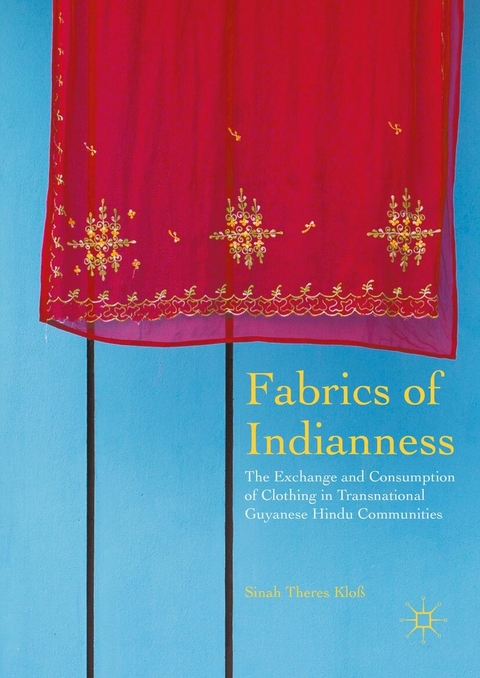
Fabrics of Indianness (eBook)
XVIII, 311 Seiten
Palgrave Macmillan US (Verlag)
978-1-137-56541-9 (ISBN)
Sinah Theres Kloß is Postdoctoral Researcher at the Global South Studies Center, University of Cologne, Germany, and Research Fellow at the Center for Religion, Economy and Politics at the University of Basel, Switzerland. She is co-editor of Caribbean Food Cultures: Culinary Practices and Consumption in the Caribbean and Its Diasporas.
This book describes how Guyanese Hindus recreate Indian ethnic identity in contemporary Guyana and examines how Hindu traditions have been transformed in this multi-religious and multi-ethnic society. By illustrating the exchange and consumption of clothing, the book demonstrates that the practices of wearing and gifting clothes materialize and visualize relationships. The significant outward migration of Guyanese to North America has resulted in substantial international gift exchange and transnational rituals. Applying the concept of translocality, this book demonstrates that different localities continue to influence transnational networks and socio-cultural practices. It provides a study of migration that emphasizes various aspects of material and visual closeness, conceptualizing the notion of touch.
Sinah Theres Kloß is Postdoctoral Researcher at the Global South Studies Center, University of Cologne, Germany, and Research Fellow at the Center for Religion, Economy and Politics at the University of Basel, Switzerland. She is co-editor of Caribbean Food Cultures: Culinary Practices and Consumption in the Caribbean and Its Diasporas.
List of FiguresAcknowledgementsChapter 1: Guyanese Hinduism and the Study of Clothing: An IntroductionSocio-historical Context and Religious Groups in GuyanaGuyanese Hindu TraditionsGuyanese Transnationalism and the Concept of TranslocalityMethodologyThe Study of Clothing and DressClothing, Closeness, and MigrationOutline of the BookResemblance, Imitation, and ConsumptionIntimacy, Touch, and ExchangeChapter 2: Negotiating ‘Indianness’ Through Indian WearDefining ‘Indian Wear’The Ambiguous ‘Long Skirt’Dressing Up for PujaIndian Wear and Ethnic IdentityIndian Ethnic Identity and the African ‘Other’Indian RevitalizationNuh-propriate Clothes and the Influence of Bollywood MoviesContested IndiannessThe ‘Indian Indian’ as Indian ‘Other’Indo-CaribbeannessMastering the Sari: Dress and the Performance of IndiannessDegrees of Indianness?Chapter 3: Stitching Readymade Dhotis: The Social History of Indian Wear in Guyana‘Overseas Clothing’Selfmade Clothes and Indian WearBranding ‘Foreign’ StatusStitching Authority?‘Superior’ Dress, Conversion, and Social Upward MobilityDressing Respectably: Dress Codes and Draped ClothesAdapting English Wear: White Dresses and OrhniHindu Male ‘Effeminacy’ and Indian WearStitching DhotisChapter 4: Uniform(ity) Through Color: The Invention of Madrassi VestmentThe ‘Invention’ of the Madras TraditionProcesses of StandardizationCreating Madras ‘Authenticity’Creating the GarmentThe ‘Invention’ of VestmentUniform(ity)Contested DisciplineUnifying ColorThe Stigma of Being MadrassiChapter 5: (Ex)Changing the Deity’s Clothes“Cyan leff a God naked”: Dressing the DeityMatching Murti ClothesThe Practice of Charhaway“Give from your brows, your sweat”The Joint Family as ContributorSending Ritual ContributionsPhotographs as SubstitutesSharing Mudda’s SarisBarrel-sending in a Madrassi CommunityWearing Mudda’s ClothesChapter 6: Staying in Touch, Dwelling in Clothes: Barrels, Gift-Giving, and MigrationTo ‘Send Back’ GiftsBarrel-sending and the Exchange of ClothingThe Barrel as Joint EffortGiving Used ClothesClothing as Dwelling StructureBodies and Clothing in ExchangeContact and Touch‘Physical’ and ‘Spiritual’ BodiesThrowing Spirits Pon ClothesEnergies and SubstancesUsed Clothing as Memory and PresenceTouched Clothes and Thrifty BarrelsGiving as ConsumptionTouched Clothing‘Nation’ and Caste IdentitiesNew and Used, Clean and PollutedWearing PrasadamCleaning Bodies, Washing ClothesBarrels and ThriftGifts of Used Clothing as Disposal?Sending Thrifty BarrelsIn Guyana, “Things Finish So Fast”Thrift and Indian Identity‘Recycling’ Used Clothes: Thrifty and Wasteful DisposalChapter 8: Conclusion
| Erscheint lt. Verlag | 29.7.2016 |
|---|---|
| Zusatzinfo | XVIII, 311 p. 14 illus. in color. |
| Verlagsort | New York |
| Sprache | englisch |
| Themenwelt | Geisteswissenschaften |
| Sozialwissenschaften ► Ethnologie | |
| Sozialwissenschaften ► Politik / Verwaltung | |
| Sozialwissenschaften ► Soziologie ► Spezielle Soziologien | |
| Technik | |
| Schlagworte | Community • ethnography • Family • Indian wear • Indo-Guyanese culture • Kali-Mai Puja • material culture • Migration • post-colonial studies • Translocality |
| ISBN-10 | 1-137-56541-1 / 1137565411 |
| ISBN-13 | 978-1-137-56541-9 / 9781137565419 |
| Informationen gemäß Produktsicherheitsverordnung (GPSR) | |
| Haben Sie eine Frage zum Produkt? |
 PDF (Wasserzeichen)
DRM: Digitales Wasserzeichen
Dieses eBook enthält ein digitales Wasserzeichen und ist damit für Sie personalisiert. Bei einer missbräuchlichen Weitergabe des eBooks an Dritte ist eine Rückverfolgung an die Quelle möglich.
Dateiformat: PDF (Portable Document Format)
Mit einem festen Seitenlayout eignet sich die PDF besonders für Fachbücher mit Spalten, Tabellen und Abbildungen. Eine PDF kann auf fast allen Geräten angezeigt werden, ist aber für kleine Displays (Smartphone, eReader) nur eingeschränkt geeignet.
Systemvoraussetzungen:
PC/Mac: Mit einem PC oder Mac können Sie dieses eBook lesen. Sie benötigen dafür einen PDF-Viewer - z.B. den Adobe Reader oder Adobe Digital Editions.
eReader: Dieses eBook kann mit (fast) allen eBook-Readern gelesen werden. Mit dem amazon-Kindle ist es aber nicht kompatibel.
Smartphone/Tablet: Egal ob Apple oder Android, dieses eBook können Sie lesen. Sie benötigen dafür einen PDF-Viewer - z.B. die kostenlose Adobe Digital Editions-App.
Buying eBooks from abroad
For tax law reasons we can sell eBooks just within Germany and Switzerland. Regrettably we cannot fulfill eBook-orders from other countries.
aus dem Bereich