


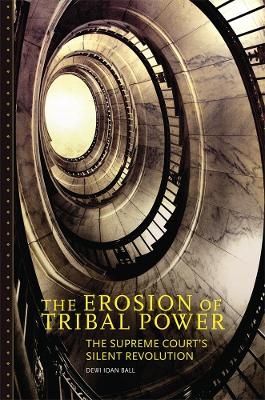
The Erosion of Tribal Power
The Supreme Court's Silent Revolution
Seiten
2016
University of Oklahoma Press (Verlag)
978-0-8061-5565-4 (ISBN)
University of Oklahoma Press (Verlag)
978-0-8061-5565-4 (ISBN)
- Lieferbar (Termin unbekannt)
- Versandkostenfrei
- Auch auf Rechnung
- Artikel merken
By drawing on the private papers of Chief Justice Earl Warren and other Justices, this book offers crucial insight into federal Indian law from the perspective of the justices themselves, and shines much-needed light on crucial changes to federal Indian law between 1959 and 2001.
For the past 180 years, the inherent power of indigenous tribes to govern themselves has been a central tenet of federal Indian law. Despite the U.S. Supreme Court's repeated confirmation of Native sovereignty since the early 1830s, it has, in the past half-century, incrementally curtailed the power of tribes to govern non-Indians on Indian reservations. The result, Dewi Ioan Ball argues, has been a ""silent revolution,"" mounted by particular justices so gradually and quietly that the significance of the Court's rulings has largely evaded public scrutiny.
Ball begins his examination of the erosion of tribal sovereignty by reviewing the so-called Marshall trilogy, the three cases that established two fundamental principles: tribal sovereignty and the power of Congress to protect Indian tribes from the encroachment of state law. Neither the Supreme Court nor Congress has remained faithful to these principles, Ball shows. Beginning with Williams v. Lee, a 1959 case that highlighted the tenuous position of Native legal authority over reservation lands and their residents, Ball analyzes multiple key cases, demonstrating how the Supreme Court's decisions weakened the criminal, civil, and taxation authority of tribal nations. During an era when many tribes were strengthening their economies and preserving their cultural identities, the high court was undermining sovereignty. In Atkinson Trading Co. v. Shirley (2001) and Nevada v. Hicks (2001), for example, the Court all but obliterated tribal authority over non-Indians on Native land.
By drawing on the private papers of Chief Justice Earl Warren and Justices Harry A. Blackmun, William J. Brennan, Thurgood Marshall, William O. Douglas, Lewis F. Powell Jr., and Hugo L. Black, Ball offers crucial insight into federal Indian law from the perspective of the justices themselves. The Erosion of Tribal Power shines much-needed light on crucial changes to federal Indian law between 1959 and 2001 and discusses how tribes have dealt with the political and economic consequences of the Court's decisions.
For the past 180 years, the inherent power of indigenous tribes to govern themselves has been a central tenet of federal Indian law. Despite the U.S. Supreme Court's repeated confirmation of Native sovereignty since the early 1830s, it has, in the past half-century, incrementally curtailed the power of tribes to govern non-Indians on Indian reservations. The result, Dewi Ioan Ball argues, has been a ""silent revolution,"" mounted by particular justices so gradually and quietly that the significance of the Court's rulings has largely evaded public scrutiny.
Ball begins his examination of the erosion of tribal sovereignty by reviewing the so-called Marshall trilogy, the three cases that established two fundamental principles: tribal sovereignty and the power of Congress to protect Indian tribes from the encroachment of state law. Neither the Supreme Court nor Congress has remained faithful to these principles, Ball shows. Beginning with Williams v. Lee, a 1959 case that highlighted the tenuous position of Native legal authority over reservation lands and their residents, Ball analyzes multiple key cases, demonstrating how the Supreme Court's decisions weakened the criminal, civil, and taxation authority of tribal nations. During an era when many tribes were strengthening their economies and preserving their cultural identities, the high court was undermining sovereignty. In Atkinson Trading Co. v. Shirley (2001) and Nevada v. Hicks (2001), for example, the Court all but obliterated tribal authority over non-Indians on Native land.
By drawing on the private papers of Chief Justice Earl Warren and Justices Harry A. Blackmun, William J. Brennan, Thurgood Marshall, William O. Douglas, Lewis F. Powell Jr., and Hugo L. Black, Ball offers crucial insight into federal Indian law from the perspective of the justices themselves. The Erosion of Tribal Power shines much-needed light on crucial changes to federal Indian law between 1959 and 2001 and discusses how tribes have dealt with the political and economic consequences of the Court's decisions.
Dewi Ioan Ball holds a PhD in history from Swansea University in Wales and is coeditor of Competing Voices in Native America. He teaches at YGG Tirdeunaw Welsh Primary School in Swansea.
| Erscheinungsdatum | 22.01.2017 |
|---|---|
| Verlagsort | Oklahoma |
| Sprache | englisch |
| Maße | 152 x 229 mm |
| Gewicht | 608 g |
| Themenwelt | Geschichte ► Allgemeine Geschichte ► Neuzeit (bis 1918) |
| Geisteswissenschaften ► Geschichte ► Regional- / Ländergeschichte | |
| Recht / Steuern ► Arbeits- / Sozialrecht ► Sozialrecht | |
| Recht / Steuern ► EU / Internationales Recht | |
| Recht / Steuern ► Öffentliches Recht ► Verfassungsrecht | |
| Sozialwissenschaften ► Ethnologie | |
| Sozialwissenschaften ► Soziologie | |
| ISBN-10 | 0-8061-5565-5 / 0806155655 |
| ISBN-13 | 978-0-8061-5565-4 / 9780806155654 |
| Zustand | Neuware |
| Informationen gemäß Produktsicherheitsverordnung (GPSR) | |
| Haben Sie eine Frage zum Produkt? |
Mehr entdecken
aus dem Bereich

aus dem Bereich
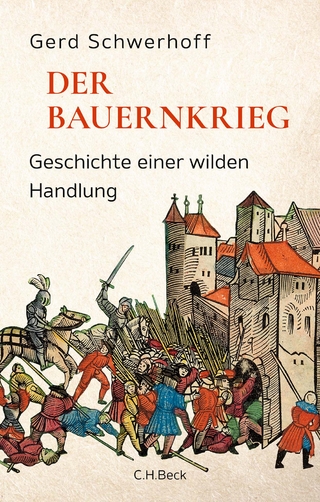
Geschichte einer wilden Handlung
Buch | Hardcover (2024)
C.H.Beck (Verlag)
CHF 47,60


