Zum Hauptinhalt springen
Nicht aus der Schweiz? Besuchen Sie lehmanns.de
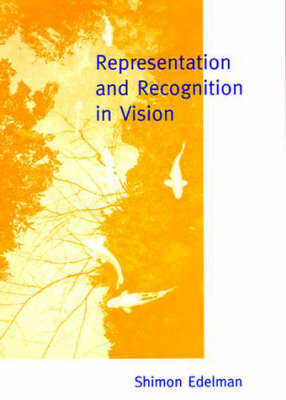
Representation and Recognition in Vision -  Shimon Edelman

Representation and Recognition in Vision (eBook)

eBook Download: PDF
1999
402 Seiten
The MIT Press (Verlag)
9780262272155 (ISBN)
Systemvoraussetzungen
113,21 inkl. MwSt
(CHF 109,95)
Der eBook-Verkauf erfolgt durch die Lehmanns Media GmbH (Berlin) zum Preis in Euro inkl. MwSt.
  • Download sofort lieferbar
  • Zahlungsarten anzeigen
Shimon Edelman bases a comprehensive approach to visual representation on the notion of correspondence between proximal (internal) and distal similarities in objects.Researchers have long sought to understand what the brain does when we see an object, what two people have in common when they see the same object, and what a "e;seeing"e; machine would need to have in common with a human visual system. Recent neurobiological and computational advances in the study of vision have now brought us close to answering these and other questions about representation.In Representation and Recognition in Vision, Shimon Edelman bases a comprehensive approach to visual representation on the notion of correspondence between proximal (internal) and distal similarities in objects. This leads to a computationally feasible and formally veridical representation of distal objects that addresses the needs of shape categorization and can be used to derive models of perceived similarity.Edelman first discusses the representational needs of various visual recognition tasks, and surveys current theories of representation in this context. He then develops a theory of representation that is related to Shepard's notion of second-order isomorphism between representations and their targets. Edelman goes beyond Shepard by specifying the conditions under which the representations can be made formally veridical. Edelman assesses his theory's performance in identification and categorization of 3D shapes and examines it in light of psychological and neurobiological data concerning the object-processing stream in primate vision. He also discusses the connections between his theory and other efforts to understand representation in the brain.
PDFPDF (Adobe DRM)

Kopierschutz: Adobe-DRM
Adobe-DRM ist ein Kopierschutz, der das eBook vor Mißbrauch schützen soll. Dabei wird das eBook bereits beim Download auf Ihre persönliche Adobe-ID autorisiert. Lesen können Sie das eBook dann nur auf den Geräten, welche ebenfalls auf Ihre Adobe-ID registriert sind.
Details zum Adobe-DRM

Dateiformat: PDF (Portable Document Format)
Mit einem festen Seiten­layout eignet sich die PDF besonders für Fach­bücher mit Spalten, Tabellen und Abbild­ungen. Eine PDF kann auf fast allen Geräten ange­zeigt werden, ist aber für kleine Displays (Smart­phone, eReader) nur einge­schränkt geeignet.

Systemvoraussetzungen:
PC/Mac: Mit einem PC oder Mac können Sie dieses eBook lesen. Sie benötigen eine Adobe-ID und die Software Adobe Digital Editions (kostenlos). Von der Benutzung der OverDrive Media Console raten wir Ihnen ab. Erfahrungsgemäß treten hier gehäuft Probleme mit dem Adobe DRM auf.
eReader: Dieses eBook kann mit (fast) allen eBook-Readern gelesen werden. Mit dem amazon-Kindle ist es aber nicht kompatibel.
Smartphone/Tablet: Egal ob Apple oder Android, dieses eBook können Sie lesen. Sie benötigen eine Adobe-ID sowie eine kostenlose App.
Geräteliste und zusätzliche Hinweise

Buying eBooks from abroad
For tax law reasons we can sell eBooks just within Germany and Switzerland. Regrettably we cannot fulfill eBook-orders from other countries.

Mehr entdecken
aus dem Bereich