


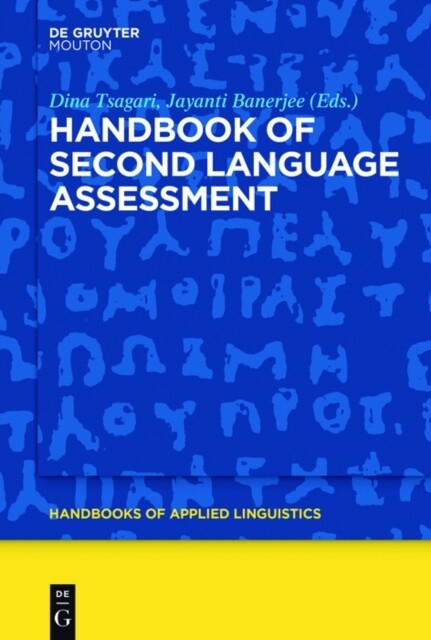
Handbook of Second Language Assessment (eBook)
460 Seiten
De Gruyter (Verlag)
978-1-61451-382-7 (ISBN)
This volume focuses on the principles and practices of second language assessment while considering its impact on society. Part I deals with the conceptual foundations of second language assessment, and Part II addresses the theory and practice of assessing different second language skills. Part III examines the challenges and opportunities of second language assessment in a range of contexts. Part IV examines key issues.
Dina Tsagari, University of Cyprus, Nicosia, Cyprus; Jayanti Banerjee, CaMLA, Ann Arbor, U.S.A.
Second language assessment is ubiquitous. It has found its way from education into questions about access to professions and migration. This volume focuses on the main debates and research advances in second language assessment in the last fifty years or so, showing the influence of linguistics, politics, philosophy, psychology, sociology, and psychometrics. There are four parts which, when taken together, address the principles and practices of second language assessment while considering its impact on society. Read separately, each part addresses a different aspect of the field. Part I deals with the conceptual foundations of second language assessment with chapters on the purposes of assessment, and standards and frameworks, as well as matters of scoring, quality assurance, and test validation. Part II addresses the theory and practice of assessing different second language skills including aspects like intercultural competence and fluency. Part III examines the challenges and opportunities of second language assessment in a range of contexts. In addition to chapters on second language assessment on a national scale, there are chapters on learning-oriented assessment, as well as the uses of second language assessment in the workplace and for migration. Part IV examines a selection of important issues in the field that deserve attention. These include the alignment of language examinations to external frameworks, the increasing use of technology to both deliver and score second language tests, the responsibilities associated with assessing test takers with special needs, the concept of 'voice' in second language assessment, and assessment literacy for teachers and other test and score users.
| Erscheint lt. Verlag | 7.3.2016 |
|---|---|
| Sprache | englisch |
| Themenwelt | Geisteswissenschaften ► Sprach- / Literaturwissenschaft ► Sprachwissenschaft |
| ISBN-10 | 1-61451-382-1 / 1614513821 |
| ISBN-13 | 978-1-61451-382-7 / 9781614513827 |
| Informationen gemäß Produktsicherheitsverordnung (GPSR) | |
| Haben Sie eine Frage zum Produkt? |
 PDF (Wasserzeichen)
Größe: 2,5 MB
DRM: Digitales Wasserzeichen
Dieses eBook enthält ein digitales Wasserzeichen und ist damit für Sie personalisiert. Bei einer missbräuchlichen Weitergabe des eBooks an Dritte ist eine Rückverfolgung an die Quelle möglich.
Dateiformat: PDF (Portable Document Format)
Mit einem festen Seitenlayout eignet sich die PDF besonders für Fachbücher mit Spalten, Tabellen und Abbildungen. Eine PDF kann auf fast allen Geräten angezeigt werden, ist aber für kleine Displays (Smartphone, eReader) nur eingeschränkt geeignet.
Systemvoraussetzungen:
PC/Mac: Mit einem PC oder Mac können Sie dieses eBook lesen. Sie benötigen dafür einen PDF-Viewer - z.B. den Adobe Reader oder Adobe Digital Editions.
eReader: Dieses eBook kann mit (fast) allen eBook-Readern gelesen werden. Mit dem amazon-Kindle ist es aber nicht kompatibel.
Smartphone/Tablet: Egal ob Apple oder Android, dieses eBook können Sie lesen. Sie benötigen dafür einen PDF-Viewer - z.B. die kostenlose Adobe Digital Editions-App.
Buying eBooks from abroad
For tax law reasons we can sell eBooks just within Germany and Switzerland. Regrettably we cannot fulfill eBook-orders from other countries.
 EPUB (Wasserzeichen)
Größe: 7,2 MB
DRM: Digitales Wasserzeichen
Dieses eBook enthält ein digitales Wasserzeichen und ist damit für Sie personalisiert. Bei einer missbräuchlichen Weitergabe des eBooks an Dritte ist eine Rückverfolgung an die Quelle möglich.
Dateiformat: EPUB (Electronic Publication)
EPUB ist ein offener Standard für eBooks und eignet sich besonders zur Darstellung von Belletristik und Sachbüchern. Der Fließtext wird dynamisch an die Display- und Schriftgröße angepasst. Auch für mobile Lesegeräte ist EPUB daher gut geeignet.
Systemvoraussetzungen:
PC/Mac: Mit einem PC oder Mac können Sie dieses eBook lesen. Sie benötigen dafür die kostenlose Software Adobe Digital Editions.
eReader: Dieses eBook kann mit (fast) allen eBook-Readern gelesen werden. Mit dem amazon-Kindle ist es aber nicht kompatibel.
Smartphone/Tablet: Egal ob Apple oder Android, dieses eBook können Sie lesen. Sie benötigen dafür eine kostenlose App.
Geräteliste und zusätzliche Hinweise
Buying eBooks from abroad
For tax law reasons we can sell eBooks just within Germany and Switzerland. Regrettably we cannot fulfill eBook-orders from other countries.
PDF (Adobe DRM)Kopierschutz: Adobe-DRM
Adobe-DRM ist ein Kopierschutz, der das eBook vor Mißbrauch schützen soll. Dabei wird das eBook bereits beim Download auf Ihre persönliche Adobe-ID autorisiert. Lesen können Sie das eBook dann nur auf den Geräten, welche ebenfalls auf Ihre Adobe-ID registriert sind.
Details zum Adobe-DRM
Dateiformat: PDF (Portable Document Format)
Mit einem festen Seitenlayout eignet sich die PDF besonders für Fachbücher mit Spalten, Tabellen und Abbildungen. Eine PDF kann auf fast allen Geräten angezeigt werden, ist aber für kleine Displays (Smartphone, eReader) nur eingeschränkt geeignet.
Systemvoraussetzungen:
PC/Mac: Mit einem PC oder Mac können Sie dieses eBook lesen. Sie benötigen eine
eReader: Dieses eBook kann mit (fast) allen eBook-Readern gelesen werden. Mit dem amazon-Kindle ist es aber nicht kompatibel.
Smartphone/Tablet: Egal ob Apple oder Android, dieses eBook können Sie lesen. Sie benötigen eine
Geräteliste und zusätzliche Hinweise
Buying eBooks from abroad
For tax law reasons we can sell eBooks just within Germany and Switzerland. Regrettably we cannot fulfill eBook-orders from other countries.
aus dem Bereich


