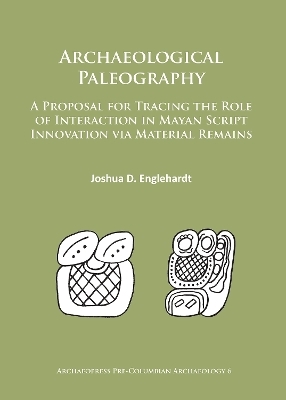
Archaeological Paleography
Archaeopress Archaeology (Verlag)
978-1-78491-239-0 (ISBN)
This research explores the development of the Maya writing system in Middle–Late Formative and Early Classic period (700 BC–AD 450) Mesoamerica. It seeks to correlate script development with interregional interaction and diachronic changes in material culture, and proposes a new methodological template for examining script development via material remains. In doing so, it contributes to anthropological debate regarding the role and effects of interregional interaction in processes of development and change of material and symbolic culture. This investigation posits that Maya writing developed in late Middle Formative through Early Classic period Mesoamerica as a correlate of interregional sociopolitical and economic interaction. Scholars working in many areas of the world have long claimed that interaction is central to cultural innovation, especially in relation to the development of writing. If the emergence of the Mayan script is a correlate of systemic interaction, then its developmental process should be traceable archaeologically through artifactual evidence. This hypothesis is tested by exploring archaeological indicators of interaction against a backdrop of previously-documented transformations in the emerging Mayan script. The methodological model proposed here builds on current models of the development of Mesoamerican writing systems and models of interregional interaction and cultural development to associate archaeological remains with the development of the Mayan script.
Joshua D. Englehardt is Research Professor of Archaeology at the Centro de Estudios Arqueológicos de El Colegio de Michoacán, Mexico, and a member of the Sistema Nacional de Investigadores. His research focuses on the development of symbolic systems, particularly writing, as well as biocultural heritage and the relationships between humans and the natural world. He has directed or co-directed research projects in Mexico, the US, and Japan.
Chapter 1: Introduction ;
Chapter 2: Theoretical Framework and Methodological Premises ;
Chapter 3: The Northwest Maya Lowlands: Site Selection and Regional Background ;
Chapter 4: Ceramic Sample and Analytic Methods ;
Chapter 5: Interpreting the Results of the Comparative and Statistical Ceramic Analyses ;
Chapter 6: Comparative Analysis of Iconographic and Linguistic Evidence ;
Chapter 7: Interpretation and Discussion: The Relationship Between Material Interaction, Innovation, and Script Development ;
Chapter 8: Conclusions ;
Bibliography
| Erscheinungsdatum | 22.03.2016 |
|---|---|
| Reihe/Serie | Archaeopress Pre-Columbian Archaeology |
| Zusatzinfo | Illustrated throughout in black & white |
| Verlagsort | Oxford |
| Sprache | englisch |
| Maße | 205 x 290 mm |
| Gewicht | 1290 g |
| Themenwelt | Geisteswissenschaften ► Archäologie |
| Geschichte ► Hilfswissenschaften ► Paläografie | |
| Geisteswissenschaften ► Sprach- / Literaturwissenschaft ► Sprachwissenschaft | |
| ISBN-10 | 1-78491-239-5 / 1784912395 |
| ISBN-13 | 978-1-78491-239-0 / 9781784912390 |
| Zustand | Neuware |
| Informationen gemäß Produktsicherheitsverordnung (GPSR) | |
| Haben Sie eine Frage zum Produkt? |
aus dem Bereich