Progress (eBook)
John Wiley & Sons (Verlag)
978-0-7456-9103-9 (ISBN)
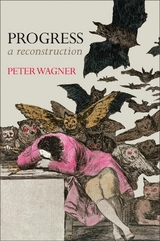
But since the late twentieth century the idea of progress has largely disappeared from public debate. Sometimes it has been explicitly declared dead. The wide horizon of future possibilities has closed. The best we can hope for, some say, is to avoid regress.
What happened to progress? Why did we stop believing in it, if indeed we did? This book offers answers to these questions. It reviews both the conceptual history of progress and the social and political experiences with progress over the past two centuries, and it comes to a surprising conclusion: The idea of progress was misconceived from its beginnings, and the failure of progress in practice was a result of this flawed conception. The experiences of the past half century, in turn, has allowed us to rethink progress in a more adequate way. Rather than the end of progress, they may herald the beginning of a new, reconstructed idea of progress.
PETER WAGNER is ICREA Research Professor at the University of Barcelona.
The idea of progress guided human expectations and actions for over two centuries. From the Enlightenment onwards, it was widely believed that the condition of humankind could be radically improved. History had embarked on an unstoppable forward trajectory, realizing the promise of freedom and reason. The scientific revolution, the industrial revolution, and the French Revolution, in some views also the socialist revolution, were milestones on this march of progress.But since the late twentieth century the idea of progress has largely disappeared from public debate. Sometimes it has been explicitly declared dead. The wide horizon of future possibilities has closed. The best we can hope for, some say, is to avoid regress. What happened to progress? Why did we stop believing in it, if indeed we did? This book offers answers to these questions. It reviews both the conceptual history of progress and the social and political experiences with progress over the past two centuries, and it comes to a surprising conclusion: The idea of progress was misconceived from its beginnings, and the failure of progress in practice was a result of this flawed conception. The experiences of the past half century, in turn, has allowed us to rethink progress in a more adequate way. Rather than the end of progress, they may herald the beginning of a new, reconstructed idea of progress.
PETER WAGNER is ICREA Research Professor at the University of Barcelona.
Foreword
Chapter 1: The withering away of progress
Chapter 2: Progress as mechanism: the epistemic-economic complex
Chapter 3: Progress as struggle under conditions of ambivalence
Chapter 4: The idea of progress revisited
Chapter 5: The past half century
Chapter 6: Possible progress today
Bibliographical note
Index
1
The Withering Away of Progress
Something Happened Between 1979 and 1989
Between 1979 and 1989, the world changed. But we have as yet failed to understand precisely what happened and how and, even much less so, why. The year 1979 is that of the second oil-price hike, of the Iranian Revolution, of the election of Margaret Thatcher as prime minister of the United Kingdom, and of the publication of Jean-François Lyotard's Condition postmoderne. The year 1989 is that of the fall of the Berlin Wall, during which political scientist Francis Fukuyama declared ‘the end of history’ and philosopher Richard Rorty put his suggestion between book covers (1989) that social and political thought may already have had ‘the last conceptual revolution it needs’. Lyotard claimed that societies are not as intelligible as social and political thought had assumed and were far from embarked on a historical trajectory of linear evolution. Iran, in turn, had long been seen as being on a stable course of ‘modernization and development’, but the overthrow of the Shah regime demonstrated that other avenues are possible. Ten years later, the beginning of the end of Soviet-style socialism, in contrast, seemed to confirm the view that ‘there is no alternative’, to paraphrase Margaret Thatcher, to market capitalism and liberal democracy. In their characteristically different ways, Fukuyama and Rorty assessed and welcomed this new situation in society and politics, as well as in intellectual life.
Despite their all-too-evident flaws, Lyotard's, Fukuyama's and Rorty's ideas captured an important aspect of their time. We may call this aspect the end of progress. On the face of it, Lyotard suggested that progress was not – or no longer – possible, whereas Fukuyama and Rorty claimed that all significant progress had already been achieved. The upshot, though, is the same: if the diagnosis is correct, progress is no longer possible in our time. Even the relentless theoretical optimist Jürgen Habermas (1990) declared his adherence to the spirit of the time by calling the end of Soviet socialism a ‘catching-up revolution’. Like the hare in the tale, ‘progressive’ political activists around the world found themselves at the end of their race looking at the liberal-democrat hedgehog who smilingly says ‘I am already here’.
But now it seems that, like the hedgehog couple,1 liberal-democratic philosophy of history has played a mirror trick on humankind. Upon arrival, the final destination of the journey did not at all correspond with the image that had been used in the publicity. From the 1990s onwards, unbound capitalism has led to an increase in inequality, a worsening of working conditions and the dismantling of the welfare state where it existed. There are now large areas on the earth where lawfulness no longer exists and violence appears to be ever more widespread. Furthermore, the ecology of the planet is ever more unbalanced, moving us rapidly closer to the moment in which living conditions will dramatically deteriorate due to climate change. All we can expect, therefore, seems to be a continuation of wars and violence, poverty and inequality, exploitation and oppression, interrupted only, at best, by spatially and temporally limited periods in which relative peace, well-being, equality and freedom can be obtained. The optimism of those who thought that the promise of progress has already been fulfilled has yielded to the pessimism of those who think that lasting progress is unachievable. The only possible meaning of progress in our time, as Claus Offe recently suggested, is the avoidance of regress. And we will have to work hard even to achieve this.
Later on, we will need to paint a more nuanced picture of the present. After all, we also live at a time in which a considerable increase in material wealth is created in the so-called ‘emerging economies’. Transformation-oriented governments in Latin America and South Africa have achieved significant reduction in poverty and increase in welfare provision. Arguably, there are fewer oppressive regimes now than there were fifty years ago. Apartheid in South Africa and military dictatorships in Latin America have been overcome and have in some places given way to vibrant participatory democracy. Maybe hopes for progress have only been abandoned in that region of the earth where such radical hopes were generated in the first place – the north-west – whereas they are flourishing elsewhere.
Let us, however, postpone the more detailed look at current reality and try first to understand the (partial) disillusionment about the present in the light of prior expectations. Disillusionment, after all, can be a positive process. It means liberation from unfounded illusions. Maybe something had been wrong with progress to start with. The world we live in today may be the result of us humans trying to bring into being a world that cannot – or should not – exist. Or of us trying to create such a world by the wrong means, by means through which it cannot – or should not – be created. The point here is not only that our view of that better future world or of the ways in which it can be brought about was possibly flawed. The point also is that the fact of us having tried has indeed transformed the world, and not – or not only – for the better. Thus I suggest that we review the history of the idea of progress and the way it has helped to transform the world to understand our present condition and our present malaise.
Some readers may now think that this is typical conservative reasoning. I want to ask them for a bit of patience; I will explicitly address conservatism later on. It is not my purpose to discard the commitment to progress altogether by showing how the pursuit of progress made the world a worse place to live in. And this for two reasons: firstly, because this is not true. The pursuit of progress made the world both better and worse, at different times, in different places and in different respects. We have to understand the reasons for these variations. And, secondly, because it is exactly our dissatisfaction with the present state of the world that requires us to continue exploring possibilities for progress. If there were flaws in the past conception of progress, leading to negative consequences in its application, then we need to see whether we can remedy both the conceptual flaws and the negative consequences by elaborating and using a more adequate notion of progress. That is why we first need to see how the concept of progress emerged that guided much of human action over two centuries.
A Look Back: The Invention of Progress
In the most general sense, progress means improvement in the living conditions of human beings, not least in their ways of living together. Progress is always temporal; it refers to improvement through a comparison over time. In this general sense, to the best of our knowledge human beings have always been concerned with progress. They have seen it happening and have reflected on the reasons for it, not least on the conditions for bringing it about. They have also witnessed decline and have reflected on possibilities of avoiding it. Observing their past, they have sometimes made distinctions between improvements in some respects and decline in others. Mostly, they have not expected improvements to be lasting accomplishments. Everything that could improve could also deteriorate again, and was likely to do so at some point.
However, something very particular occurred in Europe during the seventeenth and eighteenth centuries. The expectation arose that comprehensive improvement was possible, improvement in all respects. And such improvement would not necessarily be only temporary. It could be sustained in the long run, and every future situation could be subject to further improvement. Furthermore, such comprehensive improvement was not only possible; it was even likely to happen because one had gained insight into the conditions needed for it to emerge. This change of expectations was the invention of progress. As we shall see, it is these events to which those of the present provide the mirror. They mark the moment when the race between hare and hedgehog started. We will not be able to run it again but, in order to understand where we are now, we have to review its course.
By 1800, the reinterpretation of the idea of progress had such pronounced effects that historians have spoken of a ‘rupture in societal consciousness’ (Koselleck and Reichardt 1988), more precisely associated with the French Revolution as the moment of breakthrough of the new concept. In possibly the most striking formulation, Reinhart Koselleck has captured the emergence of the new idea of progress as the separation of the horizon of expectations from the space of experience, thus as the wide opening of the horizon of time. That which was possible in the future was no longer determined by the experiences of the past.
Two aspects of the then emerging concept of progress are particularly important for our work at reconstruction. First, the separation of expectations from experiences created a wide gap between the past and the future. Progress is that which takes place in this gap. Progress is a linear path that leads from the limited past experiences to an ever better future. Thus an asymmetry is created between improvement and deterioration, between progress and regress. While the latter cannot be entirely ruled out, it is temporary and no more than the result of...
| Erscheint lt. Verlag | 8.1.2016 |
|---|---|
| Sprache | englisch |
| Themenwelt | Geisteswissenschaften ► Philosophie ► Allgemeines / Lexika |
| Sozialwissenschaften ► Politik / Verwaltung | |
| Sozialwissenschaften ► Soziologie ► Allgemeine Soziologie | |
| Schlagworte | History • Moderne • Moderne u. Postmoderne • Modernity • Modernity & Postmodernity • Philosophie • Philosophy • Progress • Revolution • Sociology • Soziologie |
| ISBN-10 | 0-7456-9103-X / 074569103X |
| ISBN-13 | 978-0-7456-9103-9 / 9780745691039 |
| Informationen gemäß Produktsicherheitsverordnung (GPSR) | |
| Haben Sie eine Frage zum Produkt? |
 EPUB (Adobe DRM)
Kopierschutz: Adobe-DRM
Adobe-DRM ist ein Kopierschutz, der das eBook vor Mißbrauch schützen soll. Dabei wird das eBook bereits beim Download auf Ihre persönliche Adobe-ID autorisiert. Lesen können Sie das eBook dann nur auf den Geräten, welche ebenfalls auf Ihre Adobe-ID registriert sind.
Details zum Adobe-DRM
Dateiformat: EPUB (Electronic Publication)
EPUB ist ein offener Standard für eBooks und eignet sich besonders zur Darstellung von Belletristik und Sachbüchern. Der Fließtext wird dynamisch an die Display- und Schriftgröße angepasst. Auch für mobile Lesegeräte ist EPUB daher gut geeignet.
Systemvoraussetzungen:
PC/Mac: Mit einem PC oder Mac können Sie dieses eBook lesen. Sie benötigen eine
eReader: Dieses eBook kann mit (fast) allen eBook-Readern gelesen werden. Mit dem amazon-Kindle ist es aber nicht kompatibel.
Smartphone/Tablet: Egal ob Apple oder Android, dieses eBook können Sie lesen. Sie benötigen eine
Geräteliste und zusätzliche Hinweise
Buying eBooks from abroad
For tax law reasons we can sell eBooks just within Germany and Switzerland. Regrettably we cannot fulfill eBook-orders from other countries.
aus dem Bereich