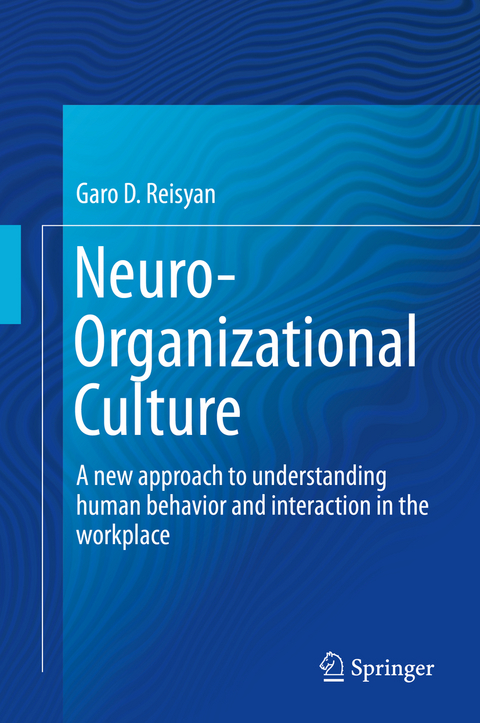
Neuro-Organizational Culture (eBook)
XII, 317 Seiten
Springer International Publishing (Verlag)
978-3-319-22147-2 (ISBN)
Garo D. Reisyan looks back on a professional experience of about 20 years, where he got to know a very diverse mix of organizational cultures. Ranging from very small to very big companies across sectors or industries, and in various situations. He held leadership roles at Procter & Gamble, Droege Group and Deutsche Bahn. As a Top-Management-Consultant, he advised renowned German family businesses and DAX-30 Corporations, such as BASF, Benteler, Thyssen, SBB, Siemens or Gerolsteiner. He led numerous strategic, reorganizational and M&A projects. Since 2009 he works as an independent management consultant and accompanied various corporate fitness projects, M&A's and culture projects. He is convinced that cultural competence is 'the' key discipline to cope with the challenges of the 21st century - a must for sustainable leadership in organizations, but also with regard to entire societies. With this book, he seeks to contribute to greater cultural competence in organizations and the general public.
Garo D. Reisyan looks back on a professional experience of about 20 years, where he got to know a very diverse mix of organizational cultures. Ranging from very small to very big companies across sectors or industries, and in various situations. He held leadership roles at Procter & Gamble, Droege Group and Deutsche Bahn. As a Top-Management-Consultant, he advised renowned German family businesses and DAX-30 Corporations, such as BASF, Benteler, Thyssen, SBB, Siemens or Gerolsteiner. He led numerous strategic, reorganizational and M&A projects. Since 2009 he works as an independent management consultant and accompanied various corporate fitness projects, M&A’s and culture projects. He is convinced that cultural competence is “the” key discipline to cope with the challenges of the 21st century – a must for sustainable leadership in organizations, but also with regard to entire societies. With this book, he seeks to contribute to greater cultural competence in organizations and the general public.
Acknowledgment 8
Contents 10
About the Author 12
Chapter 1: Introduction 14
Cultural Competence—Key Competence of the Twenty-First Century 14
Linking Neurosciences and Culture 22
Wealth of Nations or “Why Nations Fail” 23
Chapter 2: 30+ Years of Organizational Culture 25
Why Bother? 25
From an Individual’s Perspective 30
Who Usually Cares About Organizational Culture? 31
Organizations 32
Genesis and Evolution of the Concept of Organizational Culture 33
Current Landscape of Concepts—Snafu and Deficiency 42
Edgar H. Schein’s Concept of Organizational Culture—A Critical Reflection 44
Description 45
Two Ultimate Problems of Every Group 46
Formal Definition of Culture 46
Schein’s Three Levels of Culture 46
Artifacts 47
Espoused Values and Beliefs 47
Basic Underlying Assumptions 48
Dimensions of Culture 49
Cultural Typologies 50
Deciphering and Analyzing Culture 51
Changing Organizational Culture 51
A Critical Review of Schein’s Concept of Culture 52
Interplay Between Individuals and Groups 52
The Three Levels of Culture, Which are Actually Only Two 53
No Alternative to Behave else than According to Basic Assumptions 54
Basic Assumptions = Instinct and Gut Feeling? 55
Too Rationalistic 55
Changeability of Culture 56
Cultural Typologies 57
Geert Hofstede’s Concept of Intercultural Management 58
Important Convergencies of Common Schools of Thought 61
Important Divergencies of Common Schools of Thought 62
Carrier of Culture: Individual, Group, “Cloud”? 62
What is the Link Between Organizational Culture and Success? 63
Qualitative 63
Quantitative 65
Conclusion: Organizational Culture and Success 69
Analysis of Organizational Culture: Qualitative vs. Quantitative 69
Organizational Culture and Traditions, Climate, Ethics or Values—Divides 77
Changeability of Organizational Culture 79
Summary 85
Chapter 3: Brain Science and Emotion Research 88
Neuroscientific Foundations 90
Structure of the Human Nervous System and its Evolution 91
Structure and Function of Neurons and Glial Cells 98
Glial Cells 99
Neurons, Synapses and Neuroactive Substances 99
Neuronal Representations of Functions 105
Brainstem: Medulla Oblongata and Pons 107
Cerebellum 108
Subcortical Structures 108
Neocortex and Limbic Lobe (Cingulate Cortex) 112
Endocrine System (Hormone System) 115
Structure and Functioning of the Endocrine System 116
Wellbeing and Euphoria 118
Stress 119
What’s in It for Organizational Culture? 123
Sensory System and Perception 126
Basics of the Processing of Sensory Inputs 129
The Visual System 129
Perception in the Other Sensory Systems in General 133
What’s in It for Organizational Culture? 135
Emotions 137
Emotions in the Brain 139
Neural Arousal of Emotions over Time 141
Bottom Line 142
Emotion Elicitation 143
The Effects of Emotions 146
Emotion Regulation 149
What’s in It for Organizational Culture? 151
Emotions in Bullet Points 157
Memory and Learning 158
Model of the Memory 158
Memory Processes 163
Memory in the Brain 165
The Role of the Hippocampus 167
Attention and Expectation 168
Cognitive Dissonance 171
What’s in It for Organizational Culture? 174
Chapter 4: Neuroculture 178
Lonesome George—A Mental Journey to Prehistoric Times 178
Neuroculture: Concept Introduction 183
Introduction 183
Concept Definition 185
Individual Culture 186
Group Culture 187
Building Blocks of the Model 188
Reflexivity 193
Methodization 195
Notions 204
Notions and Behavior 205
Structural Framework 207
The Inventory 210
Notions of the Domain ‘Goals’ 216
Notions of the Domain ‘Ex-/Inclusion’ 218
Notions of the Domain ‘Work’ 221
Notions of the Domain ‘Periphery’ 227
Notions of the Domain ‘Humans’ 228
Conceptions of Man and Human Needs 228
Drives 230
Human Constitution 231
Schwartz Value System 232
Notions of the Domain ‘Interaction’ 234
Communication Style 235
Ways of Competing (According to Pierre Bourdieu) 235
Granting of Power 237
Discrimination 238
Symbols 238
Physical Symbols 239
Habitual Symbols 239
Verbal Symbols 240
Notions of the Domain ‘Truth’ 240
Notions of the Domain ‘Time’ 244
An Example from a School 247
Emotions 248
Chapter 5: Management of Organizational Culture 255
Culture Analysis 259
Means 261
Guidelines of Finding 263
Project Execution 265
Templates 267
Culture Change 273
Measures 273
Overarching 276
Reflexivity 278
Notions 278
Emotions 281
Supplementary Measures 284
Communication 284
Storytelling 285
Case Study Glassco 289
Chapter 6: Cornerstones for Twenty-First Century Organizations 297
High Reflexivity 302
Mature Spectrum of Notions 303
General Culture 304
Leadership Culture 304
Innovation Culture 306
Emotionally Enlightened and Positive Balance of Emotions 307
Appendix: Blank Templates 309
References 313
Index 323
| Erscheint lt. Verlag | 21.10.2015 |
|---|---|
| Zusatzinfo | XII, 317 p. 72 illus., 11 illus. in color. |
| Verlagsort | Cham |
| Sprache | englisch |
| Themenwelt | Geisteswissenschaften |
| Medizin / Pharmazie ► Medizinische Fachgebiete ► Psychiatrie / Psychotherapie | |
| Sozialwissenschaften ► Politik / Verwaltung | |
| Sozialwissenschaften ► Soziologie | |
| Wirtschaft ► Betriebswirtschaft / Management ► Personalwesen | |
| Schlagworte | Corporate Culture • Neuroleadership • Neurosciences in the Workplace • Organizational Behavior • Organizational Culture • organizational psychology |
| ISBN-10 | 3-319-22147-7 / 3319221477 |
| ISBN-13 | 978-3-319-22147-2 / 9783319221472 |
| Informationen gemäß Produktsicherheitsverordnung (GPSR) | |
| Haben Sie eine Frage zum Produkt? |
 PDF (Wasserzeichen)
DRM: Digitales Wasserzeichen
Dieses eBook enthält ein digitales Wasserzeichen und ist damit für Sie personalisiert. Bei einer missbräuchlichen Weitergabe des eBooks an Dritte ist eine Rückverfolgung an die Quelle möglich.
Dateiformat: PDF (Portable Document Format)
Mit einem festen Seitenlayout eignet sich die PDF besonders für Fachbücher mit Spalten, Tabellen und Abbildungen. Eine PDF kann auf fast allen Geräten angezeigt werden, ist aber für kleine Displays (Smartphone, eReader) nur eingeschränkt geeignet.
Systemvoraussetzungen:
PC/Mac: Mit einem PC oder Mac können Sie dieses eBook lesen. Sie benötigen dafür einen PDF-Viewer - z.B. den Adobe Reader oder Adobe Digital Editions.
eReader: Dieses eBook kann mit (fast) allen eBook-Readern gelesen werden. Mit dem amazon-Kindle ist es aber nicht kompatibel.
Smartphone/Tablet: Egal ob Apple oder Android, dieses eBook können Sie lesen. Sie benötigen dafür einen PDF-Viewer - z.B. die kostenlose Adobe Digital Editions-App.
Buying eBooks from abroad
For tax law reasons we can sell eBooks just within Germany and Switzerland. Regrettably we cannot fulfill eBook-orders from other countries.
aus dem Bereich