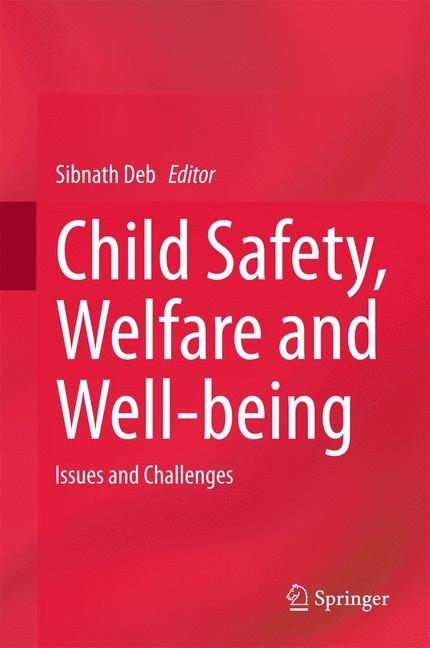
Child Safety, Welfare and Well-being (eBook)
409 Seiten
Springer India (Verlag)
978-81-322-2425-9 (ISBN)
This volume presents the unique features of child abuse and neglect and discusses proposed as well as experimented protective measures to create awareness about child rights and their implementation. Divided into four sections, the volume discusses (a) the nature and prevalence of child abuse and neglect, risk factors and impact; (b) issues pertaining to child rights with regard to nutrition, health and education; (c) rights of children with disabilities, HIV/AIDS, and in circumstances like disaster and adoption; and (d) field-based experiences of researchers in protecting child rights and preventing child abuse. The most important contribution of this volume is in providing an analysis of the current legal scenario of child protection, emphasizing the rights of different sections of vulnerable children. Professionals and academics specializing in this area from different academic backgrounds and regions have contributed chapters to this volume, creating a global and multidisciplinary forum for discussion. This volume is important for a wide range of professionals and researchers from the social sciences, law, medicine, and behavioral sciences. It is also beneficial for policy makers and law enforcement agencies working with children.
Sibnath Deb is currently professor at the Department of Applied Psychology, Pondicherry University (A Central University), Puducherry, India and Adjunct Professor, School of Public Health and Social Work, Queensland University of Technology, Brisbane, Australia has 26 years of teaching and research experience. Currently he is coordinator of UGC SAP project. In 1994, Prof. Deb did an intensive course on 'Qualitative Research' from the University of Western Australia, Australia. During April 2009 to Aug. 2009, Prof. Deb visited the School of Public Health, Queensland University of Technology, Brisbane, Australia as Visiting Faculty. Prof. Deb has produced ten Ph. D.'s and successfully coordinated more than 50 large-scale qualitative and quantitative studies in addition to publishing more than 100 research papers, writing eight books and editing four. Prof. Deb is in the editorial board of the 'Journal of Interpersonal Violence', published by the University of Washington, USA and consulting editor of a number of journals. During 2004-'08, he served the International Society for Prevention of Child Abuse and Neglect (ISPCAN) as Councilor Member. In 2009, Prof. Deb received 'Endeavour Executive Award' from the Australian Government. His current areas of research interest include child protection, students' mental health, adolescent reproductive health, and HIV/AIDS.
This volume presents the unique features of child abuse and neglect and discusses proposed as well as experimented protective measures to create awareness about child rights and their implementation. Divided into four sections, the volume discusses (a) the nature and prevalence of child abuse and neglect, risk factors and impact; (b) issues pertaining to child rights with regard to nutrition, health and education; (c) rights of children with disabilities, HIV/AIDS, and in circumstances like disaster and adoption; and (d) field-based experiences of researchers in protecting child rights and preventing child abuse. The most important contribution of this volume is in providing an analysis of the current legal scenario of child protection, emphasizing the rights of different sections of vulnerable children. Professionals and academics specializing in this area from different academic backgrounds and regions have contributed chapters to this volume, creating a global and multidisciplinary forum for discussion. This volume is important for a wide range of professionals and researchers from the social sciences, law, medicine, and behavioral sciences. It is also beneficial for policy makers and law enforcement agencies working with children.
Sibnath Deb is currently professor at the Department of Applied Psychology, Pondicherry University (A Central University), Puducherry, India and Adjunct Professor, School of Public Health and Social Work, Queensland University of Technology, Brisbane, Australia has 26 years of teaching and research experience. Currently he is coordinator of UGC SAP project. In 1994, Prof. Deb did an intensive course on ‘Qualitative Research’ from the University of Western Australia, Australia. During April 2009 to Aug. 2009, Prof. Deb visited the School of Public Health, Queensland University of Technology, Brisbane, Australia as Visiting Faculty. Prof. Deb has produced ten Ph. D.’s and successfully coordinated more than 50 large-scale qualitative and quantitative studies in addition to publishing more than 100 research papers, writing eight books and editing four. Prof. Deb is in the editorial board of the ‘Journal of Interpersonal Violence’, published by the University of Washington, USA and consulting editor of a number of journals. During 2004-’08, he served the International Society for Prevention of Child Abuse and Neglect (ISPCAN) as Councilor Member. In 2009, Prof. Deb received ‘Endeavour Executive Award’ from the Australian Government. His current areas of research interest include child protection, students’ mental health, adolescent reproductive health, and HIV/AIDS.
Foreword 5
Preface and Acknowledgments 7
Contents 12
Editor and Contributors 15
1 Introduction—Child Safety, Welfare, and Well-Being: Need of the Hour 28
Introduction 28
Phenomenon of Child Safety, Welfare and Well-Being in Different Social Strata 29
International Efforts for Child Safety and Prevention of Child Abuse 30
Latest Efforts by the Government of India for Child Safety and for Their Welfare 30
Need for Reporting of Abuse 31
Need for New Legislations for Prevention of Child Sexual Abuse and Child Trafficking 32
Need for Systematic Development of Documentation System, Monitoring, Research, and Evaluation of Existing Program 32
Prevention 33
Strengthening the System with Trained Human Resources 33
Intervention: Assessment and Treatment 34
Challenges 36
Immediate Need of the Hour 36
References 37
Part I Nature and Extent of Child Abuse and Neglect 39
2 Fifty Years of Child Abuse: Milestones, Misconceptions, and Moving On 40
Introduction 40
Milestones 41
Misconceptions 42
Where We Are at Present 44
Moving on: The Possibilities 45
What Other Disciplines Can Teach Us 46
A Future Challenge 47
References 48
3 Cyberbullying: Its Prevention and Intervention Strategies 50
Introduction 50
Child and Parent Variables Associated with Cyberbullying 51
Internet Use 51
Psychosocial Difficulties 52
Proactive Aggression 52
Normative Beliefs About Aggression 54
Parent–Child Relationship 55
Prevention and Intervention Strategies 56
Empathy Training and Changing Beliefs Supporting Aggression 57
Guidelines Governing Internet Behavior 57
Develop Positive Parent–Child Relationships Early 58
Adopting a Multi-systemic Approach 59
Conclusion and Recommendations 60
References 60
4 Child Abuse and Neglect in India, Risk Factors, and Protective Measures 64
Introduction 64
Corporal Punishment, Psychological and Sexual Abuse, and Neglect 65
Reported Cases of Child Rape and Abduction in India 67
Report of Child Abuse and Neglect Cases in India 68
Risk Factors to Child Abuse 68
Effects of Child Abuse and Neglect 73
Legislative Measures for Protection of Child Rights in India 74
Social Welfare Measures for Children 76
Conclusion 77
Recommendations 78
References 79
5 Children’s Right to Safety: The Problem of Corporal Punishment in Pakistan 83
Introduction 83
The Problem of Corporal Punishment 84
The Prevalence of CP Around the World 85
Corporal Punishment in Pakistan 86
CP in Pakistani Schools 88
CP in Pakistani Homes 89
Cultural Considerations 90
Pakistani Parents in the West 91
Legal Status of CP in Pakistan 92
Federal Law 92
Pakistan Penal Code Act XLV of 1860 (Italics Added) 92
Provincial Laws 93
Shariah Law 94
Recent Efforts at Legal Reform 94
Recommendations 95
Conclusion 96
References 96
6 Child Sexual Abuse in a Trusted Relationship: Trauma or Confusion? 99
Introduction 99
Common Myths 100
Effects of Sexual Abuse 100
Belief in Trauma 102
Trauma or Confusion 102
Conclusion and Recommendations 104
References 105
7 Conflict in Kashmir: Psychosocial Consequences on Children 106
Introduction 106
Social Disruption 107
Civil and Political Violations 107
Transformation in Roles and Responsibilities 108
Vulnerability to Children 109
Loss of Parents 109
Education of Children 110
AggressionStone Pelting 111
Loss of Childhood 111
Mental Health 111
Rebellious Nature 113
Conclusion 114
Recommendations 114
References 115
8 The Law and Practices of Ritual Male Circumcision: Time for Review 117
Introduction 117
Ritual Male Circumcision (RMC): The Practice and Its Origins 118
RMC Under Domestic Law and Practice 118
England 118
The Netherlands 120
Germany 122
RMC Under International Law 124
The Council of Europe 124
The United Nations 125
The Child’s Well-Being and Autonomy 126
The Physical Well-Being of the Child and Later Adult 126
The Psychological Well-Being of the Child and Later Adult 128
Autonomy and Self-determination of the Child 129
The Way Forward 130
Conclusion 131
References 131
Part II Child Rights and Its Practice 136
9 Child’s Right to Health, Education, and Freedom from Hunger 137
Introduction 137
Determinants of Health 140
Child Friendly Communities 140
Need for Data 141
Community Based Monitoring Systems—CBMS 141
Problems of Inequity 142
Need for Resource Development 142
Convention on the Rights of the Child-Protection, Provision, and Participation 143
Millennium Development Goals 145
Report: The Experiences and Status on MDGs 1, 2, and 4 145
DG 1: Eradicate Hunger—A Child’s Right to Nutrients, Safe Water, and Safe Food 145
Clean Water and Food Safety 146
Interventions 146
Vitamin A 146
Recommendations 147
MDG 2: Achieve Universal Primary Education—A Child’s Right to Education 147
MDG 4: Reduce Child Mortality—The Child’s Right to Health 148
Newborns 148
Early Childhood Development 149
Adolescents 150
Girls and the Girl Child 151
Children with Differing Abilities 151
Maternal Influences 152
Moving Forward 153
Beyond 2015: A Global Development Agenda 153
Establish a Culture of Quality 153
Health Information Technology—Enabling Quality Solutions 154
Population Health Metrics and Information Technology 154
One Voice: Working Together—Achieving MDG No. 8 155
Recommendations 156
Next Steps—Where There Is a Will, There Is a Way 156
References 157
10 Adoption: Right to Information Versus Right to Confidentiality 161
Introduction: Children’s Identity 161
Guiding PrinciplesPolicies 166
Laxmi Kant Pandey versus Union of India case of 1982 166
Guidelines Governing the Adoption of Children (2011) 166
Para 52 of the Guidelines Governing the Adoption of Children (2011) 167
United Nations Convention on Rights of the Child (UNCRC 1989) 167
Convention on Protection of Children and Cooperation in Respect of Inter-Country Adoption—1993 168
UNICEF’s Position 170
Understanding the Surrendering Process 170
Feedback from Recognized Adoption Agencies in India 173
Third Party Search 174
Older Adoptees Must Know 174
Conclusion 176
References 176
11 Dropouts to Learners: The Challenge of the Right to Education Act 2009 178
Introduction 178
The Phenomenon of Dropouts 180
Recent Research Evidence on Dropouts 181
Prevention of Dropouts and Needs of Inclusive Schools 184
Motivational Climate of Schools 185
Raising Motivational Level of Students 187
Teacher Training 188
Parental and Community Involvement 188
Conclusion and Recommendations 190
References 191
Part III Rights of Vulnerable Children 192
12 Child Rights in the Context of HIVAIDS 193
Introduction 193
HIV Infected Children 195
Scope 196
Key Findings 196
Disclosure: Debating on Rights Issue 197
Stigma and Discrimination 198
Exploitation 199
Discontinuation of Education 199
Right to Recreation and Good Life 200
PMTCT Program as Right of the Child 200
Discussion 201
Conclusion 203
Recommendations andor Implications 203
References 204
13 Adoption: A Source of Maltreatment and Violation of Child Rights 206
Introduction 206
Maltreatment of Children 207
Adoption: The Alternate Parenthood Context 208
From Attachment Theory to Understanding Trauma of Adopted Children in Infancy by Bowlby 209
The Mental Frame of Maltreating Parents: A Few Salient Points 215
Indicators for Child Maltreatment 216
Parenting Capacity 217
Family Conflict and Discipline Practices 217
Child Right Violation 218
Conclusion and Recommendations 219
Solution-Oriented Emotional Moves of Adoptive Parents: Helping a Child to Settle 219
References 220
14 Child Labor: An Indian Scenario 222
Introduction 222
Rights of Children 223
Indian Scenario of Child Labor 223
Prevalence and Statistics 225
Census 2001 and 2011 Data on Child Labor 225
NSSO Estimate of Child Labor (2004–2005) 225
NSSO 66th Round of Survey on Child Labor (2009–2010) 226
NFHS-3 Data on Child Labor (2005, 2006) 227
Gender-Specific Effects of Child Labor 227
Industries in Which Child Labor Is Majorly Found in India 228
Bonded Child Labor in the Indian Silk Industry 229
Children’s Testimonies (Human Rights Watch, January 2003) 229
Physical Health Effects of Child Labor 230
Impact of Child Labor on Mental Health 231
Conclusion 232
Recommendations 233
References 234
15 Rights of Children with Disability 235
Introduction 235
Children with Disabilities 236
Rights of Children with Disabilities in the Context of the UNCRC (1989) 237
Factors Leading to Disabling Experiences 241
Societal Attitudes 241
Stigma and Discrimination 242
Abuse 243
Legislation and Lack of Actionable Policies 243
Gender 245
Poverty 245
Barriers in Education 246
Protection of Rights of Children with Disability 248
Conclusion and Recommendations 250
References 251
16 Prevention of Abandonment of Children with Special Needs Through Community-Based Programs and Intervention 255
Introduction 255
Abuse Experienced by Children with Disability and Services 256
Local Situation in Puducherry, India 257
General Context 257
Context Analysis and Justification 258
Lack of Training and Education of Challenged Children in Puducherry 262
Relevance of the Project 263
Stakeholders 265
CWSNs Families 265
Disabled Youth and Adults 265
Actors in the Field of Disabilities (Schools, Parents’ Associations, PWDS’ Associations, Governmental Institutions and Agencies, NGOS) 266
Social Welfare Department, Government of Puducherry U.T. 266
Beneficiaries 266
Community-Based Rehabilitation (CBR) 267
Satya’s CBR Strategy 268
Success Story 270
Conclusion 271
Challenges 272
Recommendations 272
References 273
17 Psycho-Social Support for Protection of Children in Disasters 274
Introduction 274
Tender Age and Developmental Risk Among the Children in Disaster 275
Destruction of the Nurturing Atmosphere 276
Inability of the Family and Care Givers to Provide Adequate Support 276
Traumatic Experiences Due to Disaster 277
Destruction of Educational Set-up 277
Subsidiary Impacts of Disaster on Child and Adolescent Survivors 278
Sense of Insecurity 278
Threat to the Sense of Well-Being 278
Struggle for Survival 279
Issues of Child Protection as the Worse Victim of Disaster: Indian Context 279
Guidelines in Disaster for Child Protection 280
Psychosocial Support for Children in Disaster 285
Important Concepts for School Interventions 286
Intervention in Kanyakumari Tsunami Affected School 288
Protective Environmental Framework 290
Conclusion 291
References 291
18 Education for Vulnerable Children: Innovative Experiments in Urban India 294
Introduction 294
Rainbow Homes 295
Objectives 296
Research Design and Data Collection 296
Sampling 296
The Rainbow Homes Perspective 296
Highlights of the Findings 298
Challenges 299
Expected Outcomes 299
Current Status of the Project 300
Every Child Counts Campaign, the Door Step School 300
Objectives of the Research 300
Methodology 300
The Door Step School Perspective 301
Every Child Counts—Citizens’ Campaign by the Door Step School 302
Goal of the Campaign 303
Scope of the Campaign 303
Campaign Process 303
ECC Campaign Strategy—January to June 2012 304
ECC Campaign Strategy—June to September 2012 304
Highlights of the School Enrollment Program 305
Challenges 306
The Project Status After the Research Period 307
Campaign Focus 2012 307
Year 3: 2014–2015: Scaling up the Program 308
The Circle of Right to Education 309
Conclusion and Recommendations 310
References 311
Part IV Protective Measures 312
19 Protecting Children: Building Effective Systems 313
Introduction 313
The UN Convention on the Rights of the Child, Article 19 314
UN Convention on the Rights of the Child, Article 19 314
Legislative Framework 315
Working Together to Prevent and Treat Child Maltreatment 316
Process for Developing Collaborative Arrangements 316
Developing Guidelines or Protocols 318
Effective Inter-sectorial Collaboration 319
Multi-disciplinary, Multi-agency Training 319
Developing Multi-disciplinary Training Resources 320
Data Collection and Evaluation Systems 321
From Protection to Prevention 322
Conclusion and Recommendations 323
References 324
20 Child Protection in Child Custody Cases: Issues and Concerns 326
Introduction 326
Child Abuse in Custody Cases 326
False Allegations of Child Abuse 327
Suggestibility 329
“Parental Alienation Syndrome” (PASPAD) 331
What Is PASPAD? 332
Parental Alienation Versus Rejection Due to Abuse 332
Alienation Versus Protective Parenting 333
Appropriate Protocols for Evaluating Child Abuse 334
Assessment Models 335
Comprehensive Forensic Evaluation Models 335
Assessment of Parent–Child Interaction 336
Utilizing a Forensic Interview 336
Evidence-Based Models of Forensic Interviews 338
Impact of Multiple Forensic Interviews 338
Sensitivity Versus Specificity in Child Abuse Evaluations 339
Conclusion and Recommendations 341
References 342
21 Developing Countries and the Potential of Mandatory Reporting Laws to Identify Severe Child Abuse and Neglect 347
Introduction 347
Key Characteristics of Different Types of Child Abuse and Neglect 348
Different Types of Abuse and Neglect 348
The Consequences and Costs of Serious Child Abuse and Neglect 349
The Nature and Justifiability of Mandatory Reporting Laws 350
In the Context of Developing Countries, Might Some Forms of Maltreatment be More Suited to this Legal Response than Others? 353
Developing Countries 354
Cultural Difference and Fundamental Norms 355
Context-Specific Priorities: An Example of India 356
What Options May be Considered by Developing Countries, Taking into Account Children’s Needs, Cultural Conditions and Practices, Economic Imperatives, and the Different Levels of Preparedness to Implement Child Protection Strategies? 358
References 359
22 The Power of the Butterflies-Hearing the Children’s Story: A Case-Based Discussion 363
Introduction 363
Children’s Participation 364
Theory and Tools 365
The Task 365
The Process 366
Safety 367
Discussion 368
Conclusion 368
References 369
23 Child Sexual Abuse in Brazil: Awareness, Legal Aspects and Examples of Prevention Strategies 370
Introduction 370
Brazil’s Legislation on CSA 371
Media Attention to CSA 372
Preventive Intervention Strategies and Challenges 373
Conclusions 375
References 375
24 Child Protection: Many Milestones on an Estranged Path 378
Introduction 379
Changing Socio-Economic Context and Developments in the Field of Child Rights and Child Protection 379
Some Milestones 383
Legal Reform 385
Role of Judiciary on Child Rights’ Issues 386
Challenges 386
Is ICPS the Vehicle to Ensure Effective Implementation of All Child Protection Laws? 386
Investing in Child Protection Remains a Shameful Story 388
Way Forward 390
References 390
25 A Multidisciplinary Approach to Child Protection for Sexual Abuse in India: The Law 391
Introduction: The Ideology Governing Child Rights Against Sexual Abuse in India 391
International Obligations 392
Indian Constitutional Provisions 394
National Legislations on Child Rights 395
The Juvenile Justice (Care and Protection of Children) Act 2000 (JJA) and the Juvenile Justice (Care and Protection of Children) Rules 2007 (JJ Rules) 396
The Child Witness Court Room 402
The Role of NGOs Laid Down in Legislations 402
Conclusion and Recommendations for a Multidisciplinary Approach 403
References 404
26 Child Protection: The Grassroots Issues and Challenges 405
Introduction 405
Child Protection: Issues and Concerns 405
Child Protection Issues in India 406
Existing Child Protection Mechanisms 408
Childline the Important Innovation for Child Protection 409
Child Protection Mechanism in District Gautam Budh Nagar 410
The Existing Structure for Child Protection at District Level 412
A Few Case Studies 414
Conclusion 418
References 418
| Erscheint lt. Verlag | 5.8.2015 |
|---|---|
| Zusatzinfo | XXIX, 409 p. 12 illus., 8 illus. in color. |
| Verlagsort | New Delhi |
| Sprache | englisch |
| Themenwelt | Geisteswissenschaften ► Psychologie ► Pädagogische Psychologie |
| Sozialwissenschaften ► Pädagogik ► Sozialpädagogik | |
| Sozialwissenschaften ► Politik / Verwaltung ► Staat / Verwaltung | |
| Sozialwissenschaften ► Soziologie ► Mikrosoziologie | |
| Schlagworte | Adoption and maltreatment of children • Child abuse and neglect in India • Child custody cases • childhood studies • Child labour and its impact • Children in war zones • Child sexual abuse in Brazil • Child sexual abuse in trusted relationships • Corporal punishment of children • Cyberbullying • Education for vulnerable children • Legal aspects of sexual abuse in India • Male circumcision laws • Mandatory reporting laws against child abuse • Rights of children during disasters • Rights of children to health and education • Rights of children with disabilities • Rights of children with HIV/AIDS |
| ISBN-10 | 81-322-2425-6 / 8132224256 |
| ISBN-13 | 978-81-322-2425-9 / 9788132224259 |
| Informationen gemäß Produktsicherheitsverordnung (GPSR) | |
| Haben Sie eine Frage zum Produkt? |
 PDF (Wasserzeichen)
Größe: 3,7 MB
DRM: Digitales Wasserzeichen
Dieses eBook enthält ein digitales Wasserzeichen und ist damit für Sie personalisiert. Bei einer missbräuchlichen Weitergabe des eBooks an Dritte ist eine Rückverfolgung an die Quelle möglich.
Dateiformat: PDF (Portable Document Format)
Mit einem festen Seitenlayout eignet sich die PDF besonders für Fachbücher mit Spalten, Tabellen und Abbildungen. Eine PDF kann auf fast allen Geräten angezeigt werden, ist aber für kleine Displays (Smartphone, eReader) nur eingeschränkt geeignet.
Systemvoraussetzungen:
PC/Mac: Mit einem PC oder Mac können Sie dieses eBook lesen. Sie benötigen dafür einen PDF-Viewer - z.B. den Adobe Reader oder Adobe Digital Editions.
eReader: Dieses eBook kann mit (fast) allen eBook-Readern gelesen werden. Mit dem amazon-Kindle ist es aber nicht kompatibel.
Smartphone/Tablet: Egal ob Apple oder Android, dieses eBook können Sie lesen. Sie benötigen dafür einen PDF-Viewer - z.B. die kostenlose Adobe Digital Editions-App.
Zusätzliches Feature: Online Lesen
Dieses eBook können Sie zusätzlich zum Download auch online im Webbrowser lesen.
Buying eBooks from abroad
For tax law reasons we can sell eBooks just within Germany and Switzerland. Regrettably we cannot fulfill eBook-orders from other countries.
aus dem Bereich