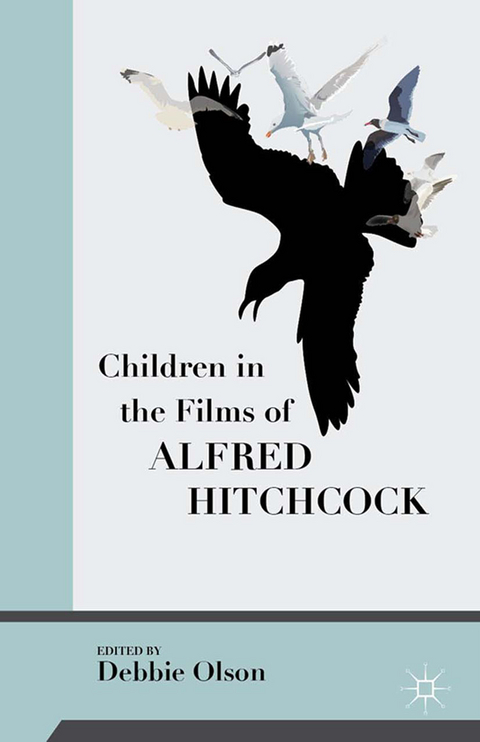
Children in the Films of Alfred Hitchcock (eBook)
IX, 276 Seiten
Palgrave Macmillan US (Verlag)
978-1-137-47281-6 (ISBN)
Noel Brown, Newcastle University, UK Jason McEntee, South Dakota State University, USA Markus Bohlmann, Seneca College, Canada Sean Moreland, University of Ottawa, Canada Adrian Schober, Monash University, Australia Brian Walter, St. Louis College of Pharmacy, USA F.E. Pheasant-Kelly, University of Wolverhampton, UK Samantha Lay, University of Houston, USA Craig Martin, La Trobe University, Australia William McBride, Illinois State University, USA Kevin J. Wetmore, Jr., Loyola Marymount University, USA Peter Lee, Drew University, USA Elizabeth Ramsey, University of Southern California, USA
Children and youth perform both innocence and knowingness within Hitchcock's complex cinematic texts. Though the child often plays a small part, their significance - symbolically, theoretically, and philosophically - offers a unique opportunity to illuminate and interrogate the child presence within the cinematic complexity of Hitchcock's films.
Noel Brown, Newcastle University, UK Jason McEntee, South Dakota State University, USA Markus Bohlmann, Seneca College, Canada Sean Moreland, University of Ottawa, Canada Adrian Schober, Monash University, Australia Brian Walter, St. Louis College of Pharmacy, USA F.E. Pheasant-Kelly, University of Wolverhampton, UK Samantha Lay, University of Houston, USA Craig Martin, La Trobe University, Australia William McBride, Illinois State University, USA Kevin J. Wetmore, Jr., Loyola Marymount University, USA Peter Lee, Drew University, USA Elizabeth Ramsey, University of Southern California, USA
Introduction: Hitchcock's Children; Debbie Olson 1. Hitchcock's Missing Children: Genre, Auteurship, and Audience Address; Noel Brown 2. "The Future's Not Ours to See": How Children and Young Adults Reflect the Anxiety of Lost Innocence in Alfred Hitchcock's American Movies; Jason McEntee 3. The Child Who Knew Too Much: Liminality in Alfred Hitchcock's The Man who Knew Too Much (1934 and 1956); Elizabeth Ramsey 4. No Laughing Matter: Imperiling Kids and Country in Alfred Hitchcock's Sabotage; Peter Lee 5. "If You Ripped the Fronts Off Houses": Killing Innocence in Hitchcock's Shadow of a Doubt; Markus Bohlmann and Sean Moreland 6. Daddy's Girl: The Knowing Innocent in Strangers on a Train; Brian Walter, St. Louis College of Pharmacy 7. Renegotiating Romanticism and the All-American Boy Child: Alfred Hitchcock's The Trouble with Harry; Adrian Schober 8. Between Knowingness and Innocence: Child Ciphers in Hitchcock's Marnie and The Birds; F. E. Pheasant-Kelly 9. The Child Hero in Alfred Hitchcock's The Birds; Samantha Lay 10. "It's the End of the World!": Alfred Hitchcock's The Birds and the Evil Children Film; Craig Martin 11. Psycho without a Cause: Norman Bates and Juvenile Delinquency Cinema; Kevin J. Wetmore, Jr. 12. Hitchcock's Stylized Capture of Post-Adolescent Fatheads; William McBride
| Erscheint lt. Verlag | 17.12.2014 |
|---|---|
| Zusatzinfo | IX, 276 p. 12 illus. |
| Verlagsort | New York |
| Sprache | englisch |
| Themenwelt | Kunst / Musik / Theater ► Film / TV |
| Kunst / Musik / Theater ► Kunstgeschichte / Kunststile | |
| Kunst / Musik / Theater ► Malerei / Plastik | |
| Geisteswissenschaften ► Geschichte | |
| Sozialwissenschaften ► Kommunikation / Medien ► Medienwissenschaft | |
| Sozialwissenschaften ► Politik / Verwaltung | |
| Sozialwissenschaften ► Soziologie | |
| Schlagworte | Alfred Hitchcock • children • Cinema • ciphers • classic Hollywood Cinema • Cultural Studies • Film • futurity • Hollywood • Juvenile Delinquent • Psycho • Romanticism • Society • Youth |
| ISBN-10 | 1-137-47281-2 / 1137472812 |
| ISBN-13 | 978-1-137-47281-6 / 9781137472816 |
| Informationen gemäß Produktsicherheitsverordnung (GPSR) | |
| Haben Sie eine Frage zum Produkt? |
 PDF (Wasserzeichen)
DRM: Digitales Wasserzeichen
Dieses eBook enthält ein digitales Wasserzeichen und ist damit für Sie personalisiert. Bei einer missbräuchlichen Weitergabe des eBooks an Dritte ist eine Rückverfolgung an die Quelle möglich.
Dateiformat: PDF (Portable Document Format)
Mit einem festen Seitenlayout eignet sich die PDF besonders für Fachbücher mit Spalten, Tabellen und Abbildungen. Eine PDF kann auf fast allen Geräten angezeigt werden, ist aber für kleine Displays (Smartphone, eReader) nur eingeschränkt geeignet.
Systemvoraussetzungen:
PC/Mac: Mit einem PC oder Mac können Sie dieses eBook lesen. Sie benötigen dafür einen PDF-Viewer - z.B. den Adobe Reader oder Adobe Digital Editions.
eReader: Dieses eBook kann mit (fast) allen eBook-Readern gelesen werden. Mit dem amazon-Kindle ist es aber nicht kompatibel.
Smartphone/Tablet: Egal ob Apple oder Android, dieses eBook können Sie lesen. Sie benötigen dafür einen PDF-Viewer - z.B. die kostenlose Adobe Digital Editions-App.
Buying eBooks from abroad
For tax law reasons we can sell eBooks just within Germany and Switzerland. Regrettably we cannot fulfill eBook-orders from other countries.
aus dem Bereich