


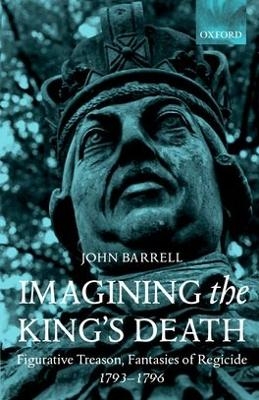
Imagining the King's Death
Figurative Treason, Fantasies of Regicide, 1793-1796
Seiten
2000
Oxford University Press (Verlag)
978-0-19-811292-1 (ISBN)
Oxford University Press (Verlag)
978-0-19-811292-1 (ISBN)
It is high treason in British law to imagine the king's death. But after the execution of Louis XVI in 1793, everyone in Britain must have found themselves imagining that the same fate might befall George III. How easy was it to distinguish between fantasising about the death of George and 'imagining' it, in the legal sense of 'intending' or 'designing'?
It is high treason in British law to 'imagine' the king's death. But after the execution of Louis XVI in 1793, everyone in Britain must have found themselves imagining that the same fate might befall George III. How easy was it to distinguish between fantasising about the death of George and 'imagining' it, in the legal sense of 'intending' or 'designing'? John Barrell examines this question in the context of the political trials of the mid-1790s and the controversies they generated. He shows how the law of treason was adapted in the years following Louis's death to punish what was acknowledged to be a 'modern' form of treason unheard of when the law had been framed. The result, he argues, was the invention of a new, an imaginary, a 'figurative' treason, by which the question of who was imagining the king's death, the supposed traitors or those who charged them with treason, became inescapable.
It is high treason in British law to 'imagine' the king's death. But after the execution of Louis XVI in 1793, everyone in Britain must have found themselves imagining that the same fate might befall George III. How easy was it to distinguish between fantasising about the death of George and 'imagining' it, in the legal sense of 'intending' or 'designing'? John Barrell examines this question in the context of the political trials of the mid-1790s and the controversies they generated. He shows how the law of treason was adapted in the years following Louis's death to punish what was acknowledged to be a 'modern' form of treason unheard of when the law had been framed. The result, he argues, was the invention of a new, an imaginary, a 'figurative' treason, by which the question of who was imagining the king's death, the supposed traitors or those who charged them with treason, became inescapable.
John Barrell is Professor of English and Co-Director, Centre for Eighteenth Century Studies, University of York
PART ONE: SAD STORIES ; PART TWO: THE INVENTION OF MODERN TREASON ; PART THREE: ALARMS AND DIVERSIONS ; PART FOUR: PHANTOMS OF IMAGINATION
| Erscheint lt. Verlag | 16.3.2000 |
|---|---|
| Zusatzinfo | 24 black and white halftones |
| Verlagsort | Oxford |
| Sprache | englisch |
| Maße | 165 x 244 mm |
| Gewicht | 1417 g |
| Themenwelt | Geschichte ► Allgemeine Geschichte ► Neuzeit (bis 1918) |
| Geisteswissenschaften ► Geschichte ► Regional- / Ländergeschichte | |
| ISBN-10 | 0-19-811292-0 / 0198112920 |
| ISBN-13 | 978-0-19-811292-1 / 9780198112921 |
| Zustand | Neuware |
| Informationen gemäß Produktsicherheitsverordnung (GPSR) | |
| Haben Sie eine Frage zum Produkt? |
Mehr entdecken
aus dem Bereich
aus dem Bereich
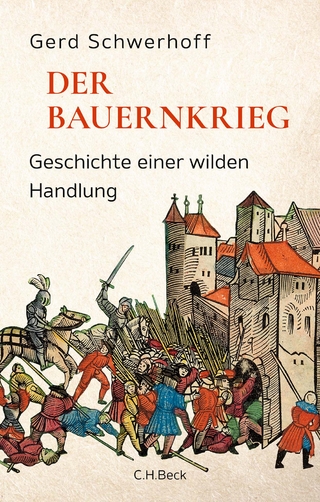
Geschichte einer wilden Handlung
Buch | Hardcover (2024)
C.H.Beck (Verlag)
CHF 47,60


