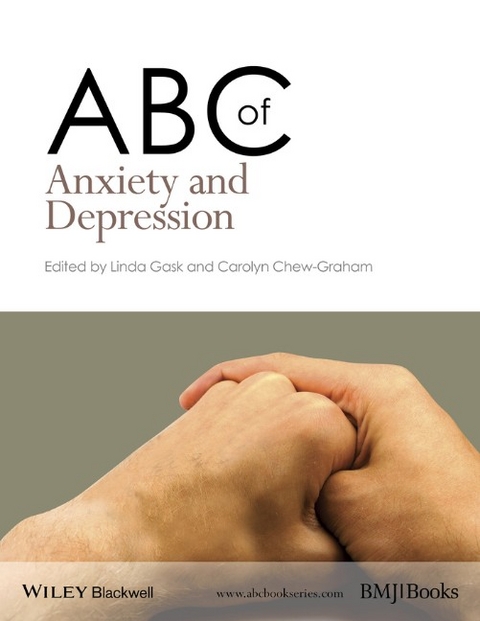
ABC of Anxiety and Depression (eBook)
John Wiley & Sons (Verlag)
978-1-118-78078-7 (ISBN)
ABC of Anxiety and Depression is a practical guide to the assessment, treatment and management of patients with anxiety and depression as they commonly present in primary care,
It begins with an introduction to views on the understanding of anxiety and depression, The following chapters cover how anxiety and depression present in different patient groups such as children and young people, adults, older people and during antenatal/postnatal periods, It then addresses anxiety and depression as comorbidities with chronic illness, and within special populations and settings,
The options for treatment and management of anxiety and depression are considered with guidance on when referral to secondary care may be appropriate and the current best practice in psychological therapies, drug treatment and social interventions, Cases are used to illustrate the complexities of managing patients with anxiety and depression,
The title concludes with an important chapter on practitioner well-being,
ABC of Anxiety and Depression is a practical resource all general practitioners and family physicians working with patients with anxiety and depressive disorders, It is also relevant for primary health care professionals who are part of clinical teams treating patients with anxiety and depression, and conditions where anxiety and depression are common comorbidities, as well as psychologists, counsellors, social workers, and medical and nursing students,
Linda Gask, Centre for Primary Care, University of Manchester, Manchester, UK
Carolyn Chew-Graham, Research Institute, Primary Care and Health Sciences and National School for Primary Care Research, Keele University, Keele, UK
ABC of Anxiety and Depression is a practical guide to the assessment, treatment and management of patients with anxiety and depression as they commonly present in primary care. It begins with an introduction to views on the understanding of anxiety and depression. The following chapters cover how anxiety and depression present in different patient groups such as children and young people, adults, older people and during antenatal/postnatal periods. It then addresses anxiety and depression as comorbidities with chronic illness, and within special populations and settings. The options for treatment and management of anxiety and depression are considered with guidance on when referral to secondary care may be appropriate and the current best practice in psychological therapies, drug treatment and social interventions. Cases are used to illustrate the complexities of managing patients with anxiety and depression. The title concludes with an important chapter on practitioner well-being. ABC of Anxiety and Depression is a practical resource all general practitioners and family physicians working with patients with anxiety and depressive disorders. It is also relevant for primary health care professionals who are part of clinical teams treating patients with anxiety and depression, and conditions where anxiety and depression are common comorbidities, as well as psychologists, counsellors, social workers, and medical and nursing students.
Linda Gask, Centre for Primary Care, University of Manchester, Manchester, UK Carolyn Chew-Graham, Research Institute, Primary Care and Health Sciences and National School for Primary Care Research, Keele University, Keele, UK
Contributors, vii
Preface, viii
Acknowledgements, ix
List of Abbreviations, x
1 Introduction: Anxiety and Depression, 1
Linda Gask and Carolyn Chew-Graham
2 Anxiety and Depression in Children and Adolescents, 5
Jane Roberts and Aaron Vallance
3 Anxiety and Depression in Adults, 9
David Kessler and Linda Gask
4 Anxiety and Depression in Older People, 15
Carolyn Chew-Graham and Cornelius Katona
5 Antenatal and Postnatal Mental Health, 19
Carol Henshaw and James Patterson
6 Anxiety and Depression: Long-Term Conditions, 23
Sarah Alderson and Allan House
7 Bereavement and Grief, 27
Linda Gask and Carolyn Chew-Graham
8 Anxiety, Depression and Ethnicity, 31
Waquas Waheed, Carolyn Chew-Graham and Linda Gask
9 Special Settings: The Criminal Justice System, 35
Richard Byng and Judith Forrest
10 Brief Psychological Interventions for Anxiety and Depression, 40
Clare Baguley, Jody Comiskey and Chloe Preston
11 Anxiety and Depression: Drugs, 46
R. Hamish McAllister-Williams and Sarah Yates
12 Psychosocial Interventions in the Community for Anxiety and Depression, 53
Linda Gask and Carolyn Chew-Graham
13 Looking After Ourselves, 57
Ceri Dornan and Louise Ivinson
Appendix 1, 60
Appendix 2, 61
Appendix 3, 63
Appendix 4, 64
Appendix 5, 65
Appendix 6, 67
Appendix 7, 68
Appendix 8, 69
Index, 77
Chapter 2
Anxiety and Depression in Children and Adolescents
Jane Roberts1 and Aaron Vallance2
1 Clinical Innovation and Research Centre, Royal College of General Practitioners, London, UK
2 Metabolic and Clinical Trials Unit, Department of Mental Health Sciences, The Royal Free Hospital, London, UK
OVERVIEW
- Anxiety and depression are not uncommon in children and young people, particularly those with coexisting medical problems or learning difficulties.
- The primary care consultation offers an opportunity to explore the young person’s problem from their own perspective, but inclusion of a family member or carer is usually necessary.
- Anxiety and depression are risk factors for self-harm and suicide.
- The stepped care approach should be followed in the management of children and young people with anxiety and/or depression.
- Psychological therapies should be considered in the first instance, and antidepressants only initiated after assessment within specialist services.
- GPs should understand referral pathways, including how to refer for specialist care.
- The third sector offers resources to support the young person and their family, and the role of the school should be recognised.
This chapter considers the presentation and management of anxiety and depression in children and young people, and explores the challenges clinicians face in responding to the needs of children and their families. As in adults, the two conditions are frequently comorbid, but they will be discussed in turn.
Box 2.1 Introducing Humah
Humah, 15, lives with her extended family. She is doing well at the local school, although feels her parents’ expectations put all of the siblings under pressure. She has a good circle of school friends, mostly Pakistani girls approved by her parents. She likes talking to Jess next door, when she comes over to look after her three younger brothers (although can’t understand why she isn’t trusted… or why her older brother Shochin isn’t expected to do this). She feels her mother likes chatting with Jess; in fact she only smiles when Jess is around.
Humah feels sad most of the time and gets upset when her father and grandparents tell her she’s lucky and has a bright future. She wonders whether to share her feelings with Jess, but fears she’ll laugh; Jess always seems so cheerful.
Primary care – an opportunity to make a difference
In primary care, the consultation is an opportunity for a therapeutic encounter. However, GPs often report feeling anxious and uncertain when faced with young people experiencing emotional distress – a state that can lead to inertia or disengagement and leave the young person isolated and unsure where to turn.
A first consultation should begin the GP showing an interest and concern, thereby reinforcing that mental health issues are taken as seriously as, say, acne or period pain. This involves attentive listening and a non-judgemental stance, displaying compassion and curiosity in the young person’s story. Using natural language and a lightness of tone, appropriate and judicious use of humour can serve to minimise the formal tone that clinicians can unwittingly adopt and which young people often report as a barrier. Focusing initially on the wider psychosocial context (e.g. family, friends, education/employment, how they spend their time) not only provides information but may ‘break the ice’ for exploring sensitive emotional issues later on. Asking about drug and alcohol use (e.g. as counterproductive coping strategies), and sexual activity/orientation are also important, but you may sense it is more appropriate to raise this later on. Establishing rapport is important for the long term: depression and anxiety in adolescence are often persistent or recurrent. Enquire about the family’s mental health history: this not only might be relevant to the young person’s experience, but also may cast light on the meaning of mental illness in the family. The child may have been a young carer. Moreover, evidence shows that treating parental depression or anxiety can help the child’s disorder. Humah’s case reflects how depression and anxiety may afflict those across generations, as well as the importance of understanding religious/cultural perspectives.
Depression in children and adolescents
Depression is not uncommon in young people: the 1-year global prevalence rate exceeds 4% in mid–late adolescence, with increasing preponderance in girls with age. Diagnostic criteria are as for adults, although irritability, oppositional behaviours and somatic symptoms tend to be more common, whilst functionality and enjoyment in activities can often be preserved (Box 2.2). Potential contributing factors include: genetic and personality factors; parental mental health problems, conflict and lack of warmth; previous and current life events (including loss and trauma); and physical illness. School can harbour both protective factors (e.g. routine, activity, peers), exacerbating factors (e.g. bullying, stressful peer dynamics, academic worries) and consequences (e.g. deteriorating school grades or peer relationships).
Box 2.2 Humah’s depression
For months Humah has struggled to get to sleep. She wakes up throughout the night and her day often starts long before her alarm. She just about manages her school-work, but worries that her difficulty in sleeping will affect her energy, concentration and school grades; her worries go round in circles, making her insomnia even worse.
Humah does as she’s told and can sometimes enjoy helping out the family or being with friends. Recently she’s unusually irritable though; even little things make her snap, making her feel guilty. Sometimes she feels they’re better off without her, and has fleeting thoughts of wanting to die. However, she does not think she’ll do anything as it will upset her family, and fears what the community might think.
What to cover in the consultation
To aid diagnosis, ask direct questions about: persistence and severity of low mood, concentration, energy, enjoyment, negative thoughts, and sleep, eating and weight patterns. Risk should be evaluated at the first appointment (see below). It is better to aim for a therapeutic consultation rather than an exhaustive one; building trust is important. Ideally book further consultations there and then, which may help the young person to feel more cared for.
Assessing and managing risk
Assessing risk can be done sensitively; for example, start by asking about hopelessness and whether life’s worth living, then eventually build up to direct questions on wanting to die and then on self-harming or suicidal ideation, intent or plan (Box 2.3). There is no evidence that asking such questions increases risk, whilst an accurate risk assessment would reduce risk.
Box 2.3 Assessing risk
- What methods of self-harm (or suicide) are being used or considered?
- What is the (perceived) intent? To relieve distress? To communicate feelings? To die?
- Have they got any firm plans? How, what, where?
- Is the young person unsafe at home? Is there abuse or bullying?
- What protective factors are there? What might stop them from making an attempt? (e.g. impact on family and friends, or future ambitions and hopes). Who is available for them to talk to?
Suicidal ideation is common at some point in adolescence, although a genuine intent to kill oneself is relatively rare. Depression is particularly associated with self-harm and suicide, although teenagers may cut themselves in the absence of psychiatric disorder. Deliberate self-harm also commonly occurs with emotionally unstable personality traits, other features of which include feelings of emptiness, emotional volatility and relationship difficulties, whilst a history of trauma or rejection is common. What to cover when assessing risk is outlined in Box 2.3. Find out about the chronology of any cutting behaviour, triggers, exacerbating and relieving factors. Although most adolescent self-harm is not acutely associated with suicide, the long-term likelihood of eventual death by suicide (in adult years) increases 50–100-fold.
If you are concerned about a significant and acute risk, act promptly. Confidentiality issues need to be considered, in particular deciding at what point parents need to know, and what they are told. There is often a complex balancing act between respecting the young person’s right to confidentiality and maintaining short- and long-term rapport on one hand, with needing to tell parents to prevent serious risk of harm and galvanise family support and communication on the other. Gently encouraging the young person to share details with parents is often helpful. Advise parents on keeping the home safe (e.g. securing sharps and medicine).
Make an immediate referral to CAMHS (Child and Adolescent Mental Health Services) if concerned about mental health and risk, and provide as much information as possible; the time scale of a CAMHS assessment will depend on risk severity. In emergencies, CAMHS can usually respond with a same or next-day assessment; sending the young person with their family to the Emergency Department (ED) may be required. Contact your local safeguarding...
| Erscheint lt. Verlag | 30.7.2014 |
|---|---|
| Reihe/Serie | ABC Series |
| ABC Series | ABC Series |
| Sprache | englisch |
| Themenwelt | Geisteswissenschaften ► Psychologie ► Klinische Psychologie |
| Medizin / Pharmazie ► Gesundheitsfachberufe | |
| Medizin / Pharmazie ► Gesundheitswesen | |
| Medizin / Pharmazie ► Medizinische Fachgebiete ► Allgemeinmedizin | |
| Medizin / Pharmazie ► Medizinische Fachgebiete ► Psychiatrie / Psychotherapie | |
| Schlagworte | ABC • Allgemeinpraxis, hausärztliche Praxis • Allgemeinpraxis, hausärztliche Praxis • Angststörung • Anxiety • Assessment • Care • Chapters • commonly • Comorbidities • Cover • Depression • Different • General Practice/Family Practice • Gesundheits- u. Sozialwesen • Guide • Health & Social Care • Illness • Introduction • Medical Science • Medizin • Mental Health • Patient • patients • People • Practical • present • Primary • Psychiatrie • Psychiatry • Psychische Gesundheit • Understanding • Views |
| ISBN-10 | 1-118-78078-7 / 1118780787 |
| ISBN-13 | 978-1-118-78078-7 / 9781118780787 |
| Informationen gemäß Produktsicherheitsverordnung (GPSR) | |
| Haben Sie eine Frage zum Produkt? |
 EPUB (Adobe DRM)
Kopierschutz: Adobe-DRM
Adobe-DRM ist ein Kopierschutz, der das eBook vor Mißbrauch schützen soll. Dabei wird das eBook bereits beim Download auf Ihre persönliche Adobe-ID autorisiert. Lesen können Sie das eBook dann nur auf den Geräten, welche ebenfalls auf Ihre Adobe-ID registriert sind.
Details zum Adobe-DRM
Dateiformat: EPUB (Electronic Publication)
EPUB ist ein offener Standard für eBooks und eignet sich besonders zur Darstellung von Belletristik und Sachbüchern. Der Fließtext wird dynamisch an die Display- und Schriftgröße angepasst. Auch für mobile Lesegeräte ist EPUB daher gut geeignet.
Systemvoraussetzungen:
PC/Mac: Mit einem PC oder Mac können Sie dieses eBook lesen. Sie benötigen eine
eReader: Dieses eBook kann mit (fast) allen eBook-Readern gelesen werden. Mit dem amazon-Kindle ist es aber nicht kompatibel.
Smartphone/Tablet: Egal ob Apple oder Android, dieses eBook können Sie lesen. Sie benötigen eine
Geräteliste und zusätzliche Hinweise
Buying eBooks from abroad
For tax law reasons we can sell eBooks just within Germany and Switzerland. Regrettably we cannot fulfill eBook-orders from other countries.
aus dem Bereich